Planning Cabinet Paint Drying: Recoat Time, Cure and Return to Use
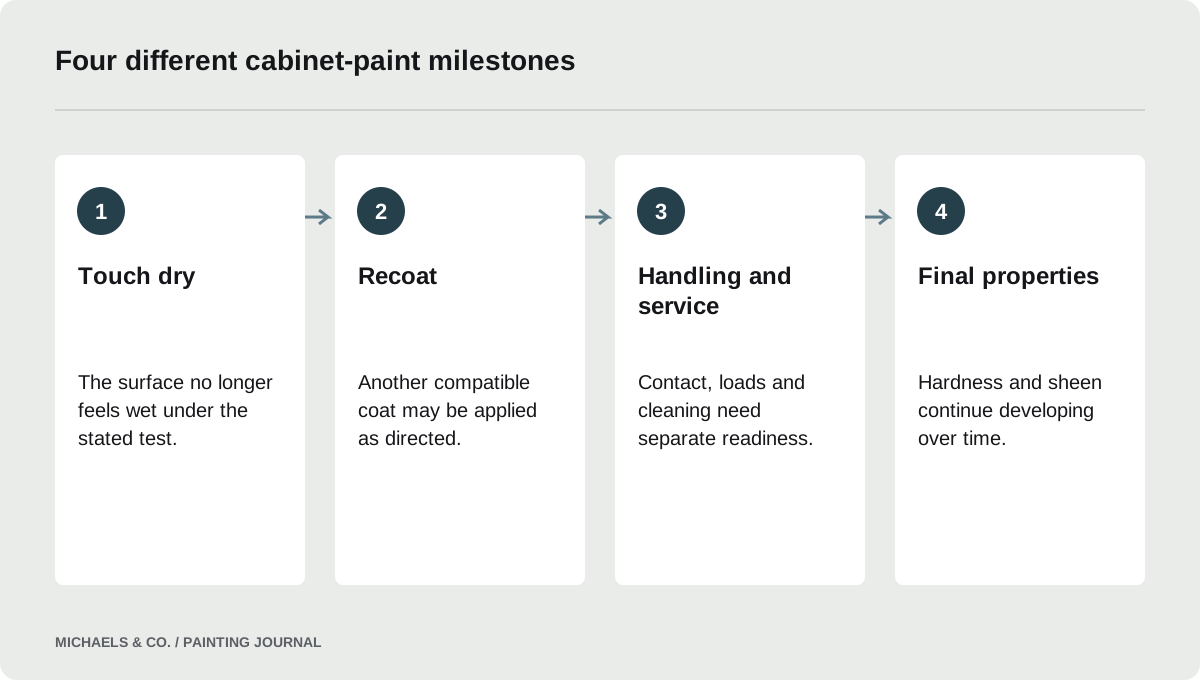
Cabinet paint can be ready for another coat before it is ready for doors to close, shelves to carry objects or surfaces to be scrubbed. Treat touch dry, recoat, handling and service as separate milestones. For example, ADVANCE Satin 792 lists a 16-hour recoat interval at 77°F and 50% relative humidity, while final hardness develops much longer. Use the exact product sheet and actual conditions to schedule contact and use.
Ask what the painted surface must do next
The word dry is too vague for cabinet scheduling. A face that can be lightly touched may still mark under a hinge plate, stick to a bumper or take an imprint from a heavy object. Before painting, list the next events: another coat, turning a door, installing hardware, closing doors, loading shelves and cleaning. Each places a different demand on the finish.
A Reddit question about ADVANCE's 30-day cure period came from someone wanting to place a television on a newly painted surface. That is a service-load question, not simply a recoat question. Another discussion about working with the same product shows how application and waiting time become entangled. The practical response is to match each planned action to the manufacturer's relevant milestone. A schedule built only around when paint stops feeling wet leaves the most damaging contact events undefined.
Use one exact technical sheet as the schedule example
The ADVANCE waterborne interior alkyd Satin 792 technical sheet gives the following example at 77°F and 50% relative humidity. These numbers belong to that product and stated conditions; other sheens, products or revisions may differ.
| Milestone | Stated example |
|---|---|
| Touch dry | 4–6 hours |
| Recoat | 16 hours |
| Heavy abrasion or shelf/tabletop service | At least 5–7 days |
| Optimum hardness and final sheen | May take up to 30 days depending on conditions |
The sheet also explains that cooler temperatures or higher humidity prolong the process. Do not compress these distinct milestones into a claim that the paint fully cures in five days. General product marketing may summarize performance differently, but the exact technical sheet is the more useful basis for a project schedule and a discussion with technical support.
Build a recoat schedule with room for real conditions
If a first coat is completed late in the afternoon, a long recoat interval may make the following morning too early even when the surface feels dry. Calculate from the completion of the relevant area, not from the time the can was opened. On multiple doors, label each group so the last sprayed component is not treated as if it dried as long as the first.
Measure or otherwise establish the actual room conditions rather than assuming indoor work equals the reference conditions on a sheet. A cool garage, poorly ventilated basement or humid kitchen can behave differently. Do not use a heater aimed directly at the doors to force a deadline without product guidance; uneven conditions can create new problems. Plan a buffer and inspect readiness using the manufacturer's criteria. The useful schedule is a realistic sequence that can tolerate ordinary variation, not the earliest theoretical recoat time repeated as a promise.
Treat handling and support contact separately
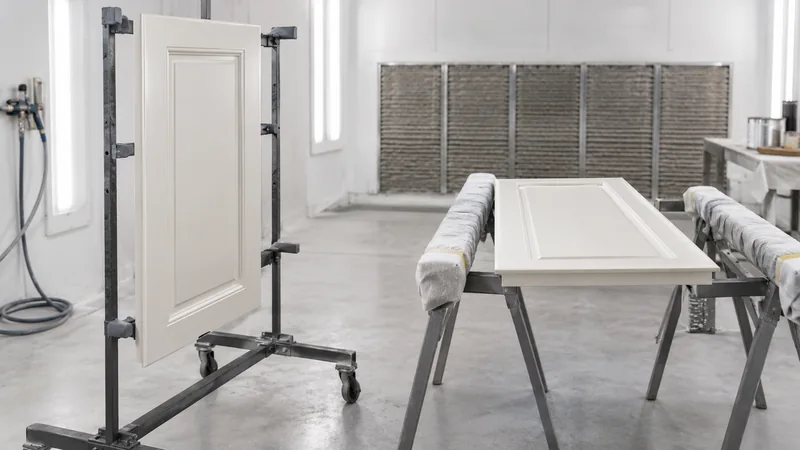
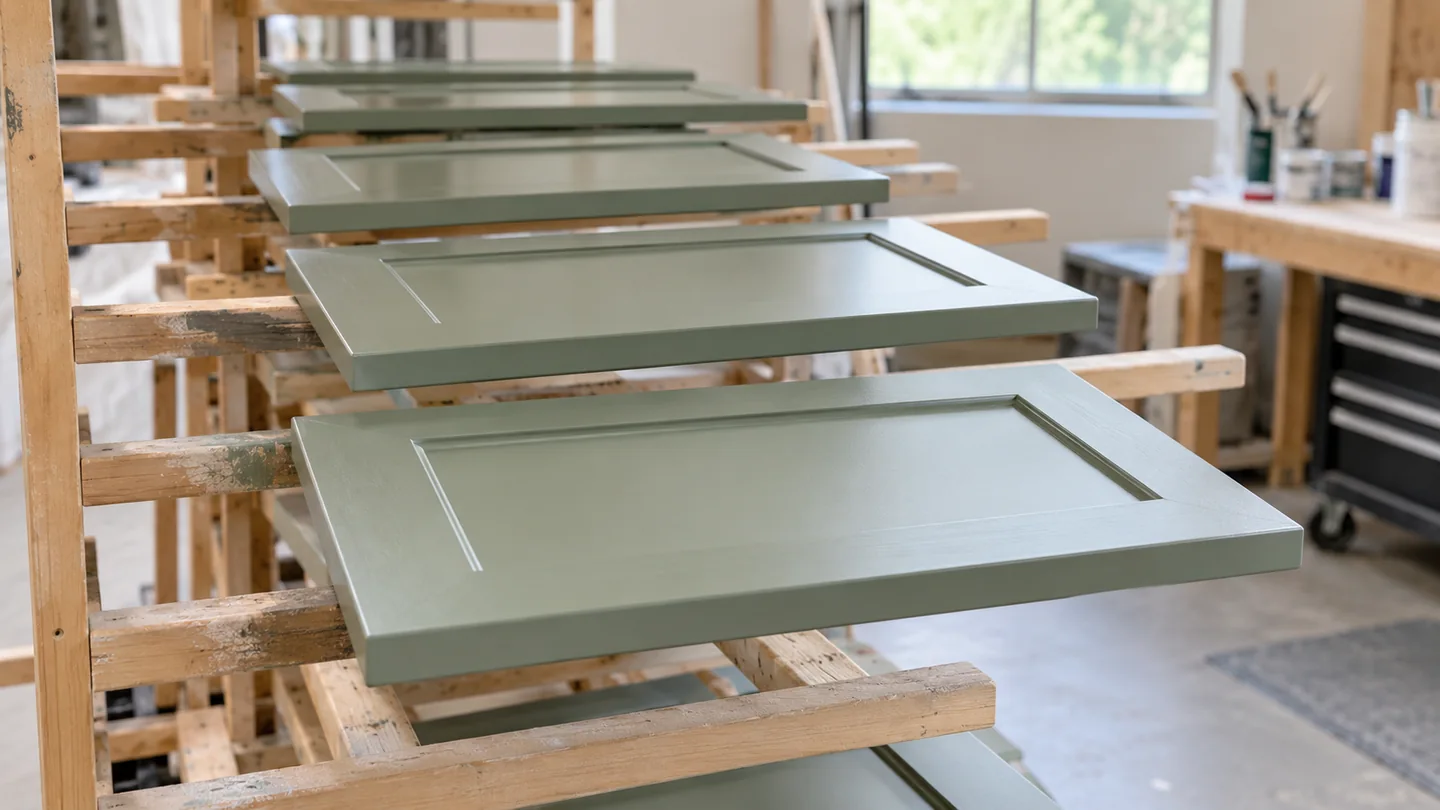
A door may need to be turned or moved before final service, but the support arrangement determines the risk. Small contact points can concentrate load, while broad supports can leave a larger impression if the coating is not ready. Plan the finishing rack and orientation so premature contact is not required simply to free the work area.
Do not stack fresh doors face to face or lean painted edges together on the assumption that a recoat interval has passed. Keep labels and spacers from becoming unintended contact marks. If the coating's sheet does not specify readiness for the proposed handling, ask about that exact use and test a representative sample. A hidden spot on the finished door is not always an adequate substitute for a sample because pressure and contact duration differ. Good drying-space planning often prevents more damage than adding an extra day after the doors have already been marked.
Delay concentrated loads and closed contact appropriately
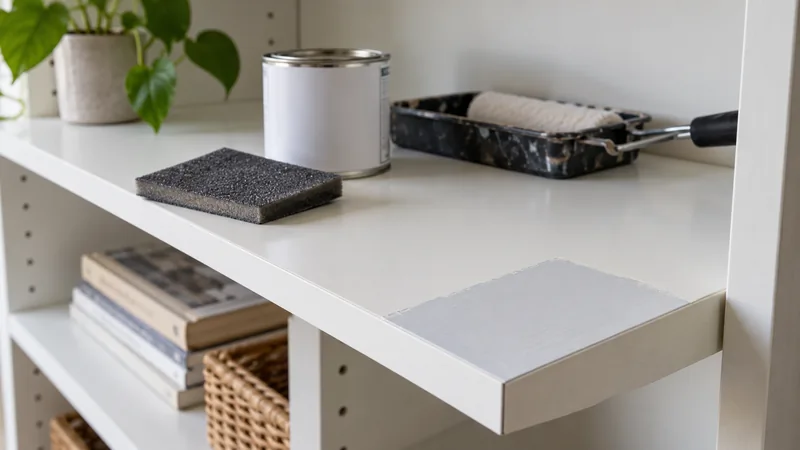
Shelves and cabinet interiors receive loads that are easy to underestimate. A television foot, appliance pad, stack of dishes or shelf liner can maintain pressure at one location for a long period. Doors and drawers create repeated contact at stops and bumpers. These conditions can reveal softness or blocking that a light fingertip check misses.
Follow the product's service guidance and consider whether the intended use is more demanding than the example it provides. Keep heavy items off newly painted horizontal surfaces until the system is ready. Do not add a liner, wax, clear coat or household powder as an unapproved shortcut; each can introduce compatibility or contact issues. If the cabinet must return to heavy use on a fixed deadline, choose a coating system and professional process that can meet that requirement before work begins. Cure timing is a product-selection constraint, not merely an inconvenience discovered at the end.
Create a cabinet return-to-use checklist
Write the dates and conditions down while the project is active. This is especially useful when several people use the kitchen or when one crew paints and another installs hardware. A simple label on the work area prevents someone from assuming that an attractive finish is fully ready.
- Record the exact enamel, sheen and technical-sheet revision.
- Note when each final coat was completed.
- Allow the specified interval before further coating.
- Confirm readiness for turning and support contact separately.
- Install hardware without dragging or compressing vulnerable paint.
- Wait for the required service stage before loading shelves.
- Begin cleaning only with the permitted method and timing.
Include any manufacturer guidance received for unusual use, such as a heavy appliance on a painted shelf. Keep that guidance with the project record rather than relying on a verbal recollection after an imprint or sticky contact appears.
Recognize when waiting alone may not resolve the problem
A coating that remains unusually soft can reflect conditions, excessive build, incompatible layers or another issue. A long cure allowance should not become a reason to ignore obvious sagging, contamination or loss of adhesion. Record what was applied, how much, over which primer and under what conditions, then compare that record with the approved system.
Avoid repeatedly testing a visible surface with a fingernail or loaded object; the test itself can create damage without providing a reliable measure of readiness. Use the manufacturer's assessment method or obtain technical advice. If a repair is needed, define the failed layer and correction before adding more coating. The distinction between normal property development and an application problem matters. A realistic curing schedule protects a sound finish, but it does not transform an unsuitable coating system into a sound one merely by leaving it untouched for a month.
Questions & answers
Can I rehang cabinet doors as soon as I can recoat them?
Not automatically. Recoating and handling involve different stresses, especially at hinges, supports and stops. Check the product's handling guidance and the planned contact points. Keep enough drying space that rehanging does not become a forced step before the finish is ready.
Does a 30-day hardness period mean the kitchen cannot be used for a month?
Not necessarily. A product may allow certain stages of handling or service before its final properties develop. Follow the exact milestones and protect the finish from loads or cleaning it is not yet ready to tolerate. Do not replace those distinctions with one universal waiting period.
Will a fan make cabinet paint cure immediately?
No. Appropriate air movement may be part of suitable drying conditions, but it does not eliminate the coating's required development time. Avoid direct airflow that introduces dust or conditions outside the product instructions. Plan around the approved process rather than trying to force an immediate return to service.
Sources & further reading
- Benjamin Moore ADVANCE Satin 792 Technical Data SheetThe sheet separates touch-dry, recoat, early service and eventual hardness; cool or humid conditions extend these stages.
Reader discussions
These conversations describe problems people encountered. They do not establish the cause of a defect or replace product instructions and applicable requirements.