Choosing Roller Nap for Smooth Walls Without Creating Heavy Stipple
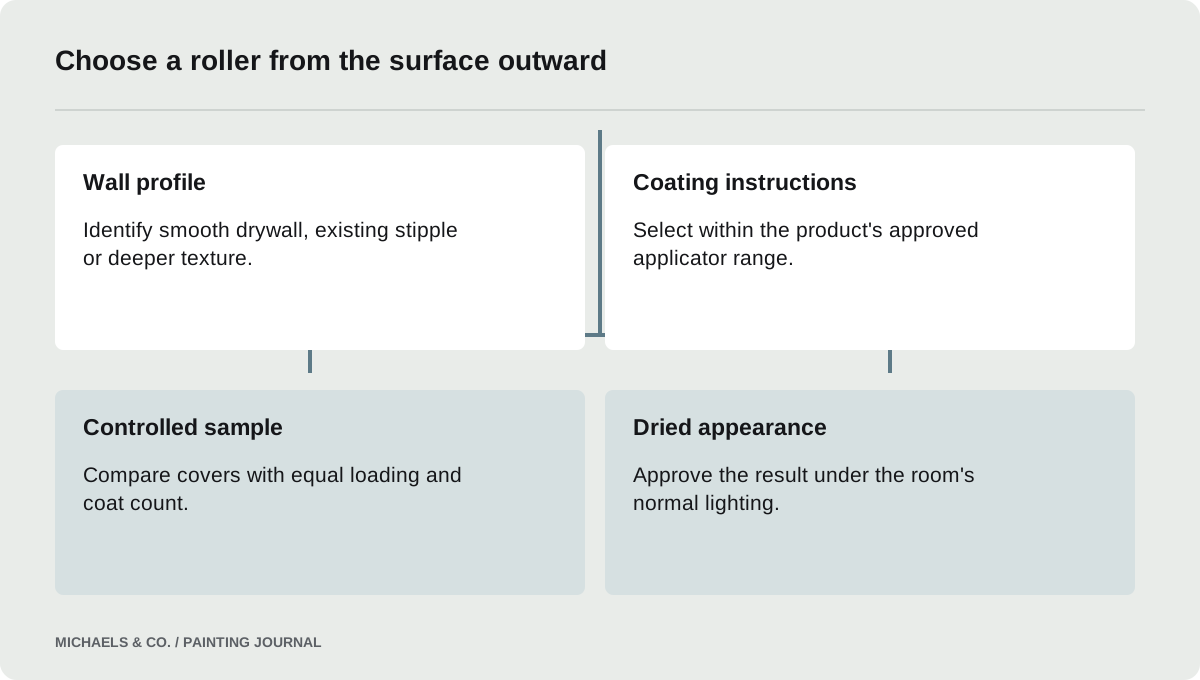
Choose roller nap for the wall profile and the coating manufacturer's application instructions, then judge a dried sample. A shorter nap generally leaves a finer pattern on smooth surfaces, but it carries less paint and cannot erase existing texture. Fabric, loading, pressure and working time also affect the result. A roller finish can be even and attractive without looking like sprayed cabinetry.
Separate smoothness from sheen
A wall can have a flat sheen and still show a substantial roller pattern. Conversely, a glossy coating can lie fairly smooth while reflecting every small irregularity beneath it. Before buying covers, decide whether the objection is reflected light, raised texture, visible application lanes or actual bumps in the substrate. Each points to a different decision.
The distinction appears in a Reddit question about roller choices for newly skimmed walls and ceilings: the desired “flat” result did not clearly separate sheen from texture. Another discussion concerns a lounge where short-nap rolling still produced visible texture. Those questions are useful because they show why buying an even shorter cover can disappoint. Define an acceptable sample under the room's normal light, rather than asking a sales counter for the smoothest roller in the abstract. Newly skimmed drywall also needs a suitable primer system before its finish texture can be assessed fairly.
Read the coating instructions before comparing covers
The coating is the first filter. Some products specify a cover material or a range of naps because the finish needs a particular film build and release pattern. An applicator that performs well with a thin wall paint may struggle with a heavier coating. Purdy's roller-cover guidance treats fabric, nap and width as related choices, not interchangeable indicators of quality.
Take the exact product name and sheen to the paint store. Ask which covers fit its current technical sheet and the condition of your surface. Then compare within that suitable group. A package marked for smooth surfaces is a useful starting point, but it does not override the coating instructions. Keep the packaging and note the cover used for the sample. If a second painter completes the next room, that record makes matching the application more realistic than simply specifying a premium roller.
Use nap to reach the surface without overloading it
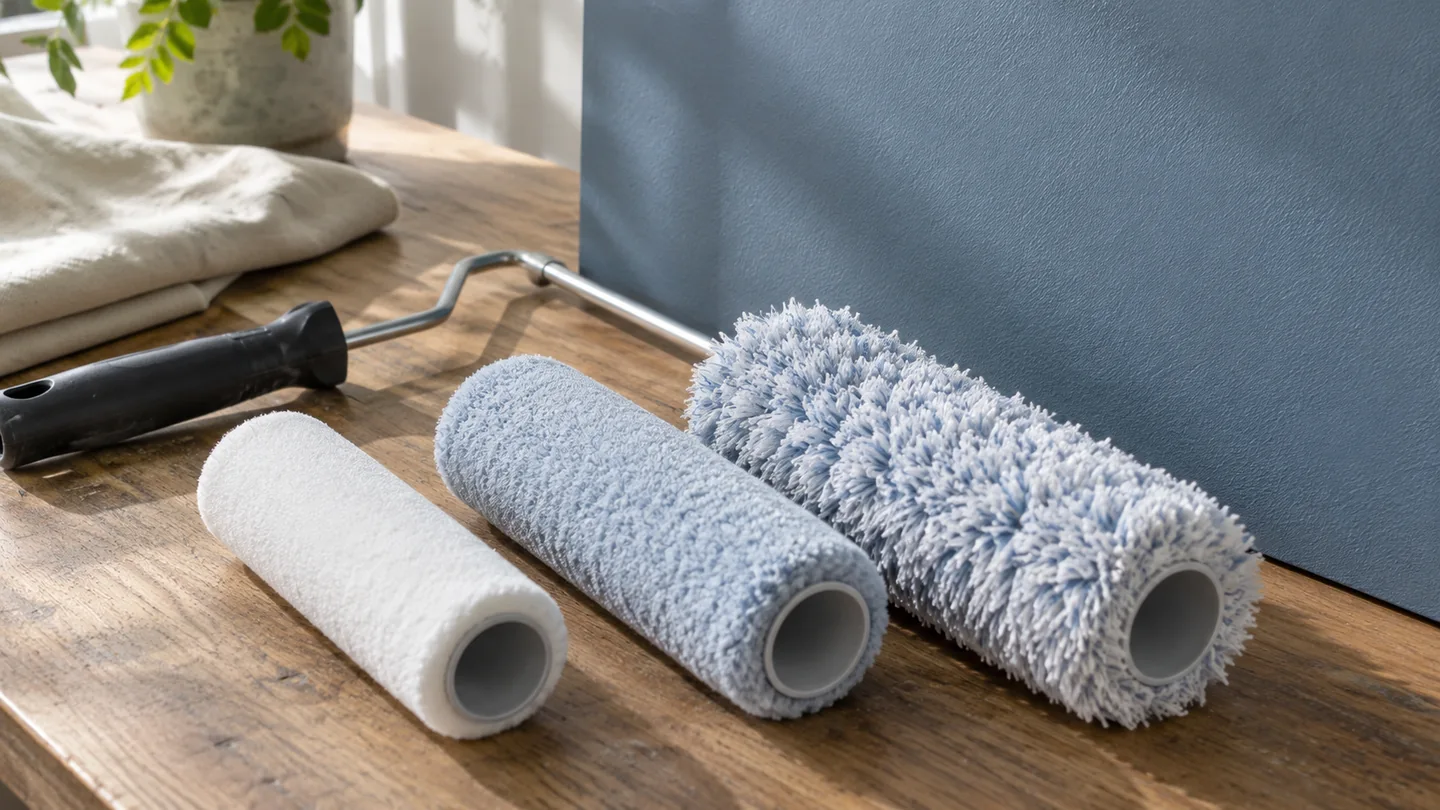
Nap is the length of the cover's working fibers. A relatively short nap suits a smooth, sealed plane because the fibers do not need to reach deep recesses. Rough plaster, textured drywall and masonry need more reach. Choosing the shortest available nap for a textured wall can leave hollows poorly coated while the high points receive repeated passes.
On smooth walls, a longer nap can carry more paint and help production, but the application pattern may be more pronounced. That tradeoff is not resolved by pressing harder. Pressure squeezes paint unevenly and can create ridges at the ends of the cover. Use the manufacturer's permitted range, then test the shorter and longer options with normal loading. If the shorter cover requires constant reloading or starts dragging before a workable section is complete, it may make a consistent finish harder rather than easier.
For a concrete starting comparison, Purdy gives the following examples. These are manufacturer selection examples, not overrides of your paint's technical sheet.
| Nap | Purdy example |
|---|---|
| 1/4 inch | Smooth uniform surfaces using a suitable short-nap cover |
| 3/8 inch | Walls, ceilings and paneling |
| 1/2 inch | Lightly textured surfaces |
| 3/4 inch | Textured ceilings, stucco and masonry |
For smooth drywall, comparing approved 1/4-inch and 3/8-inch options answers a more useful question than buying the shortest nap available without testing paint release.
Compare fabric and cover condition fairly
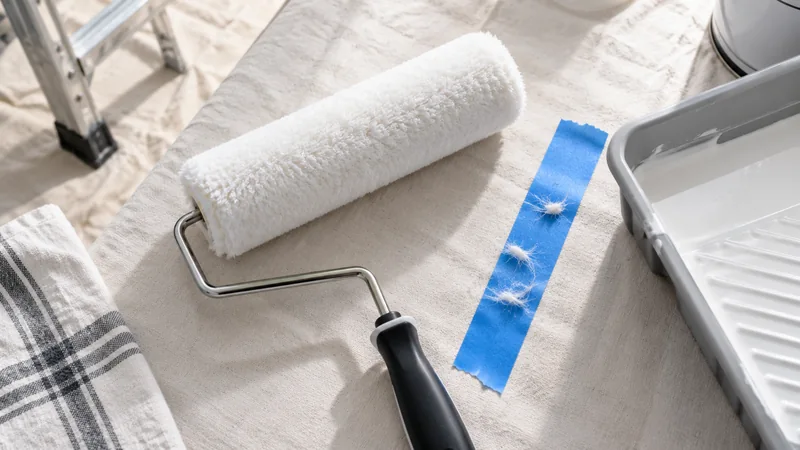
Woven, knitted and microfiber descriptions identify different constructions, but the label alone does not predict every finish. Products vary in density, release and intended coating compatibility. Compare actual covers with the same paint instead of treating an entire fabric category as inherently smooth or lint-free. Remove loose fibers as the cover maker recommends before starting.
A worn cover, a bent frame or a sleeve that slides sideways can spoil the comparison. Check that the cover rotates freely and stays centered. Use a tray or grid that loads its width evenly. For a useful test, do not compare a dry, unprepared cover against one that has already been worked into the paint. Bring each to a normal working load, roll separate labeled areas and let both dry. Keep the room conditions, primer, coat count and lighting the same so the test answers a real question.
Control loading and finishing passes
Roller texture is partly a record of how paint was placed and left to settle. A starved cover encourages repeated pressure and overworking. An overloaded cover can leave heavy edges. Load evenly, distribute the paint across a manageable section and finish with controlled passes while the coating remains workable. Avoid returning repeatedly to an area that has begun to set.
Sherwin-Williams' guidance on brush and roller marks identifies unsuitable applicators, film build and overworking among the factors that interfere with leveling. That does not mean every visible stipple is a defect. The practical goal is an even pattern without distinct lanes, ridges or debris. If an adjustment helps only while you maintain awkward pressure or an unrealistic pace, choose a more workable cover or section size. A method that can be repeated around corners and outlets matters more than a perfect isolated stroke.
Approve a dried sample using a simple comparison
Make the sample large enough to include several overlapping passes. A tiny patch hides the handling problems that emerge when a roller is loaded, turned and reloaded. Include a representative repaired area if the wall contains one, but make sure its preparation is already complete. Record the paint, primer, cover and number of coats.
| Observation after drying | Decision to investigate |
|---|---|
| Even fine texture, acceptable in normal light | Keep the cover and application method |
| Heavy but uniform pattern | Compare an approved shorter nap and normal film build |
| Ridges at pass edges | Check loading, pressure and frame condition |
| Old bumps remain visible | Review substrate preparation before changing tools |
View the sample from ordinary standing positions and with the lighting that will actually be used. Strong side light may reveal texture that diffuse daylight hides; include it if it is a permanent feature of the room.
Set expectations before a whole-room repaint
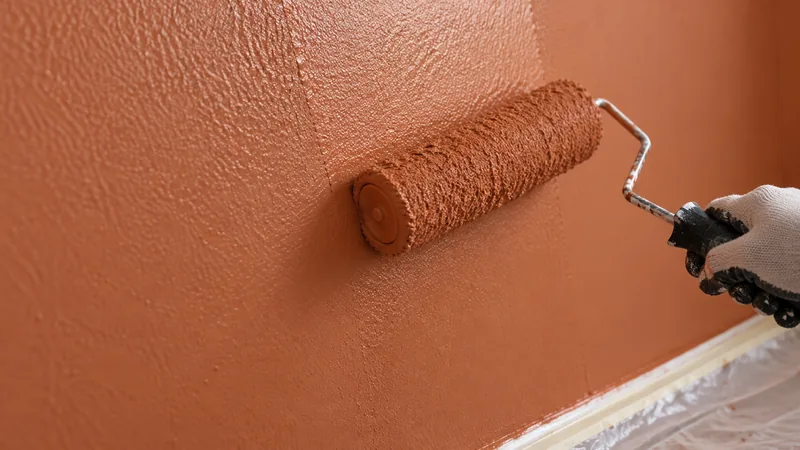
A roller deposits paint through a textured sleeve. Even a well-controlled application generally leaves some surface pattern. If the desired result is a furniture-like sprayed appearance, discuss whether the substrate, coating and project setup can support it. Spraying does not remove drywall irregularities, and it introduces masking, ventilation and access requirements of its own.
For a homeowner or facilities team hiring a painter, approve the sample and document the agreed appearance before production. Specify the substrate preparation and finish system as well as the cover when consistency matters across phases. Keep a spare identical cover for later work, but do not assume that touching up an aged wall will become invisible merely because the tool matches. The original coating's wear, lighting and application boundaries still matter. A clear sample agreement is more useful than a promise of completely texture-free rolled walls.
Questions & answers
Is a foam roller always smoother than a fabric roller?
No. Foam is suitable for some coatings and small surfaces, but it is not a universal wall-paint choice. The coating may require a different applicator, and foam can introduce its own application problems. Compare only covers approved for the exact product and judge the dried sample.
Can a short-nap roller flatten existing orange-peel texture?
It cannot level the wall beneath the paint. A short nap may change the added application pattern, but existing texture remains. If a genuinely flatter surface is required, assess a separate surface-preparation plan before choosing the final primer, paint and applicator.
Should I use the same nap on walls and ceilings?
Use the same cover only if both substrates and their coatings support it. A textured ceiling needs different reach from a smooth wall, and ceiling paint may have different application recommendations. Matching tools is less important than producing a consistent finish on each surface.
Sources & further reading
- Purdy: How to Choose a Paint Roller CoverSelect cover fabric, nap and width for the coating and substrate; short nap is not a promise of zero texture.
- Sherwin-Williams: Brush or Roller MarksWrong applicators, overworking, premature reworking and unsuitable film build can prevent leveling.
Reader discussions
These conversations describe problems people encountered. They do not establish the cause of a defect or replace product instructions and applicable requirements.