Cleaning Paint Brushes and Rollers Without Ruining Their Shape
Use the cleaner specified for the coating, remove paint before it hardens deep inside the applicator and dry the tool without crushing its working surface. Water cleanup does not mean every part of the tool is clean as soon as the rinse looks clear. Inspect the brush heel, roller ends and frame separately. Follow local disposal rules and coating labels rather than sending paint residue into drains by default.
Identify the coating before choosing a cleaner
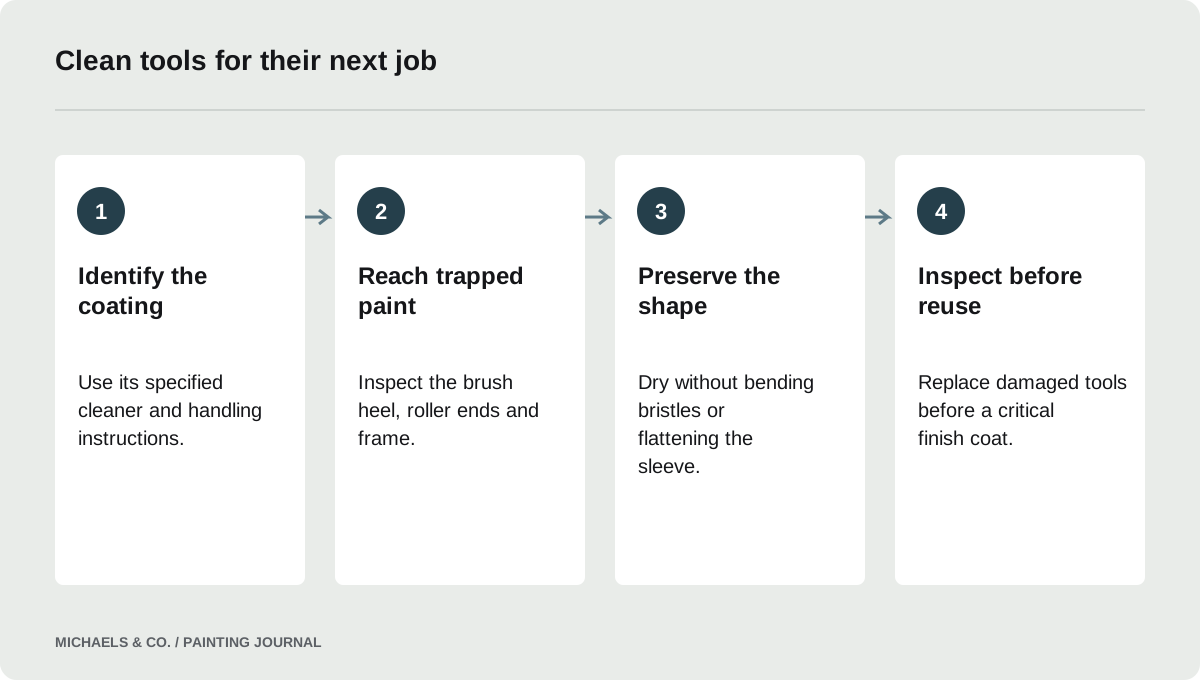
The label's cleanup directions are the starting point. Waterborne coatings, solventborne products and specialty finishes may require different methods. Do not identify a paint solely by odor, age or what the previous owner called it. If the container is missing and the coating is unknown, avoid mixing cleaners experimentally inside a tool you intend to reuse.
A brush-and-roller care discussion reflects the practical uncertainty painters face when deciding how thoroughly to clean equipment and when replacement is more sensible. The answer depends partly on what is in the tool. Purdy's tool-care FAQs provide manufacturer guidance on cleaning and preserving applicators, but that guidance still needs to be matched to the actual coating. Keep the product label available until cleanup is complete. On a project using primer, wall paint and trim enamel, clearly identify which tool belongs to each system before the cleanup station becomes crowded.
Clean promptly enough to reach the paint inside
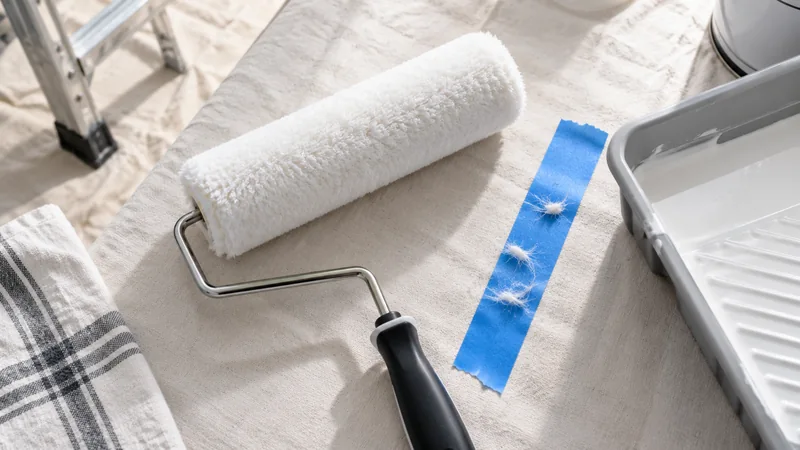
Paint drying near a brush's heel can prevent the bristles from flexing and releasing coating evenly. On rollers, hardened material near the ends or deep in the sleeve can become a source of particles later. A superficial rinse may improve appearance without restoring performance. Begin cleanup while the coating remains removable by the approved method.
Remove usable excess coating in a controlled way before washing, keeping it separate from contaminated material. Then work through the tool rather than cleaning only the visible tips. Avoid techniques that tear bristles, distort the sleeve or damage the core. If the tool has already hardened, check whether the manufacturer supports a restoration method for that material. Repeated soaking in an unsuitable cleaner can damage the applicator even when it removes some paint. A partly recovered tool may be acceptable for rough utility work but unsuitable for a visible final enamel coat.
Give the brush heel and ferrule special attention
The ferrule is the metal band holding the bristles. Paint can collect where the bristles enter it, gradually changing the brush's shape and flexibility. During cleaning, gently work the approved cleaner through this area without bending the bristles sharply or forcing them out of alignment. Inspect from both sides rather than judging only the bright appearance of the tips.
Use any brush comb or cleaning accessory according to its instructions. Aggressive scraping can split or break fibers and turn a recoverable brush into a shedding tool. After cleaning, check whether the bristles move naturally and whether residue remains at the base. If the brush retains a hard internal ridge, do not assume it will soften during the next coat. Label it for less demanding work or replace it. Tool care is successful when it preserves controlled paint release, not merely when the brush looks presentable in storage.
Clean the roller assembly as separate parts
Remove the sleeve from the frame when the equipment instructions permit and inspect both. Paint can dry on the frame, end caps and moving surfaces even while the sleeve is being washed carefully. Those deposits can interfere with rotation or later fall into clean paint. A sleeve that spins unevenly is not necessarily worn out; the frame may be the source.
Clean the cover using the coating-approved method and avoid crushing or stretching it. Pay attention to the ends, where paint and debris can accumulate. Check the core for softening, distortion or separation. A damaged core may no longer stay centered on the frame. After cleaning, confirm that the sleeve remains evenly shaped and that no hard sections can be felt through the fibers. If it cannot return to a consistent working surface, reserve it only for a task where its condition is appropriate or replace it.
Dry and store without changing the working shape
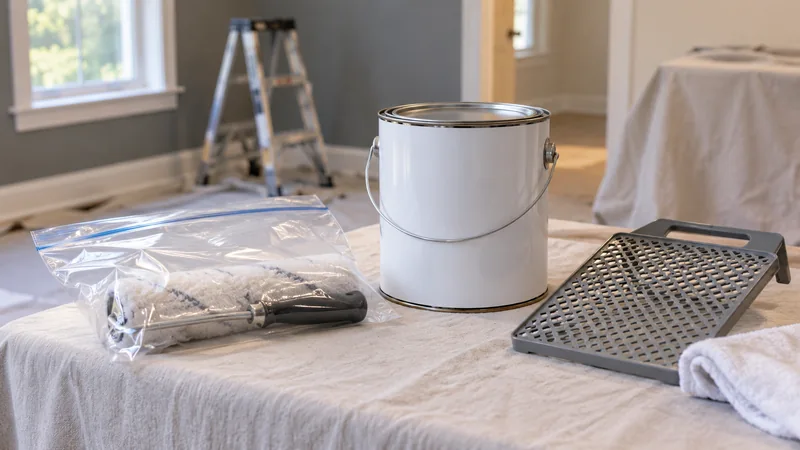
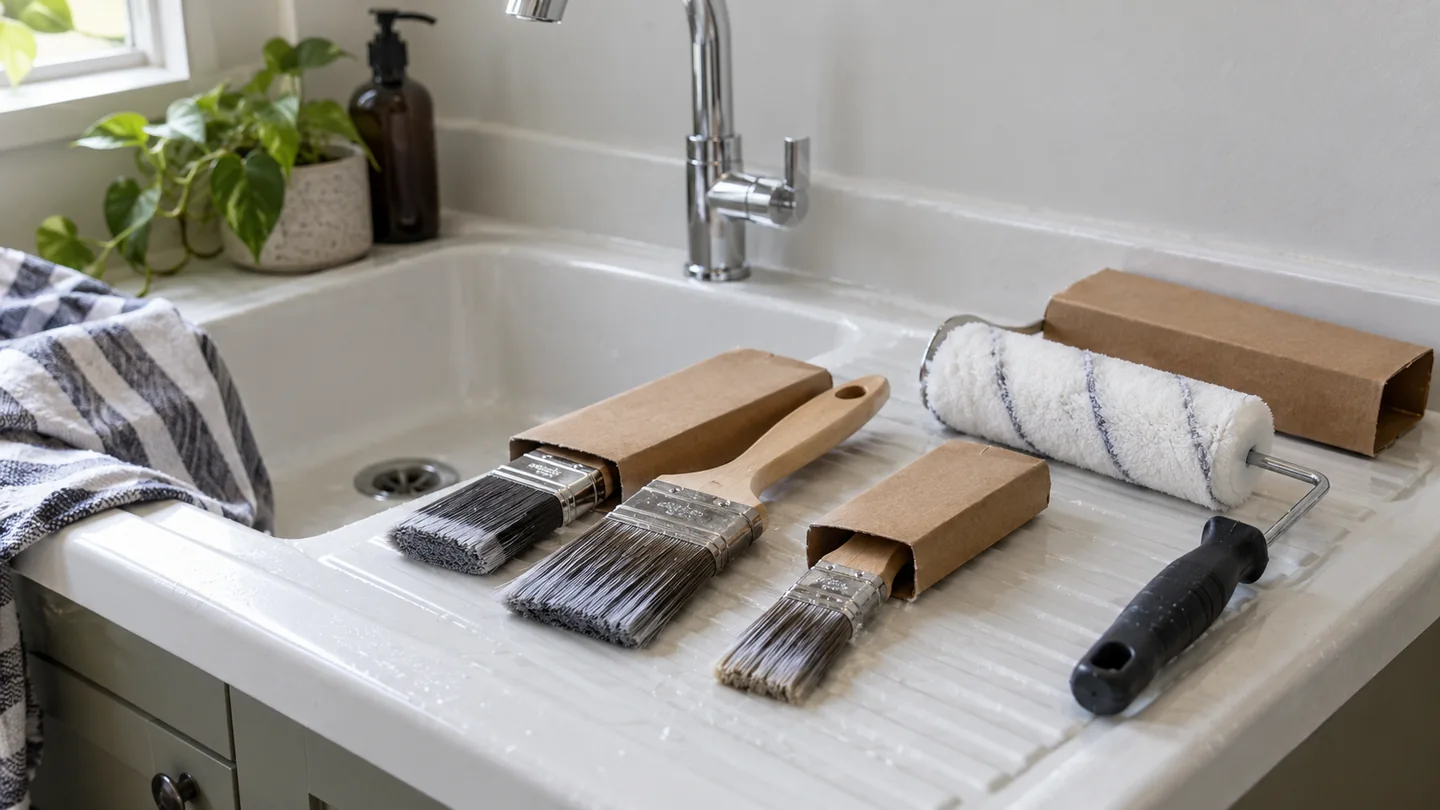
A brush left standing on its bristles can acquire a bend that interferes with cutting a clean edge. A roller stored pressed against a hard surface can develop a flattened area. Support tools so air can reach them and their working surfaces retain their intended shape. Follow the applicator maker's storage recommendations, including protective packaging where appropriate.
Do not seal a tool away while it contains unintended moisture or cleaner residue. That residue can affect the next coating and make storage conditions unpredictable. Keep clean equipment away from sanding supplies, loose hardware and dusty shelves. A protective brush keeper is useful only if the brush inside is clean and correctly shaped. Store the cover and frame so their condition can be inspected before the next project. The goal is to open the storage container and find a tool ready for a suitability check, rather than needing another cleanup before work can begin.
Purdy gives a specific storage example: clean brushes promptly, do not leave them soaking, keep the bristles in their protective keeper, and hang the brush by its handle hole or lay it flat. For washed roller sleeves, its guidance calls for removing excess water and drying the sleeve standing on its end. These instructions apply to the maker's tools; retain your own applicator instructions if they differ.
Use a practical keep-or-replace inspection
Reusable does not mean indefinitely usable. Compare the time and uncertainty of restoration with the importance of the next finish. A cover that performs adequately on rough exterior masonry may be a poor choice for a smooth interior wall. A brush with a slightly damaged edge may no longer give the control needed around stained wood or glass.
| Condition after cleaning | Practical response |
|---|---|
| Flexible, clean, even working surface | Store correctly and test before reuse |
| Hard paint at brush heel or roller ends | Use an approved recovery method or replace |
| Loose fibers or damaged bristles | Avoid critical finish work |
| Distorted core or poor frame rotation | Repair or replace the affected component |
Keep the standard tied to the work. Saving a low-cost cover is not economical if it risks contaminating a carefully prepared final coat.
Plan residue handling before opening the cleaner
Cleanup produces paint residue, contaminated liquid and sometimes solvent-bearing materials. Their handling depends on the coating, cleaner and local requirements. Do not assume a household sink, storm drain or ground disposal is acceptable. Read product labels and use the local waste authority's guidance for the actual materials involved.
Set up labeled containers before starting so different wastes are not mixed casually. Keep cleaning materials protected from ignition sources and other hazards identified on their labels. If a product specifies special handling for used rags or absorbents, follow it rather than leaving them in a pile with ordinary job trash. The same planning helps avoid accidental reuse of contaminated cleaner. A well-organized cleanup ends with tools that are fit for their next task and residues that remain identifiable. It should not transfer the mess from a brush into a drain, an unlabeled bottle or the next can of paint.
Questions & answers
Is clear rinse water proof that a brush is clean?
It is only one observation. Inspect the heel and gently check flexibility through the bristles, where hardened paint may remain despite a clear final rinse. Also remove unintended cleaning residue and dry the brush correctly before storing it for another coating system.
Can I save a roller that dried solid overnight?
Check whether the cover and coating manufacturers support a suitable restoration method. Even if some paint dissolves, the sleeve or core may be damaged. For a visible final coat, replacing an uncertain cover is often more reliable than relying on a partially recovered working surface.
Should brushes dry with the bristles pointing down?
Use a support and orientation recommended by the brush maker that avoids resting on or crushing the bristles. The key is preserving shape while allowing proper drying. Do not place a wet brush under other equipment or seal it into storage with unintended cleaner remaining.
Sources & further reading
- Purdy: Painting Tool FAQsClean immediately with the appropriate cleaner; remove residual coating and store brushes without bending their tips.
Reader discussions
These conversations describe problems people encountered. They do not establish the cause of a defect or replace product instructions and applicable requirements.