Painting Routed MDF Panels Without Fuzzy Grooves or Paint Buildup
Routed MDF exposes a more absorbent core than the factory face. Start with a cleanly machined profile, test a compatible sealing system on an offcut and smooth the sealed fibers without reshaping the groove. Apply controlled coats instead of trying to fill roughness with finish paint. If the board is swollen or the routing is torn, correct that condition before coating; another thick coat will usually make the profile less distinct.
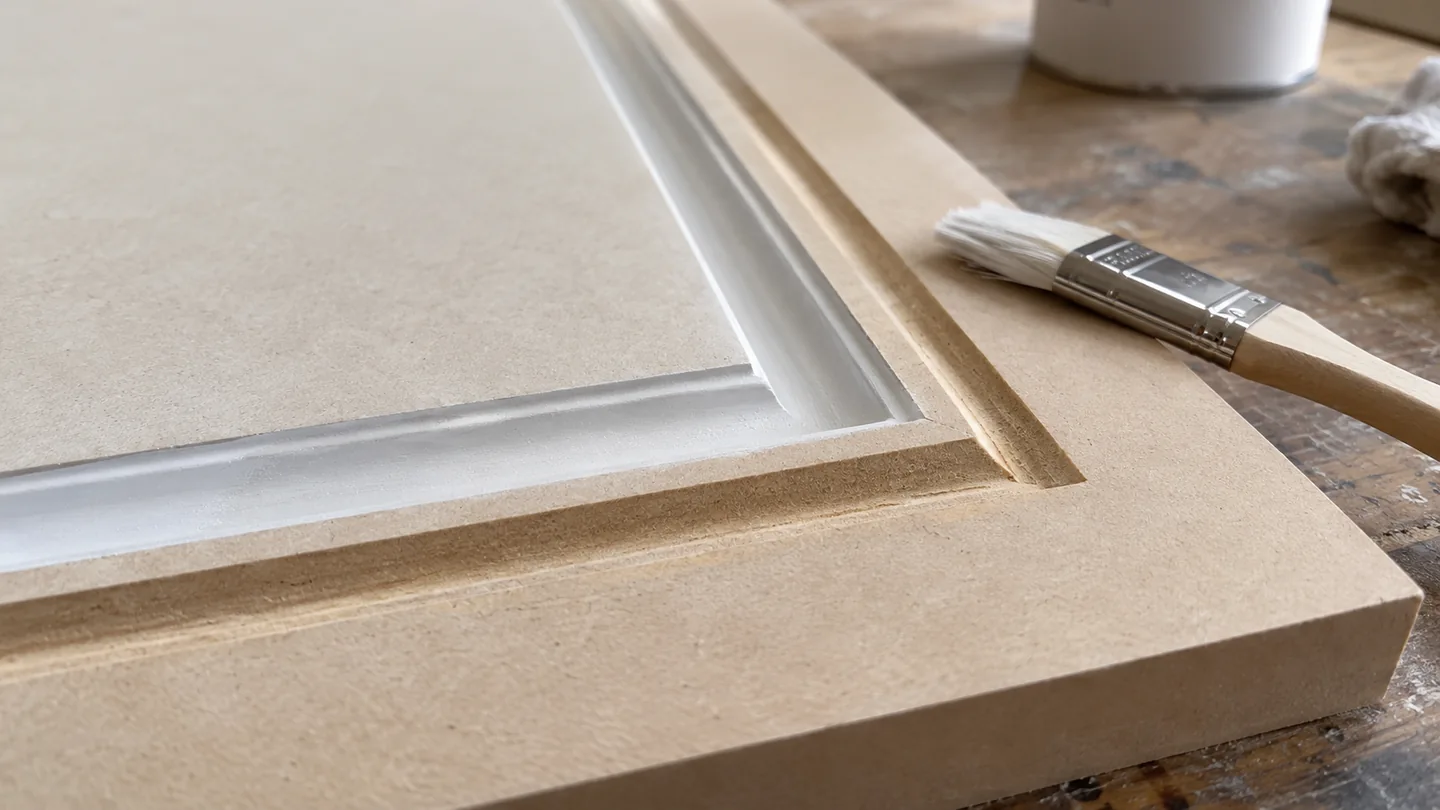
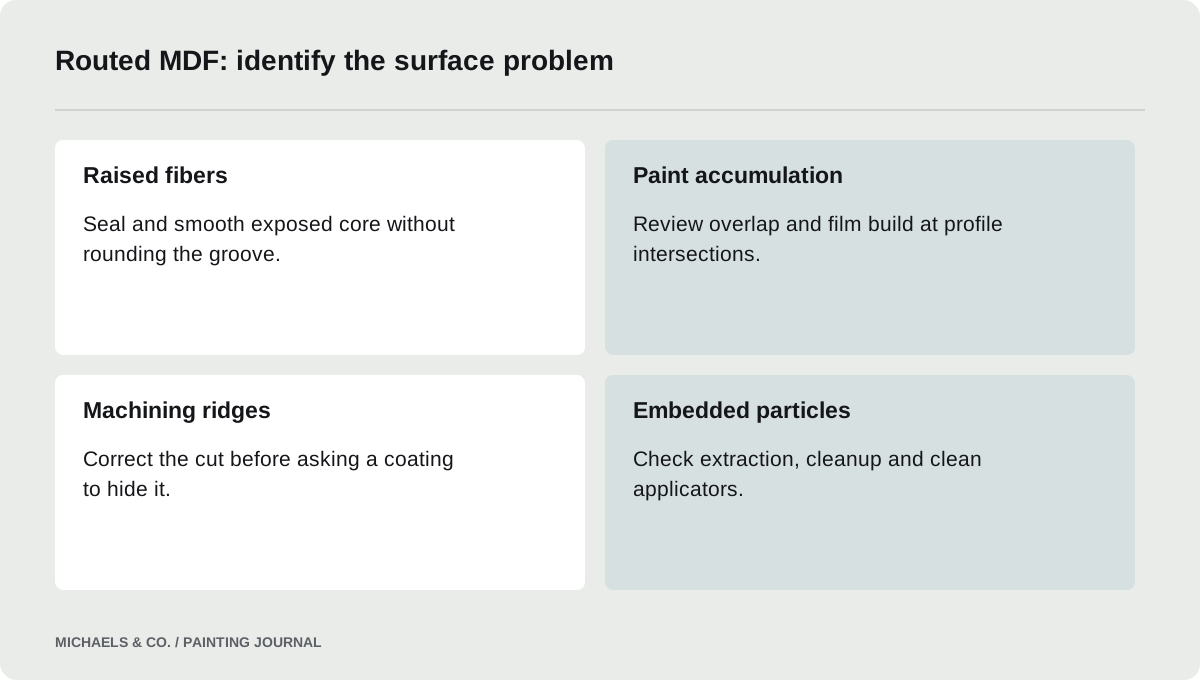
Find out whether the roughness is wood fiber or paint
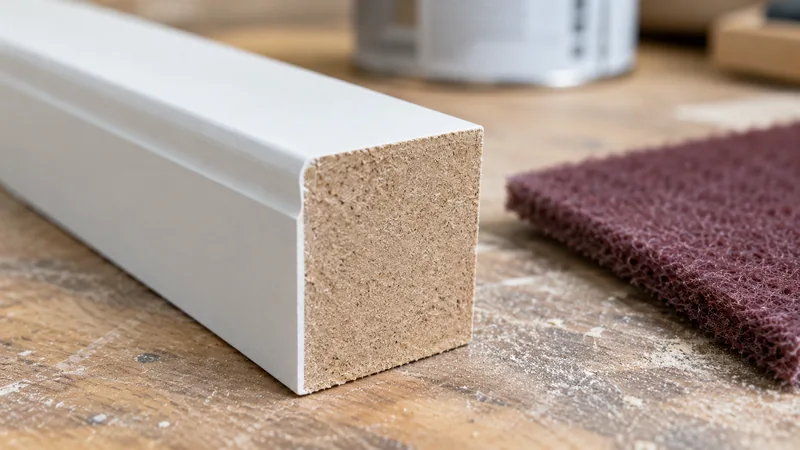
Look at the panel before choosing another primer. Soft-looking fibers that follow a routed groove suggest exposed MDF core. Repeated ridges at a regular spacing can come from machining. Rounded pools at the bottom of the profile point toward excessive coating, while isolated hard specks may be debris. These observations direct the next step; they are not interchangeable versions of poor coverage.
A Reddit question about globbing in routed MDF describes rough grooves after priming. The useful response begins by separating substrate texture from deposited material. Examine a spare uncoated piece beside the coated panel under the same light. If the defect exists in the bare board, adjusting topcoat application alone will not remove it. Photograph both pieces before sanding changes the evidence.
Choose the panel before choosing the primer
MDF grades do not all machine or tolerate moisture alike. A decorative indoor feature wall, cabinet door and panel beside a wet fixture create different demands. Confirm the board's identification and intended environment with the supplier. Sealing an unsuitable panel does not turn it into a different grade of building material.
MEDITE's PREMIER FAQs distinguish its dry-interior use from moisture-resistant and exterior products and discuss suitability for routed finishes. Those distinctions are useful examples, not approval for an unidentified sheet. Before machining an entire order, inspect the first panel's exposed core. If the finish requires unusually extensive filling, discuss the material and cutter setup with the joinery supplier. Improving the substrate may save more work than adding another coating operation to every groove.
Make the offcut reproduce the difficult geometry
A test on the flat back of a panel does not tell you how a deep groove will finish. Route an offcut with the same profile, including an intersection or tight corner if the design contains one. Use the same primer, application method and intended topcoat. Label the stages so an attractive final sample can actually be repeated.
Include the adjoining factory face in the sample. The aim is a consistent appearance across materials with different absorption, rather than a groove that looks good in isolation. Let each stage reach its specified sanding or recoating condition. Compare the sample in the lighting intended for the finished wall. Grazing light along repeated vertical grooves can reveal differences that a small handheld piece viewed straight on does not show.
Keep one portion of the offcut untreated as a reference. If the groove looks wider after preparation, compare it directly with that original section. This simple comparison helps distinguish smoother fibers from accidental removal of the intended profile.
Smooth fibers without erasing the profile
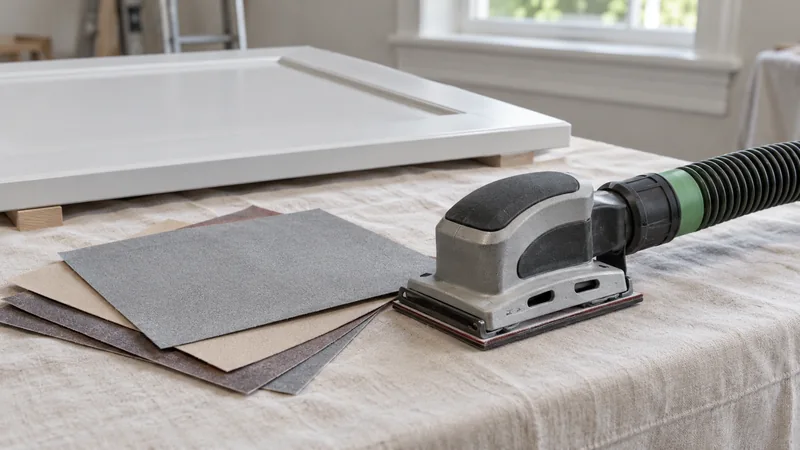
Use an abrasive and support that fit the shape. A flat block pushed across a narrow rounded channel can remove its high edges while leaving the bottom rough. A flexible abrasive can follow a contour, but finger pressure concentrated in one spot can still alter it. Work deliberately on the raised material rather than treating every pass as general sanding.
Check the profile frequently against an untouched offcut. If the groove becomes wider, corners become rounded or the pattern loses definition, stop and reassess the method. Sanding should prepare the surface, not redesign the panel. Arrange dust extraction appropriate to MDF and the tool, and follow the material's safety information. Keep dust out of adjacent wet work. A visibly smooth groove can still hold enough powder to contaminate the next coat.
Seal the core using a compatible system
Select a primer or sealer approved for the actual MDF and the planned finish. The role is to establish a suitable coated surface over exposed fibers; it is not to compensate for a swollen board or a poorly cut recess. Ask the coating supplier how its system handles routed edges, especially if a waterborne process is required.
Follow the specified application and sanding sequence on the sample before scaling up. Do not combine glue mixtures, fillers and primers from unrelated forum recipes without checking compatibility. A layer that feels hard after drying may still interfere with the next product. If exposed core continues to look rough, inspect whether the problem is raised fibers needing controlled smoothing, inadequate sealing or an unstable surface. Each requires a different response.
Keep coating out of the corners
A groove receives material from more than one direction when the adjoining faces are brushed or sprayed. Repeated passes can create a heavy bead at intersections even when the flat field appears normal. Plan the application sequence so edges and profiles receive the intended film rather than several accidental extra loads.
| What you see | What to change or investigate |
|---|---|
| Fuzzy but sharply defined groove | Sealing and controlled smoothing of exposed fibers |
| Rounded, filled-in corner | Excess material or repeated overlap |
| Regular tool ridges under paint | Machining quality before coating |
| Random hard particles | Dust, tool condition or contaminated paint |
Inspect the first finished section before completing a whole wall. Correcting the process early is easier than removing cured material from every narrow recess.
Judge the complete finish, not the primer color
Primer is a preparation layer, so its appearance alone may not predict the final sheen or color. Complete the intended finish on the test piece and inspect the transition from groove to face. Check for visible edges, uneven reflectance and loss of detail. A dark or reflective finish can make profile differences particularly noticeable.
Record the successful panel grade, primer, applicator and sequence with the approved sample. On a commercial feature wall, give the installer and painter access to the same reference. Agree who corrects machining defects and who handles coating defects before the panels arrive on site. This prevents the finisher from accepting responsibility for a geometry problem that cannot be repaired by painting without changing the design.
Questions & answers
Does moisture-resistant MDF eliminate the need to seal routed areas?
No. Moisture resistance is a property of the board, not a completed decorative finish or a guarantee against every wet exposure. The exposed core still needs a coating system suitable for the intended use. Identify the grade and follow its manufacturer’s requirements together with the coating instructions.
Should I fill every groove with high-build primer?
Only use a high-build product where the selected system calls for it and its film limits can be maintained. Deep decorative grooves are not cavities to fill indiscriminately. Excess material can round edges, collect in intersections and create more sanding than a controlled sealing process.
Can I sand the final paint until the MDF stops looking fuzzy?
First identify whether the fuzz is in the substrate or the coating. Sanding through the completed film can expose absorbent fibers again and restart the problem. Test a repair that addresses the affected layer, then rebuild the approved primer and finish sequence rather than repeatedly thinning the topcoat.
Sources & further reading
- MEDITE PREMIER: Manufacturer FAQsMDF grade and machining quality matter; interior-grade panels are for dry interiors and require compatible coating guidance.
- MEDITE MR: Manufacturer FAQsMoisture-resistant MDF is not waterproof or exterior grade; wet-area use requires full sealing and coating.
- Sherwin-Williams: Brush or Roller MarksWrong applicators, overworking, premature reworking and unsuitable film build can prevent leveling.
Reader discussions
These conversations describe problems people encountered. They do not establish the cause of a defect or replace product instructions and applicable requirements.