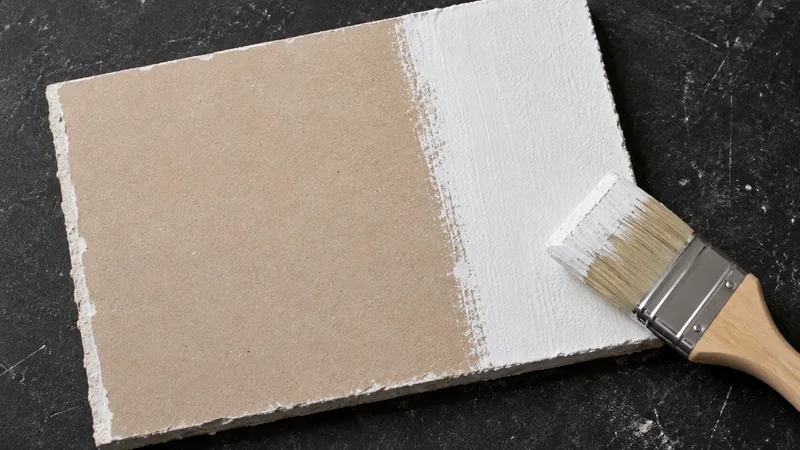
PVA or Acrylic Primer for New and Patched Drywall?
PVA drywall primer can be appropriate for clean new drywall when the exact product permits the planned finish. An acrylic primer may offer a broader substrate range, but acrylic is not a guarantee of bonding or stain blocking. For patched walls, identify both the porous repair and the surrounding existing coating. Choose a primer whose approved uses cover those conditions and the intended topcoat sheen.
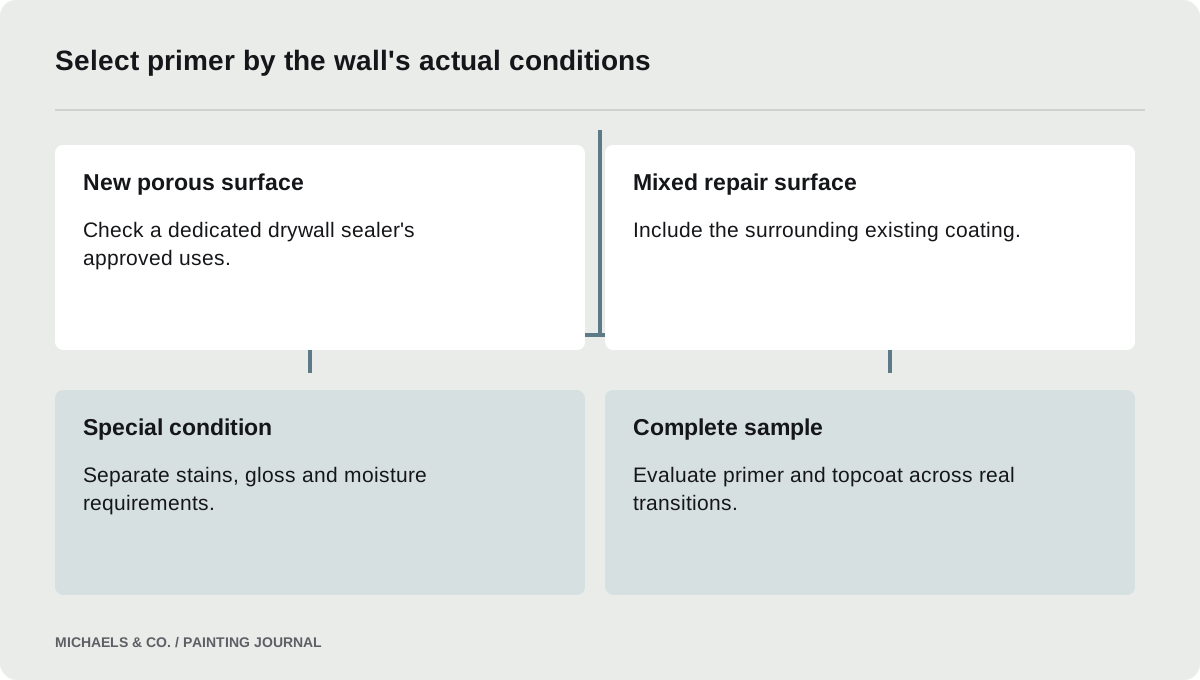
Start with the wall you have, not the resin label
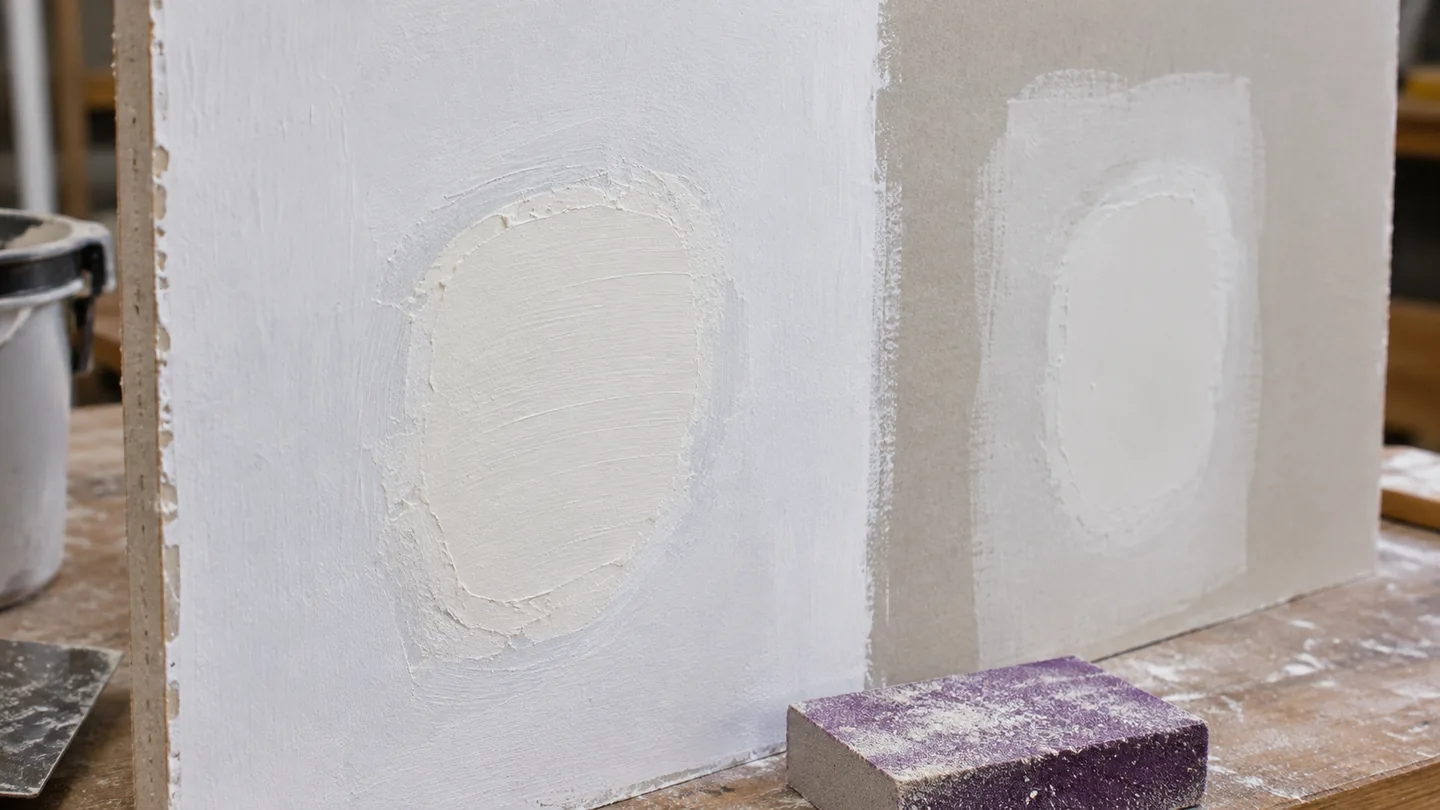
A new basement with uncoated board is different from a bedroom wall containing old satin paint and fresh patches. Both may be described casually as drywall, but the primer sees different surfaces. Map the bare paper, joint compound, sound old coating and any stains or contamination before comparing products.
A Reddit basement-remodel discussion about choosing drywall primer contains conflicting recommendations for PVA, multipurpose and stain-blocking products. The confusion comes partly from asking one category name to solve several possible jobs. Identify whether you need absorption control on new drywall, adhesion over an existing coating, stain blocking or a combination. PVA and acrylic describe aspects of formulation; the label's approved uses describe the job the product is intended to perform. A useful recommendation names the exact primer and explains why its limits fit the wall, rather than declaring one resin universally better.
Understand a specific PVA primer's useful boundary
The KILZ PVA drywall-primer page identifies new uncoated drywall as its intended use and limits that product to flat or low-sheen topcoats. It is not presented as a stain blocker or a primer for glossy surfaces. This is a concrete example of an economical product designed for a relatively specific task.
Those limits do not establish a universal rule for every primer containing PVA. Read the can and current technical sheet for the product actually available to you. Manufacturers can use similar names across revisions or markets, so match the product number. If your wall is ordinary new drywall and the planned finish fits the approved system, paying more for unrelated specialty functions may add little value. If the wall contains conditions outside those limits, the same low price can become a poor economy. Suitability comes before category loyalty.
Ask what a broader acrylic primer actually adds
An acrylic drywall primer may list more surfaces or repaint uses than a basic new-drywall sealer. The BEHR Drywall Plus product page describes a 100% acrylic product for certain uncoated and previously painted interior surfaces in low-moisture settings. That broader description still includes preparation requirements and sheen limitations.
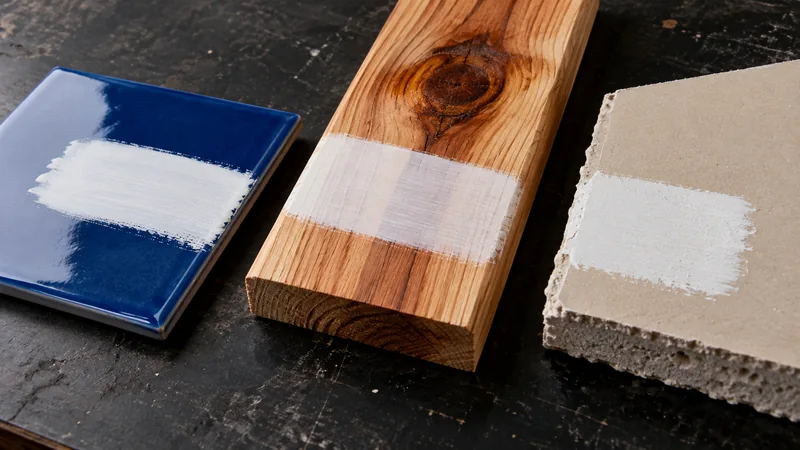
Do not translate acrylic into universal adhesion. A sound painted wall, slick laminate, stained wood and bare masonry remain different substrates. Similarly, a primer that seals joint compound is not automatically the right product for water stains. Check the specific use table and exclusions. If older product literature and the current page disagree, resolve the exact can and technical sheet with the manufacturer rather than choosing whichever statement allows the desired shortcut. The comparison should be between two identified products for one identified project, not between broad chemistry words detached from application instructions.
Handle patches and surrounding paint as a combined system
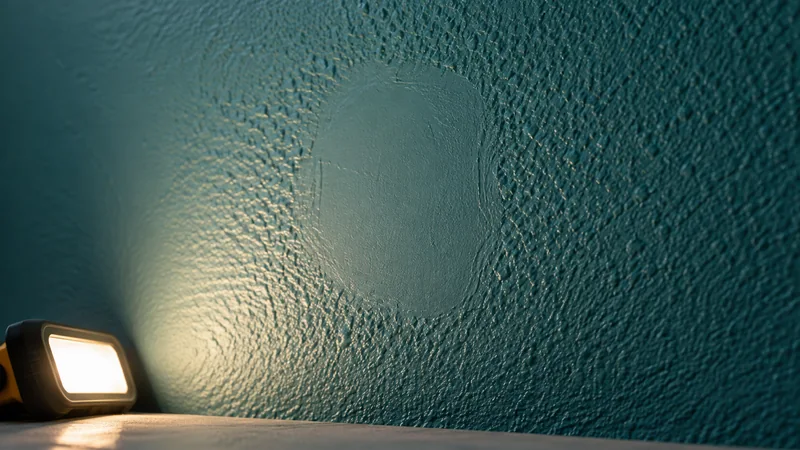
A patch usually has at least two relevant characteristics: its physical texture and its absorption. Primer can help with the latter, while sanding and finishing determine the former. A smooth sealed patch can still show if its texture differs from the surrounding rolled wall. Conversely, a well-shaped patch can stand out if the finish absorbs differently.
Identify the existing coating's condition and sheen before selecting spot primer. If the primer is approved only for new uncoated drywall, do not casually spread it across a glossy painted area. A broader compatible primer may be appropriate for mixed surfaces, or the system may call for treating separate areas differently. The size and distribution of repairs also matter. Many patches across one strongly lit wall may justify a more unified preparation plan than a single small repair. Decide the scope before topcoating rather than trying to hide each patch with increasingly heavy finish paint.
Estimate primer from labeled coverage and real area
Measure the wall and ceiling areas included in the priming scope, then use the selected product's coverage range as an estimate. Porosity and texture influence consumption, so do not plan every job at the most optimistic number. Check whether the estimate includes only one specified primer coat or another required application.
For example, a hypothetical 1,200-square-foot priming area at 300 square feet per gallon requires four gallons for that coat before accounting for job-specific waste or reserve. This is arithmetic, not a recommended spread rate for every primer. Use the actual label value for your product. If consumption is dramatically lower than expected, investigate whether the material is being stretched too thin rather than celebrating the saving. If it is much higher, check substrate absorption, application losses and the measured area. Coverage is a planning and quality-control clue, not merely a shopping calculation.
Use a decision table to narrow the purchase
Bring a short substrate description to the supplier. Include the topcoat product and sheen, whether the wall is new or repainted and whether moisture or stains are present. This makes the choice more precise than asking for the best primer.
| Observed condition | Primer function to verify |
|---|---|
| Clean new board and compound | Approved drywall sealing under the selected sheen |
| Patches across sound painted walls | Compatibility with both porous and coated areas |
| Glossy existing finish | Required cleaning, deglossing and adhesion system |
| Water or tannin staining | Cause correction and suitable stain blocking |
| Damp or unstable material | Repair and drying before primer selection |
A primer that solves one row may not solve another. Some projects need targeted specialty treatment followed by a broader wall system, rather than one product performing every task equally well.
Test and inspect before committing the finish coats
Apply the selected system to a representative area containing the wall's actual transitions. Follow preparation, coverage and drying requirements. Inspect the primed surface for loose material, missed areas and physical defects before the finish goes on. Then evaluate the complete dried sample under the room's lighting.
Keep the primer and finish product numbers in the project record. If the result is unsatisfactory, those details allow useful technical advice instead of a vague discussion about whether PVA is bad. Do not keep switching primer categories over successive test layers without understanding what remains underneath. A clean comparison uses known preparation and a defined system. Once the sample works, maintain the same method across the planned area. The right primer is the one whose approved function fits the surface and topcoat, applied at the proper stage and build, rather than the product with the broadest marketing description.
Questions & answers
Is acrylic primer always better than PVA?
No. A suitable PVA product may be entirely appropriate for its intended new-drywall application. Acrylic products can offer different or broader uses, but the specific label controls. Compare the actual substrate, finish sheen and required functions instead of treating resin type as a universal quality ranking.
Can I use drywall primer over an old satin wall?
Only if the exact primer approves that coated surface and its preparation requirements are met. Some basic drywall primers are intended for new uncoated board and exclude glossy surfaces. Identify the existing coating and select a compatible system rather than relying on the wall's drywall construction.
Must every patch receive a whole-wall primer coat?
Not automatically. The repair size, distribution, existing coating, lighting and selected system influence the scope. Spot priming may suit some repairs, while widespread mixed porosity may call for a more unified approach. A representative finish sample helps determine whether the planned treatment is adequate.
Sources & further reading
- KILZ PVA Drywall PrimerThis specific PVA primer is intended for uncoated drywall under flat or low-sheen finishes, not stains or glossy substrates.
- BEHR Drywall Plus Primer and SealerThis acrylic primer lists new and previously painted interior substrates, with preparation and finish-sheen limits.
Reader discussions
These conversations describe problems people encountered. They do not establish the cause of a defect or replace product instructions and applicable requirements.