A Painting Warranty Was Denied: Separate Coating Failure, Substrate Problems, and Exclusions
A denied painting warranty claim should be evaluated against the written warranty and evidence of the failure's cause. Identify who issued the warranty, what it covers, what exclusions apply and how claims must be reported. Document where and when the coating failed, then request a written assessment and repair proposal. Contractor workmanship coverage and a manufacturer's product warranty are separate; neither should be assumed to cover every substrate, moisture or impact problem.
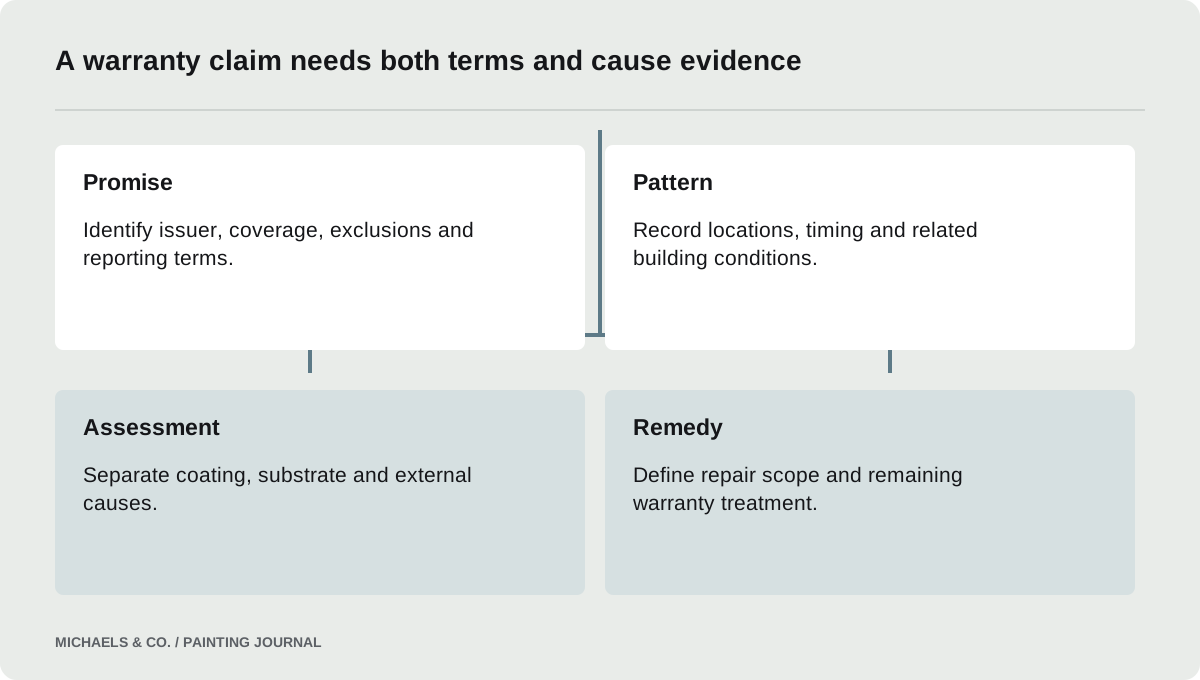
Identify the promise and the party behind it
Find the actual warranty document, not only the sales statement that the job comes with several years of protection. Identify the business issuing it, the covered surfaces, reporting procedure, time period and stated remedy. Keep the original painting scope and product schedule with it.
A contractor's workmanship warranty addresses the promise that contractor made. A manufacturer's product warranty has its own terms and claimant requirements. Do not assume that a “lifetime” product label means the painter must provide unlimited labor or that the manufacturer pays to redo every failed project. Request the relevant current terms if they were not supplied. The first task is to understand the promise being invoked, so the claim is sent to the right party with the information that promise requires.
Document the pattern, not just the worst spot
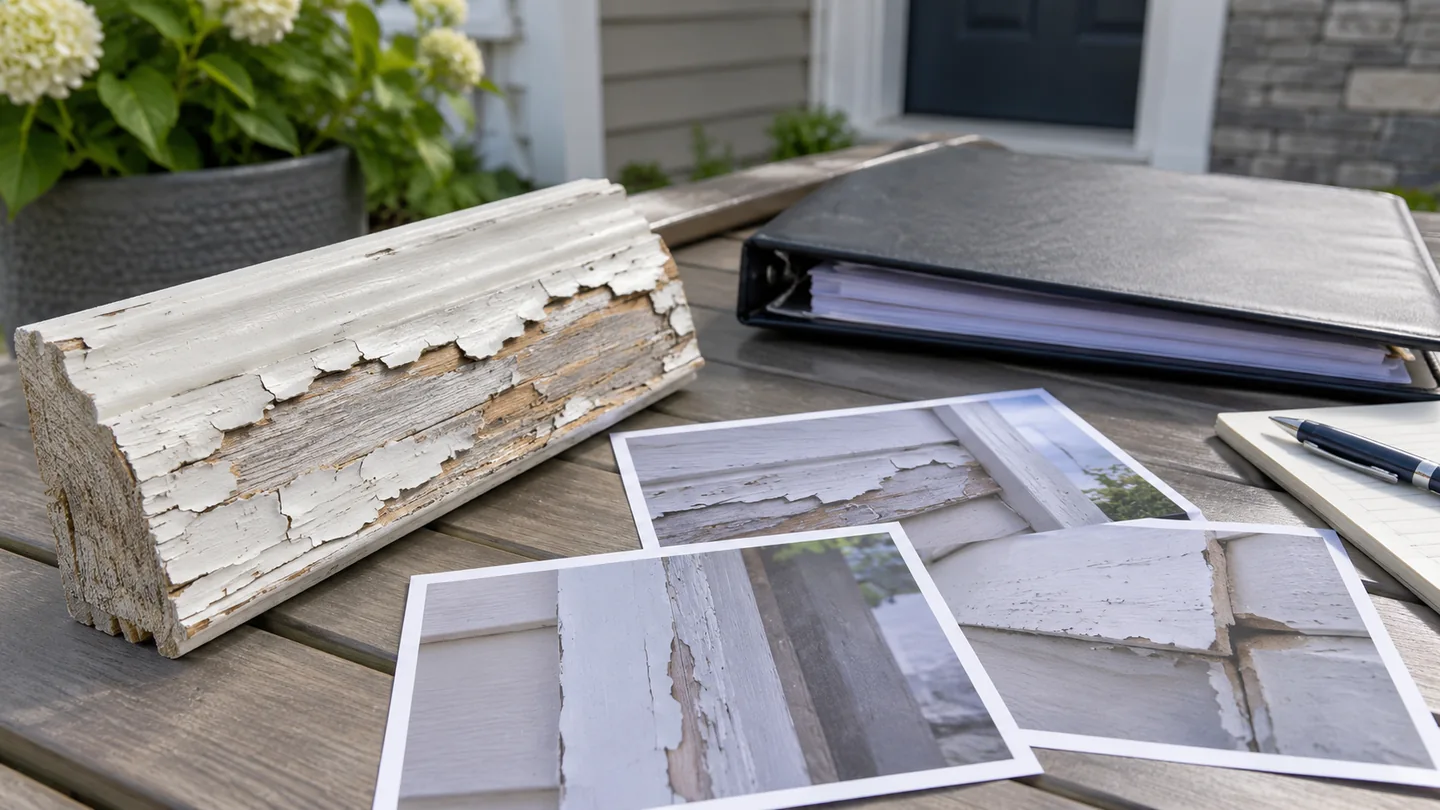
Photograph both close details and the wider distribution of peeling, blistering, cracking or discoloration. Record the first observation date, affected materials and any recent event such as a leak, impact or storm. Note whether similar surfaces elsewhere remain sound.
In a homeowner's warranty dispute, the painter attributed siding-edge damage to hail while the owner questioned that explanation. The post does not establish the cause. A pattern record is more useful than assuming that the presence or absence of another damaged component proves the answer. Preserve representative conditions for inspection and avoid removing loose material merely to demonstrate how easily it comes off, especially where older coatings may present hazards.
Separate coating failure from failure beneath it
Fresh paint depends on the condition of the surface and earlier layers. A visible failure may involve the new coating, an older coating, substrate deterioration, moisture or a combination. The remedy should address the failing part of the system rather than simply cover the exposed area.
Ask the contractor to explain what they believe failed and what evidence supports that conclusion. Product-specific preparation and application information can help assess the proposed explanation. An example manufacturer data sheet demonstrates why actual product instructions matter, but it cannot diagnose a different coating or substrate remotely. If the cause remains disputed, a qualified independent assessment may be worthwhile before either party commits to a large repair.
Read exclusions against the facts
A warranty may exclude damage caused by water intrusion, impact, chemicals or pre-existing substrate conditions. The existence of an exclusion does not prove that it caused this failure. Conversely, early failure does not automatically prove poor workmanship. Ask the party relying on an exclusion to connect it to observed evidence.
A painter's warranty discussion illustrates the range of issues a written warranty can address. It is not an industry-wide standard and should not be substituted for your document. Review the exact language, any related scope exclusions and the project's condition record. If an exclusion or limitation is legally disputed, obtain advice appropriate to the agreement rather than asking an inspector to decide its enforceability.
Request a repair proposal that addresses the cause
A useful proposal identifies the affected surfaces, required preparation, materials, correction extent and expected result. It should explain any work that belongs to another trade, such as repairing a leak or replacing damaged material, before painting resumes.
| Repair question | Why it matters |
|---|---|
| What failed? | The visible layer may not be the root problem. |
| What must change? | Repeating the same process may repeat the failure. |
| What area is restored? | A small patch may not restore the agreed appearance. |
| What remains covered? | Repair and remaining warranty terms should be clear. |
Do not accept repeated cosmetic patching as a complete answer when the failure returns and no cause assessment is documented.
Evaluate repeated repairs and settlement offers carefully
A homeowner's account of repeated exterior failures describes unsuccessful warranty visits followed by a proposed partial settlement. The reported amounts and opinions are not a guide to what another claim is worth. The important question is what work is actually needed and what the offer would resolve.
Obtain an itemized independent repair estimate where appropriate. Separate necessary correction from upgrades or unrelated maintenance. Before signing a release, understand whether it ends future claims and whether the proposed payment is enough for the agreed resolution. Preserve evidence before another contractor removes the coating. A quick settlement can be practical, but only if its scope and consequences are understood rather than inferred from a short email.
Keep the warranty process separate from payment pressure
The contractor may be concerned about being blamed for building defects, while the owner may feel that paying for a warranty should prevent further argument. Neither concern replaces the evidence. Keep communications focused on inspection, cause, remedy and the written terms.
For covered Massachusetts HIC projects, state contract guidance includes express-warranty information, but applicability depends on the actual work. Other consumer or contractual rights require their own assessment. Do not assume a denied express warranty ends every possible remedy, or that a particular dispute process is available to every painting customer. Prepare the documents and seek appropriate advice if the parties cannot agree on the claim's treatment.
Create a record that supports the final decision
Keep a chronology of notices, inspections, proposed repairs, access offered and work performed. Save photographs before and after each visit. If the contractor declines the claim, ask for the reason in writing. If the claim is accepted, record the correction date and any conditions that must be resolved first.
After repair, retain the final product information and maintenance instructions. Note whether the warranty continues under its original terms or an agreed revision. The FTC's general consumer guidance reinforces the value of clear records, but the outcome remains fact specific. A well-supported claim makes it easier to distinguish an excluded event, a valid workmanship concern and an unresolved technical question without relying on the loudest opinion in an online discussion.
Questions & answers
Does peeling within a year prove that the painter did poor work?
No. Early failure warrants investigation, but its cause may involve preparation, application, earlier coatings, moisture or the substrate. Document the pattern and request a cause assessment tied to the actual system. The timing is relevant evidence, not a complete diagnosis or automatic warranty decision.
Is the paint manufacturer's warranty the same as the painter's warranty?
No. They are promises from different parties with different terms, reporting requirements and remedies. Obtain both documents if they are being relied on. Do not assume that product replacement includes labor or that a contractor's workmanship promise covers every building-related cause of coating failure.
Should I let another painter repair the failure immediately?
Preserve the condition and notify the original contractor under the applicable process before nonurgent alteration. A replacement assessment may be useful, but removing evidence can complicate the dispute. Urgent property protection should be handled appropriately and documented. Review any contractual consequences before committing to replacement work.
Sources & further reading
- Massachusetts home improvement contract sample languageCovered HIC contracts require detailed scope, materials, dates and payment terms; applicability must be checked.
- FTC: How to avoid a home improvement scamFTC consumer guidance favors written scope and documented payments and identifies pressure and advance-payment warning signs.
- Sherwin-Williams Emerald Interior Satin product dataExample manufacturer instructions specify recoat time and film build under stated conditions; use the actual selected product's current sheet.
Reader discussions
These conversations describe problems people encountered. They do not establish the cause of a defect or replace product instructions and applicable requirements.