A Cedar Deck Is Peeling: Is the Wood, the Coating or the Preparation at Fault?
A cedar deck can peel because of weak existing coating, excessive buildup, moisture, unsuitable preparation or a system that does not fit the surface and service. The wood species alone does not identify the cause. Compare exposed and protected areas, inspect the failed layers and assess the wood before selecting removal or recoating. Use the actual product guidance and a representative repair sample rather than a blanket oil-versus-latex rule.
Identify what is actually on the deck
Recover the product label, invoices or information from the previous owner. Determine whether the surface received paint, solid stain, a more transparent finish or several different products over time. Record which information is verified and which is only a guess.
The owner in this Reddit discussion was told that cedar oil repelled latex and wanted to know whether that explained peeling. The thread documents the uncertainty, not a confirmed incompatibility. A deck described casually as painted may have a solid stain, and the system beneath the visible layer may be the weak point. Recommending a replacement product before understanding that history can leave the original failure buried under another coating.
Map where the coating fails
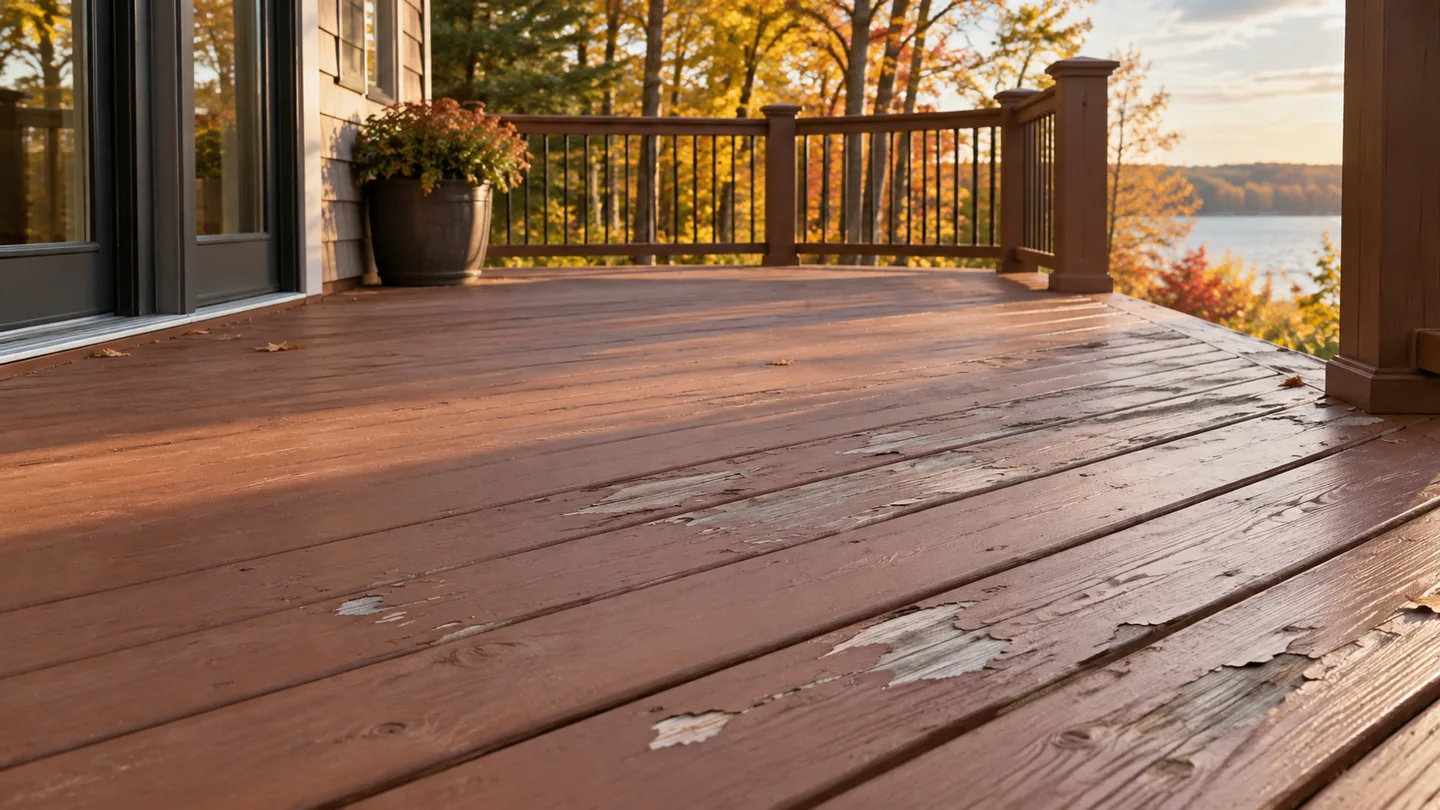
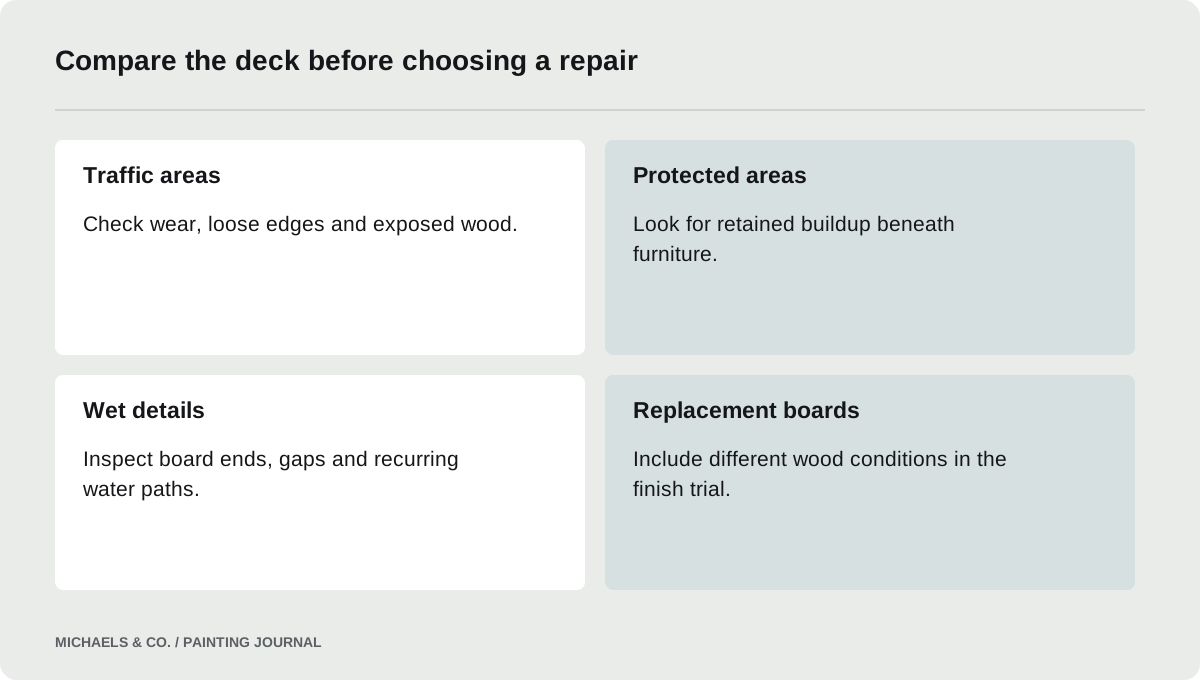
Compare walking areas, board ends, gaps, shaded sections and places beneath furniture. Note whether rails and vertical surfaces remain sound while the horizontal deck peels. Record locations that hold debris or stay wet longer after ordinary weather.
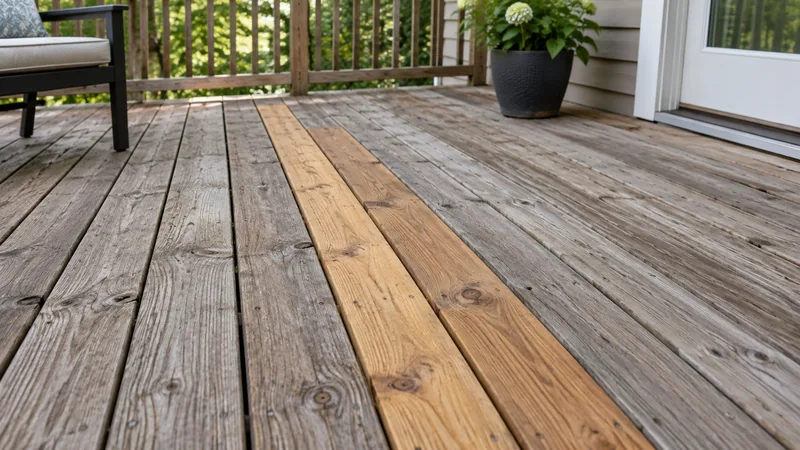
This map helps define the service conditions rather than prove one cause. A failure near standing moisture deserves a different investigation from an isolated patch over an old repair. Do not assume every board needs the same treatment without inspecting the pattern. Include photographs of intact areas as comparisons; they can help show whether exposure, coating thickness or substrate condition differs across the deck.
- Map peeling on walking paths, board ends, shaded sections, and areas beneath furniture to see whether wear and moisture exposure follow different patterns.
- Check accessible boards for softness, splitting, trapped debris, and drainage restrictions before treating the failure as a coating problem that sanding alone will solve.
- Record the previous coating type if known and whether the proposed replacement requires bare wood or permits sound existing material to remain under it.
- Agree on a representative prepared area that includes both failed and retained finish, then evaluate the replacement system using its actual application and drying directions.
Inspect the failed layer and wood condition
Examine detached coating and the surface below it. Does the new layer release from an older finish, or does the entire film come away with weak wood fibers attached? Look for soft spots, splintering and deterioration that may require material repair or replacement.
Cabot: How to Stain advises assessing the current wood and removing unsound coating or weathered surface material before staining. The preparation extent should follow those conditions. A deck can look ready after loose flakes are brushed away while weak edges remain around them. Conversely, a few isolated failures do not automatically justify a promise to strip every sound board to bare wood without considering the selected system.
Investigate moisture paths and recurring wetting
Check drainage, board gaps, nearby irrigation and details that concentrate water. Consider both the visible face and accessible underside conditions. A horizontal deck experiences different exposure from protected siding, so an exterior wall coating recommendation cannot be transferred automatically.
Correct building or drainage problems that repeatedly wet the same area before expecting a new finish to last. Do not describe paint as a substitute for sound wood and appropriate water management. Where the structure or concealed material is questionable, have it assessed separately from the coating estimate. The finish repair should begin after the deck is suitable to retain, not be used to hide deterioration until the next maintenance season.
Check whether too much finish accumulated
More coating is not always more protection for a deck system. Cabot: How to Stain explains that excessive application of penetrating finishes can leave material on the surface and contribute to peeling or tackiness. Review the product's application guidance and the history of repeated recoats.
Do not infer overapplication solely from an opaque color. Some products are intended to form an opaque finish, while others depend on penetration. The correct question is whether the actual system was applied and maintained as intended. A repeated full recoat over protected areas that had not weathered may create different conditions from worn traffic areas, which is another reason to map the deck rather than treat it as uniform.
Define the removal method and its limits
Compare local preparation, broader removal and board replacement based on the condition and desired finish. A transparent appearance after an opaque coating may require much more removal than another compatible opaque system. Test the achievable result before promising a uniformly natural-looking deck.
Use a method appropriate to the existing coating and wood, with applicable lead precautions for older or unknown paint. Aggressive washing, grinding or stripping can damage the surface and complicate the next coating. The proposal should explain protection, cleanup and how remaining material will be assessed. Choosing a removal method is part of the repair design, not merely selecting the fastest tool available.
Test the replacement system on representative boards
Include an exposed board, a previously protected area and any replacement wood in the trial where practical. Prepare each as specified, apply the intended system and allow the required conditions before evaluation. Assess both appearance and whether the surface is ready for service.
Follow the actual product instructions for application amount, recoat sequence and drying. Do not add a universal moisture percentage or waiting calendar borrowed from another finish. Ask the manufacturer when the retained coating or mixed wood condition creates uncertainty. A sample cannot promise a particular lifespan, but it can reveal an obvious compatibility or appearance problem before the entire deck is committed.
Set a maintenance plan around condition
At completion, record products, preparation areas, replaced boards and any accepted variation. Agree on how the deck will be inspected and cleaned using the selected system's guidance. Focus future recoating on the product's maintenance requirements and observed condition rather than adding finish automatically every calendar year.
Watch the details associated with the original failure, including wet board ends, debris traps and protected areas with heavy buildup. If peeling returns, photograph it before removing the evidence and compare the failed layer with the original record. That provides a better basis for correction than repeating the same cedar-versus-latex explanation regardless of what the coating and wood are actually doing.
Questions & answers
Is oil-based stain automatically safer on cedar?
No category guarantees success on an unknown existing finish. Compatibility, preparation, application and exposure matter. Identify the old system and follow the proposed product instructions. A change to oil-based material does not restore adhesion in an older layer that is already peeling.
Can I paint over the firmly attached parts?
Possibly, if the retained coating is sound and compatible with the selected system. Inspect its edges and representative protected areas, not only the obvious flakes. The manufacturer guidance and a test repair should support the decision about how much existing material can remain.
Why are the railings fine while the deck boards peel?
Vertical and horizontal surfaces experience different traffic, water exposure and weathering. They may also have different application histories. Compare those conditions before deciding on the repair. A sound railing does not establish that the same preparation and maintenance approach suits the walking surface.
Sources & further reading
- Cabot: How to StainExisting coating, wood readiness and sample appearance matter; excessive stain application can leave a sticky film or cause peeling.
Reader discussions
These conversations describe problems people encountered. They do not establish the cause of a defect or replace product instructions and applicable requirements.