Commercial Painting Punch Lists: Separate Defects from Damage by Other Trades
A commercial painting punch list should distinguish incomplete contracted work, defects requiring correction and damage caused after an area was finished. Photograph room conditions, number the items and agree on correction scope and dates. Payment and additional-work decisions should follow the actual contract. Neither an unlimited callback expectation nor a blanket declaration that all touchups are a courtesy provides a reliable way to close a project.
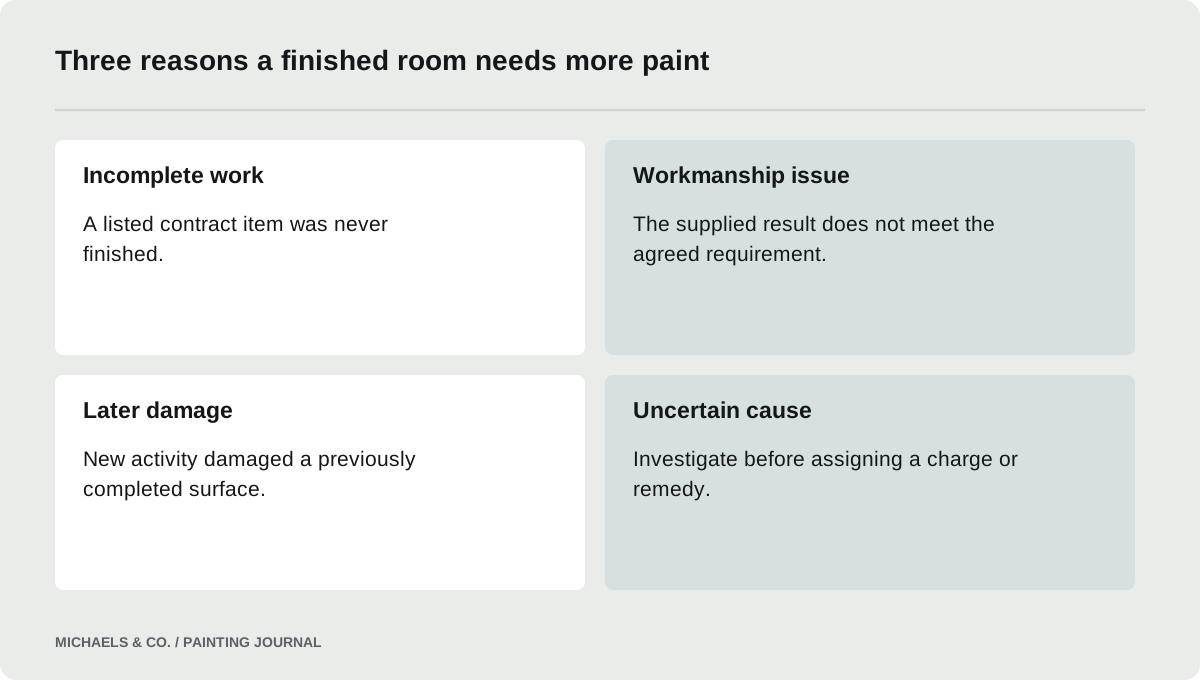
Classify the item before discussing its price
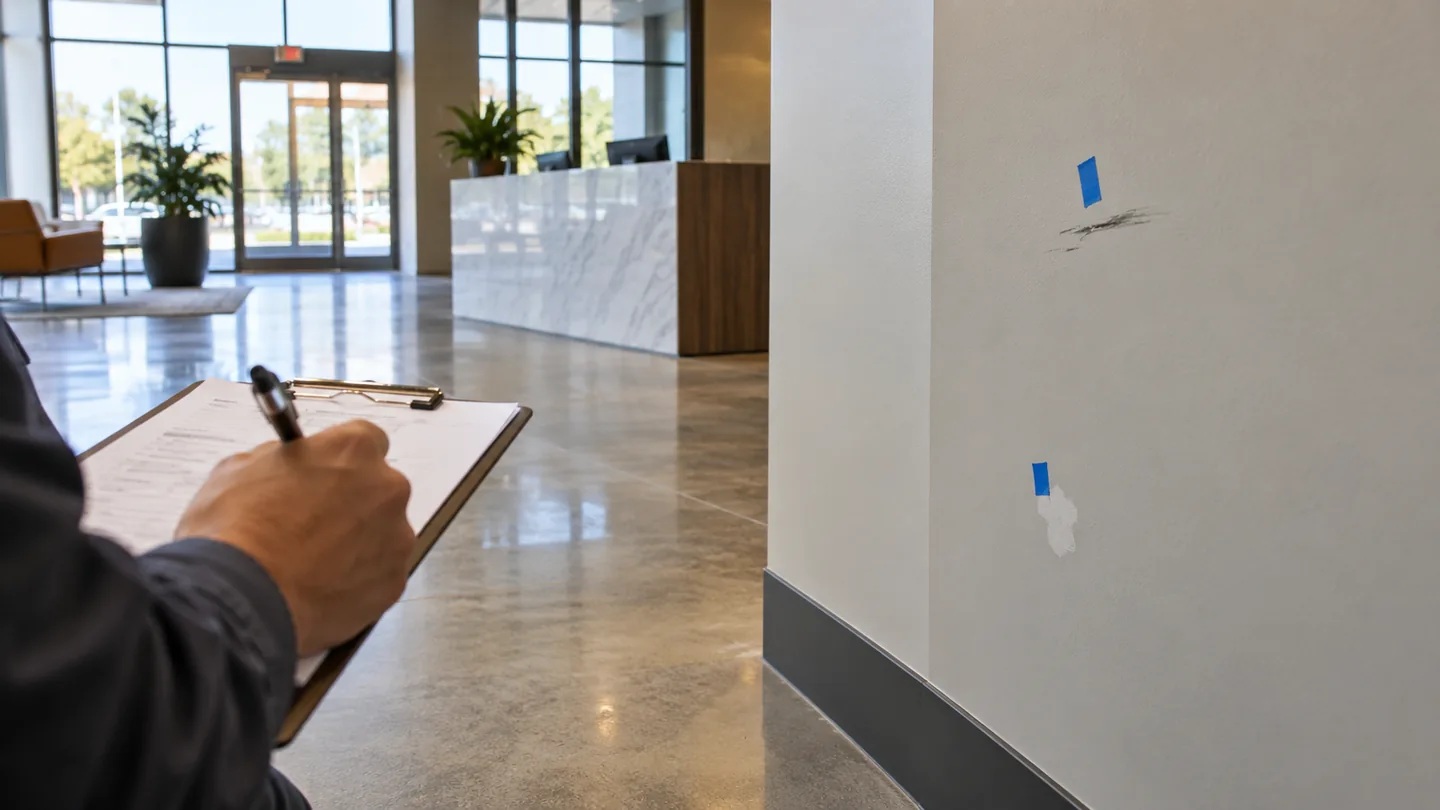
The word touchup can describe several different things. A missed section of trim is incomplete work. A coating defect may require correction. A fresh gouge from equipment installation may be new damage. Those categories can have different cost and schedule consequences, even when each eventually requires paint.
A commercial finishing discussion shows painters and drywall contractors struggling with repeated return visits and responsibility for later damage. The useful lesson is to classify each item by facts rather than by the label used in an email. Ask when it appeared, what the accepted scope required and whether intervening work occurred. Where cause remains uncertain, mark it for investigation instead of assigning a charge immediately.
Create a room record before other trades return
Photographs of completed rooms can help establish the baseline, especially where installers, movers or other trades will continue working. Capture enough context to identify the wall and include close views of relevant details. Record the date and the status of the room: fully accepted, awaiting inspection or complete except for listed items.
Do not present photographs as proof that nothing could have been wrong. Lighting, camera angle and inaccessible areas limit what they show. Their value is greatest when combined with walkthrough notes and a documented access sequence. Ask the general contractor to coordinate later work so that responsibility does not depend on guesswork. A simple room-release log can prevent a dispute over whether a scratch existed before the furniture installation.
Write corrections that describe an outcome
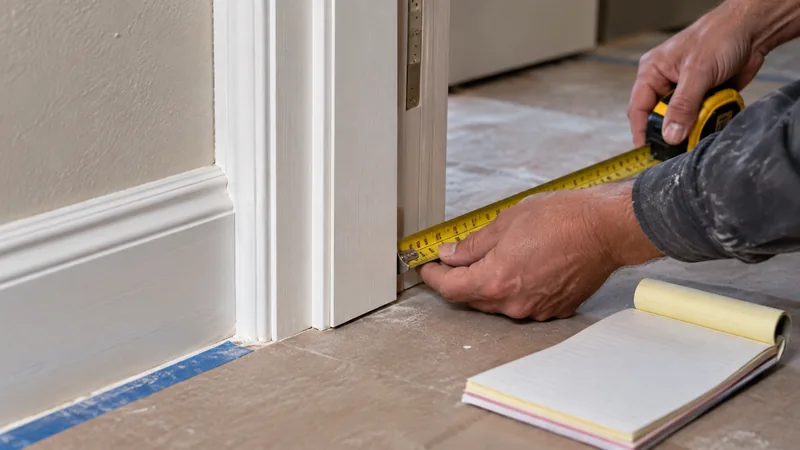
“Fix paint” gives the crew little direction and leaves the owner unable to verify completion. Describe the location, observable condition and required result. If the remedy itself is uncertain, ask for an assessment rather than prescribing an unsupported method.
- Give each item a number and room location.
- Attach a photograph with surrounding context.
- Identify the relevant contract surface or finish requirement.
- Classify the item or mark the cause as unresolved.
- Record the proposed correction and responsible party.
- Set a completion date and verification step.
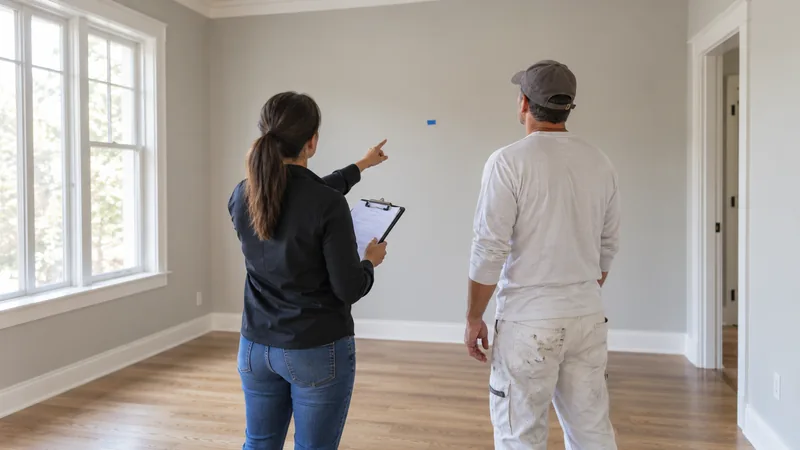
Keep the list understandable to someone who did not attend the original walkthrough. That matters when a different crew performs the corrections. A detailed list reduces repeated mobilizations caused by discovering that the contractor interpreted the requested result differently.
Agree how inspection conditions affect acceptance
Paint appearance changes with lighting, sheen and viewing angle. Use the project's actual acceptance requirements and any approved sample. Do not introduce a demanding new inspection method at closeout without explaining how it relates to the specification, and do not dismiss a defect simply because it is inconvenient to see.
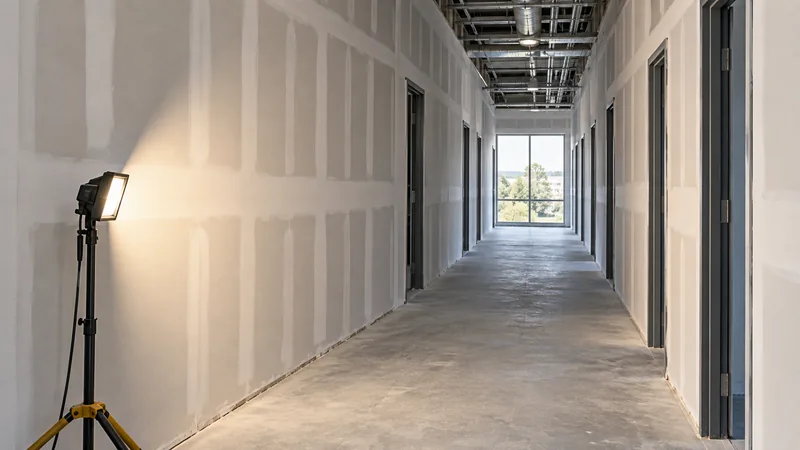
If the project incorporates a trade standard, identify the current document and relevant provision rather than quoting an assumed viewing distance from memory. Record whether permanent lighting is installed and which areas remain obstructed. A final inspection cannot meaningfully assess a wall hidden behind stacked materials. Schedule access for those areas and state whether their acceptance is deferred. The inspection process should be fair to both the purchaser and the contractor while remaining tied to what was contracted.
Distinguish localized correction from wider repainting
A small defect does not always produce a small visible repair. Differences in texture, sheen, product history or application can make a localized patch noticeable. Ask the contractor to explain the proposed correction extent and how it will meet the agreed appearance requirement.
Avoid universal promises that every touchup will blend or that every mark requires an entire wall. Evaluate the actual coating, surface and result. If a trial correction is useful, agree on its location and acceptance before repeating it throughout the building. Record additional preparation or coating needed to restore the finish. The question is whether the specified result is achieved, not whether the contractor used the smallest possible area or the owner requested the largest conceivable remedy.
Separate additional work from original obligations
When a later trade damages an accepted wall, the owner or general contractor may need to authorize a new repair. Define the area, method, access and price before the painter returns where possible. A pre-agreed unit price or allowance can help, but only if it describes a repeatable scope.
Do not back-charge another trade solely because that trade was last seen in the room. Preserve the evidence and follow the project's procedure for notifying the responsible party. Likewise, calling an original defect additional work does not make it so. Review the baseline documents and inspection record. Clear classification protects the owner's budget while giving contractors a reasonable way to price repairs that fall outside their original responsibility.
Read payment and punch-list clauses together
A clause stating that final payment is due at substantial completion may interact with separate correction obligations, retainage provisions or statutory rules. The project administrator should review those terms as a whole. The painter and owner should not invent a new payment rule in the field.
A homeowner's contract discussion questions language making punch-list work a courtesy after payment. It illustrates the concern, not a commercial legal standard. Massachusetts HIC contract guidance applies to covered residential work and should not be transferred automatically to commercial projects. If payment is disputed, obtain advice appropriate to the agreement rather than assuming that withholding everything or demanding everything is always justified.
Close the list without erasing later rights
Record each correction as completed, rejected with a reason or deferred under an agreed plan. Have the appropriate representatives verify the result. Preserve the original item and completion date so the project history remains clear rather than replacing the list with an unexplained “all done.”
A closed punch list and a warranty address different questions. Closing listed corrections does not necessarily decide how a later coating failure will be handled. State where the warranty documents and final product records are stored, and identify the reporting contact. For commercial work, good closeout is a usable package: accepted areas, remaining exceptions, maintenance information and a documented route for future issues. That is more durable than a hurried signature obtained while equipment is still being moved through the rooms.
Questions & answers
Can the painter charge for damage caused by another trade?
Potentially, if it is outside the original scope and the project agreement supports the charge. Document the completed condition, the new damage and the proposed repair before authorizing additional work. Do not assume the cause from timing alone; unresolved responsibility should be investigated through the project's established process.
Does every paint touchup require a full-wall repaint?
No universal rule applies. Some localized corrections may be acceptable, while others remain visible because of sheen, texture or application differences. Evaluate the actual surface and specified result. A trial correction can help establish the appropriate scope before a larger repair is authorized.
Should the punch list include damage discovered after the walkthrough?
Record it, but classify it rather than automatically accepting or rejecting it. It could be an original defect that was not observable, new damage or another condition. Keep the earlier inspection record, note intervening activity and follow the contract's notification and correction procedures.
Sources & further reading
- Massachusetts home improvement contract sample languageCovered HIC contracts require detailed scope, materials, dates and payment terms; applicability must be checked.
Reader discussions
These conversations describe problems people encountered. They do not establish the cause of a defect or replace product instructions and applicable requirements.