Drywall-to-Paint Handoffs: Preventing the 'You Accepted the Wall' Dispute
A drywall-to-paint handoff should record the substrate condition, the agreed finish and any visible exceptions before primer obscures the evidence. The painter and drywall contractor need a shared inspection process, not an assumption that touching the wall transfers every future problem. Define who corrects defects, who pays for resulting recoating and how damage by later trades is handled. Contract clauses matter, but they do not establish a universal rule for all projects.
Identify the finish the project actually requires
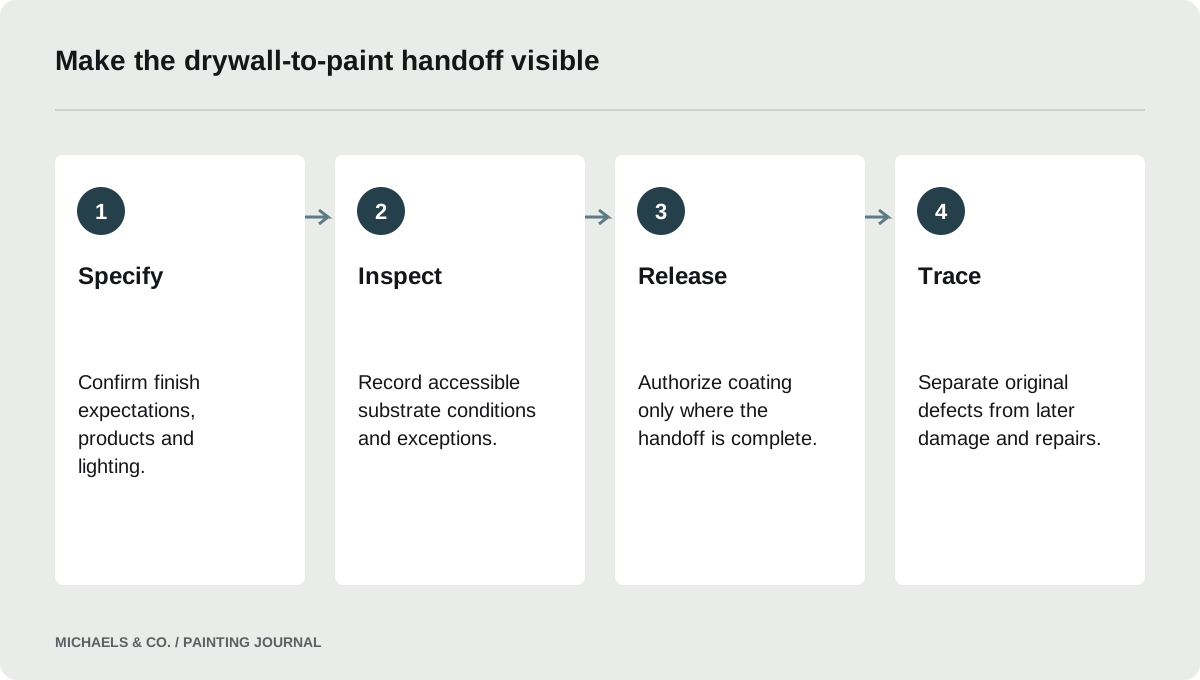
A handoff is difficult when the owner expects a visually uniform wall but the documents specify only a vaguely described drywall finish. Review the plans, specifications, accepted samples and intended lighting together. Clarify whether the painting scope includes any further surface improvement or only coating a prepared substrate.
A commercial drywall contractor's discussion describes a clause treating painting as acceptance of the wall and asks how repeated touchups should be handled. That is evidence of a contractual concern, not proof that such a clause applies everywhere. The practical response is to establish what can reasonably be observed at the handoff and record exceptions. Ask the project administrator to reconcile conflicting documents before either trade proceeds on an incompatible assumption.
Inspect before primer changes the record
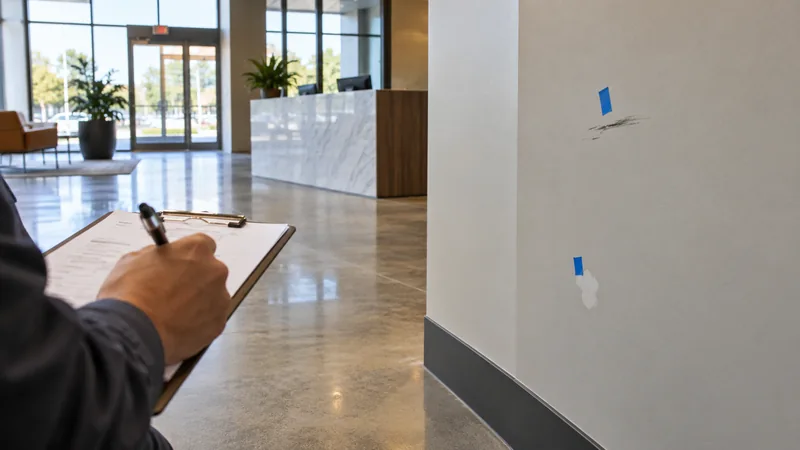
Arrange a walkthrough while the relevant surfaces remain accessible. Identify visible ridges, damaged corners, inconsistent texture, poorly completed patches and contamination. Describe the condition and location without immediately assigning blame. A room number, wall orientation and photograph make the record more useful than a broad statement that the drywall looks rough.
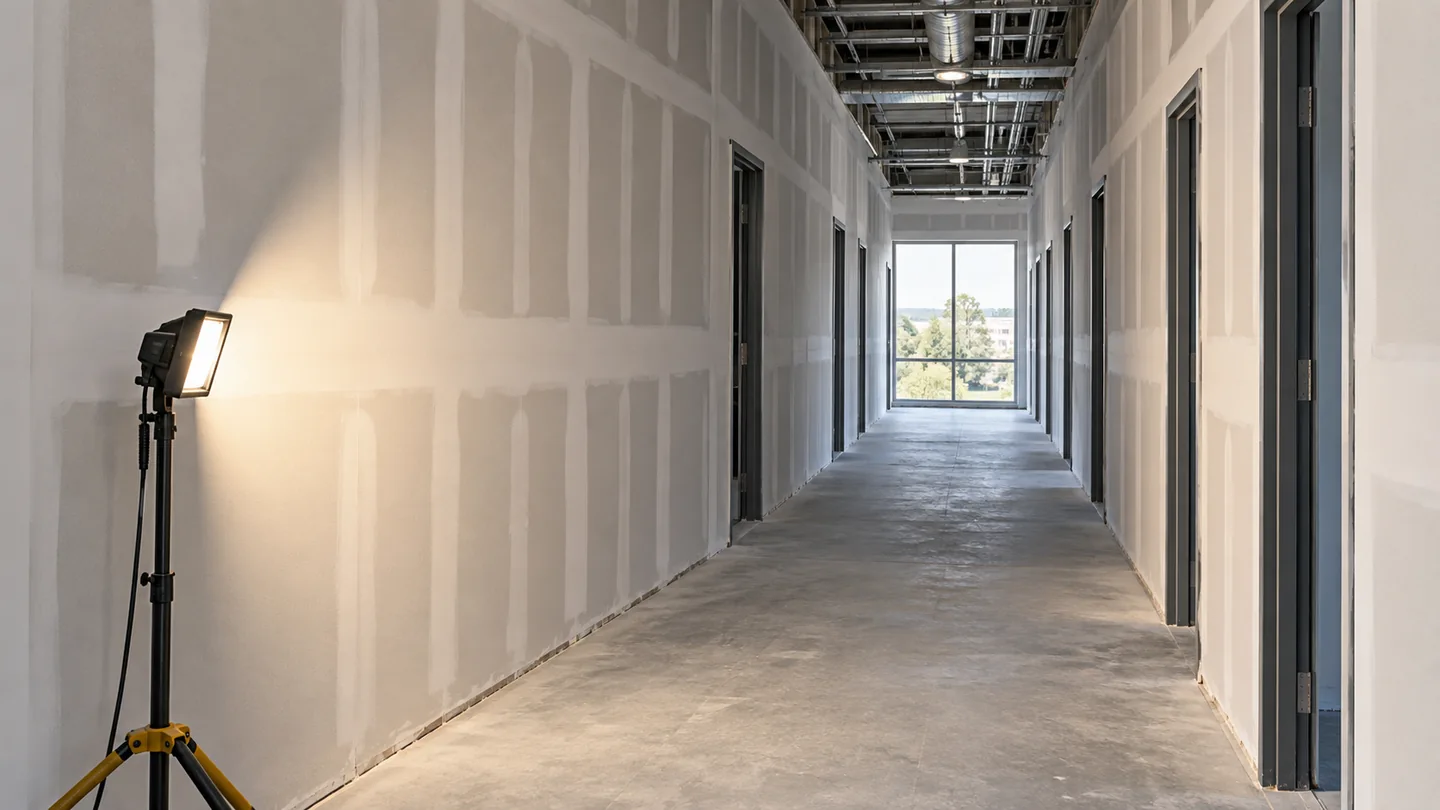
Inspection should occur under the conditions agreed for the project. If permanent lighting is not yet installed, record what lighting was available and whether another review is required. Do not invent a universal viewing distance or a mandatory flashlight test. A particular trade standard may be incorporated into the contract, but it needs to be identified and applied correctly. The handoff should capture the basis of acceptance, including its limitations.
Separate substrate defects from coating defects
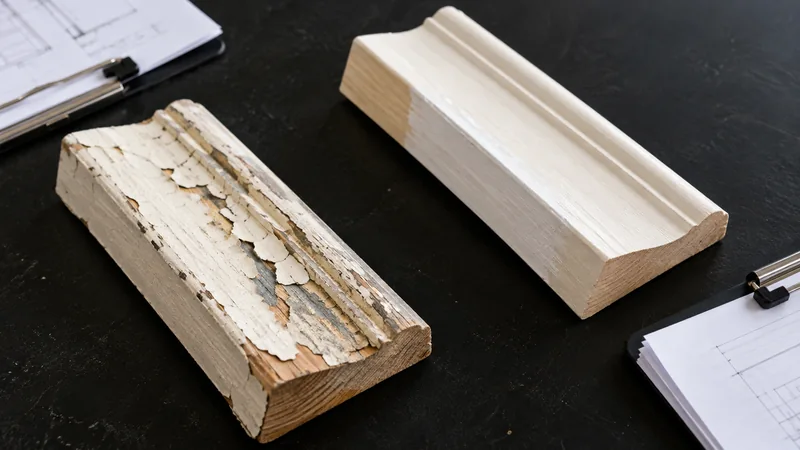
A visible line after painting may come from a joint, a patch edge, application overlap or another cause. The appearance alone does not establish which trade must correct it. Record when the condition was first observed and compare it with the pre-paint photographs.
Ask the relevant parties to inspect together before one trade removes the evidence. A limited sample correction can sometimes help establish the necessary scope, provided it is agreed and safe for the substrate. The actual coating's instructions also matter: preparation and compatibility requirements cannot be replaced by a general statement that the wall was accepted. The manufacturer data for an example wall coating illustrates why the specified product should have its own preparation and application review.
Use a sample area to resolve expensive assumptions
Where appearance expectations are demanding or the substrate varies, an agreed sample area can reveal the result before the entire project is coated. Specify its location, preparation, primer, finish product and lighting. Include a representative repaired area if that is where uncertainty lies.
A sample should answer a defined question. Is the existing texture acceptable? Does the selected sheen expose defects the owner wants corrected? Is additional preparation included or a priced change? Record who approves the sample and what that approval means. It should not become an unqualified waiver for hidden conditions or different work elsewhere. Keep photographs and the written decision with the project documents so a later supervisor can reproduce the accepted process rather than guessing from memory.
Document later access and new damage
Once a room is painted, electricians, installers, furniture movers or other workers may still need access. Record the accepted condition before that activity where practical. Identify the date and scope of later work, particularly when equipment or materials will be moved close to finished walls.
New scratches, holes or stains should be listed separately from incomplete painting. This distinction helps the owner obtain corrections without paying twice for the same original obligation, and helps the painter avoid absorbing unrelated damage. Avoid treating every late complaint as new damage, however. A defect may only become apparent under the completed lighting or after an item is moved. Use the condition record and inspection history to investigate rather than relying on a blanket time cutoff.
Resolve acceptance language before it is tested
If the contract says starting paint constitutes substrate acceptance, ask how that clause interacts with inaccessible areas, concealed conditions, later lighting and defects not reasonably visible beforehand. Have the responsible contract professional clarify its effect. The painting supervisor should understand the operational process even if they are not the person interpreting the legal language.
For covered Massachusetts residential HIC work, state contract guidance emphasizes a detailed work and material description. Commercial subcontract obligations are a separate matter. On either type of project, a written exception list is more useful than a dispute after all surfaces are finished. Do not rely on a generic trade custom to fill a gap that the parties could resolve explicitly before work.
Close the handoff with an auditable record
The final handoff should identify inspected areas, accepted sample conditions, outstanding defects and the people responsible for each next step. Record whether the painter may proceed everywhere or only in released rooms. Keep that distinction visible on the current project schedule.
At completion, compare the finish with the agreed scope and approved sample where applicable. Record corrections without erasing the earlier history. A clear sequence helps answer whether a later issue was present at handoff, resulted from painting or arose during subsequent work. The purpose is not to create a file that blames another trade automatically. It is to preserve enough shared evidence that the owner can obtain an appropriate remedy and the trades can price and perform their actual responsibilities.
Questions & answers
Does applying primer mean the painter accepted every drywall defect?
That depends on the contract and the circumstances. A clause may assign responsibilities, but its meaning should be reviewed against the actual scope and what was observable. Use a documented pre-paint inspection and exception list rather than assuming that starting work automatically settles every later question about the substrate.
Should the drywall contractor pay to repaint a repaired patch?
The answer depends on the cause, the contract and the agreed correction scope. A repair may require more than coating the small patched area to restore the specified finish. Establish the investigation and full restoration sequence before work begins, and document who has authorized the associated cost.
What if the permanent lights reveal defects after painting?
Record the lighting available during the original inspection and compare the result with the project specification and any accepted sample. Different lighting can reveal a condition that was not previously evident, but that does not automatically assign responsibility. Arrange a joint review and agree on the appropriate correction.
Sources & further reading
- Massachusetts home improvement contract sample languageCovered HIC contracts require detailed scope, materials, dates and payment terms; applicability must be checked.
- Sherwin-Williams Emerald Interior Satin product dataExample manufacturer instructions specify recoat time and film build under stated conditions; use the actual selected product's current sheet.
Reader discussions
These conversations describe problems people encountered. They do not establish the cause of a defect or replace product instructions and applicable requirements.