Garage Floor Paint Blisters When It Gets Wet: Diagnose Before Applying Another Coating
Garage-floor blistering after wetting can involve the coating's exposure limits, moisture moving through the slab, contamination or inadequate surface preparation. Map where failure occurs and identify the existing system before selecting a replacement. The absence of tire damage does not rule out other problems. Use the proposed coating's required assessment and preparation methods, then test a representative repair before reopening the floor to service.
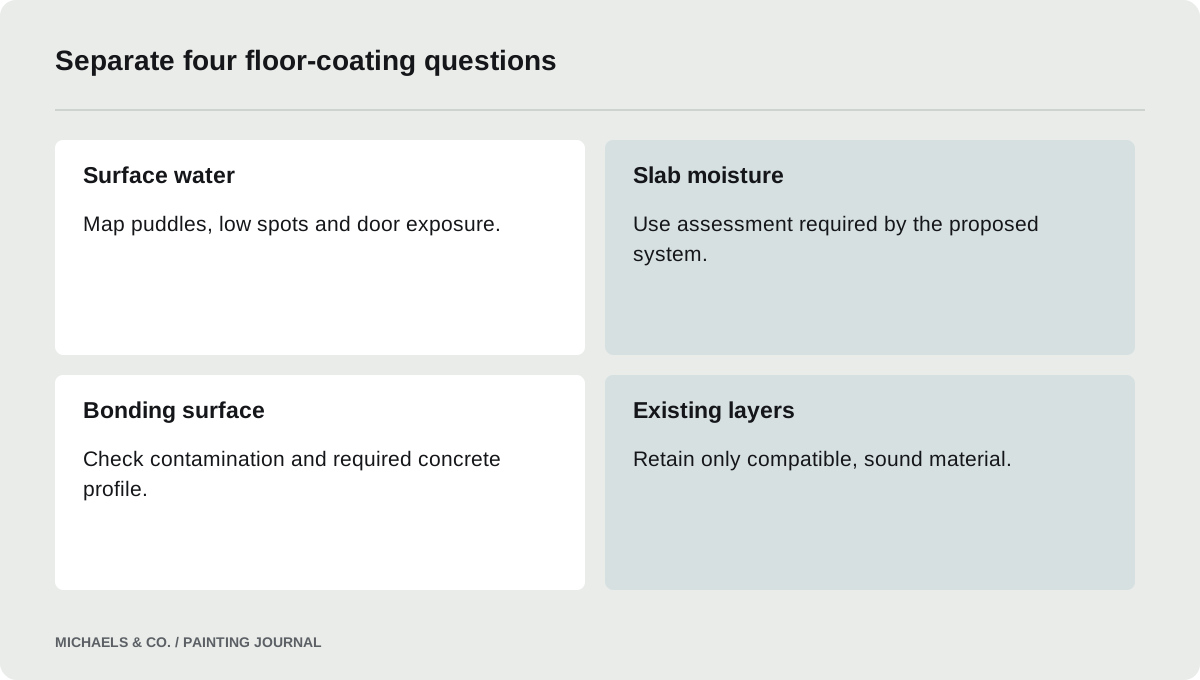
Map wet areas and intact areas separately
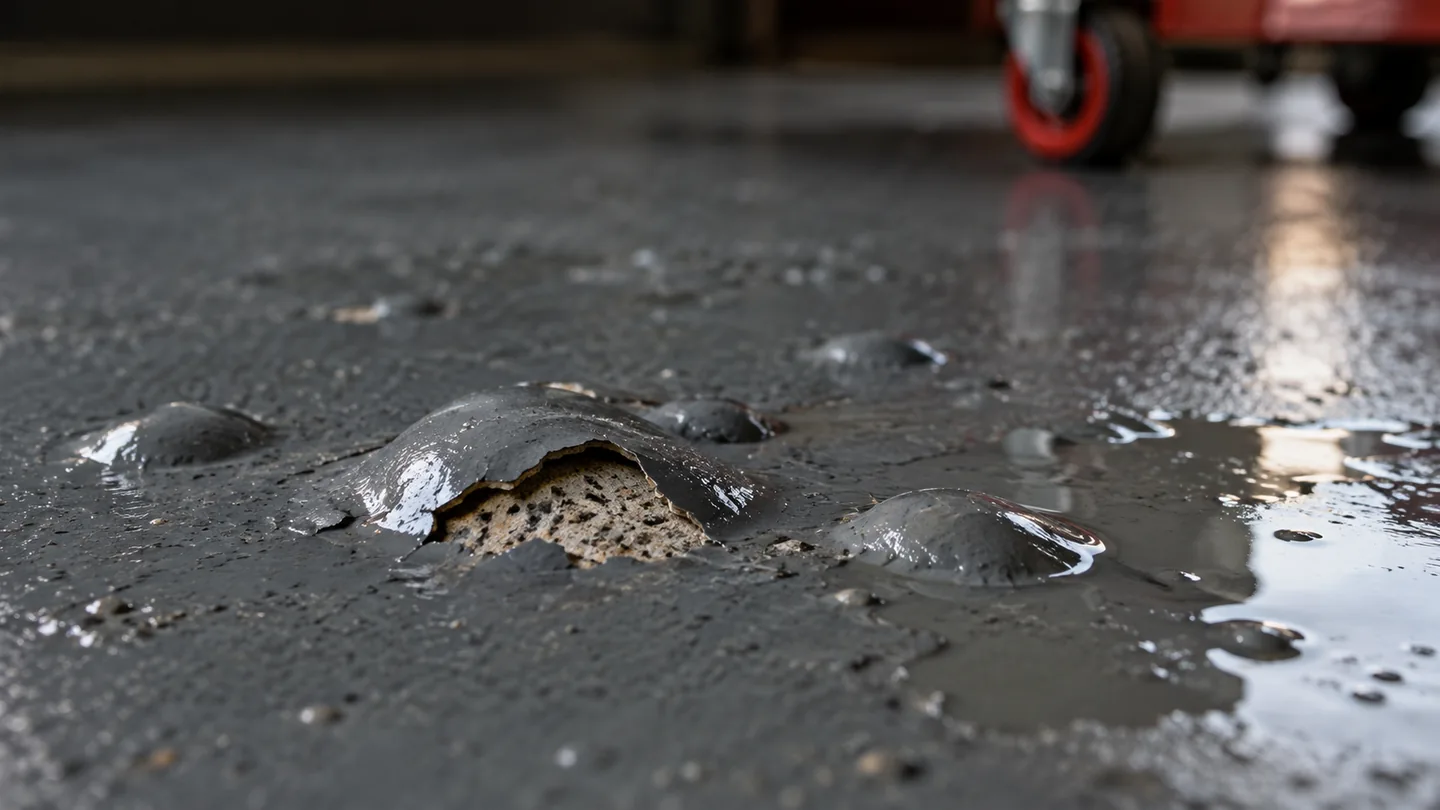
Record where water reaches the floor and where bubbles appear. Compare the garage opening, low spots, wall edges, wheel paths and protected areas. Note whether bubbles appear during wetting, remain afterward or leave detached film. Photograph the floor before cleaning or removal obscures the pattern.
In this Reddit discussion, small puddles reportedly caused many bubbles and areas near the garage door peeled, while tire-parking locations remained bonded. The owner believed rising damp was absent. Those are useful reported observations, not a verified moisture diagnosis. The pattern should guide further checks rather than be reduced to a general claim that all garage-floor paint fails under car tires.
Identify the complete floor coating system
Recover the product names, primer, number of applications and any earlier coatings that remained. Determine whether the finish is a single-component floor paint, a multicomponent system or another material. Their mixing, preparation and service requirements can differ substantially.
Record application dates and when the garage returned to use. A label on one remaining container may not describe the entire system. Ask whether curing compounds, sealers or old paint were removed or retained. This history gives the supplier a useful basis for assessing compatibility. Without it, replacing the coating with a more expensive product may leave the same weak layer or contamination below.
- Identify the coating product and installation history, including previous sealers or finishes, because a garage floor's visible color does not reveal the complete existing system.
- Map blisters against wet parking locations, perimeter walls, cracks, and apparently dry areas, recording when they appear rather than assuming surface water explains every failure.
- Ask whether the investigation needs manufacturer-specified moisture assessment, contamination checks, or substrate preparation review before selecting a replacement product that may face the same conditions.
- Include representative sound and failed areas in the repair assessment, and distinguish a local damaged film from a slab or preparation condition that affects the whole floor.
Distinguish top-side water from moisture through the slab
Water entering at the garage opening, cleaning water and slab moisture are different exposure paths. Inspect drainage and low spots, and review any relevant building history. A surface that looks dry between puddles does not establish the condition deeper in the concrete.
Sherwin-Williams: Peeling Concrete Floors lists moisture, contamination and unsuitable coating selection among possible causes of concrete-floor peeling. Use the testing and acceptance requirements of the proposed system rather than treating one improvised check as proof that all moisture risks are absent. Where the slab condition is uncertain, obtain an appropriate assessment. A finish should not be selected until its moisture limitations can be compared with the actual floor.
Check contamination and surface profile
Oil, grease, old sealer and other residues can interfere with adhesion. Concrete that is too smooth for the selected coating may also require preparation. These are separate conditions; removing visible dirt does not necessarily produce the profile or cleanliness the product requires.
Review how the original floor was prepared and inspect the exposed areas after failure. Do not assume that acid treatment is always sufficient or always appropriate. The coating system should specify a suitable method and acceptance condition. If mechanical preparation is needed, plan dust control and protection for the occupied property. The preparation method must fit the concrete and retained materials rather than a generic garage-floor recipe.
Read the failed layer and concrete condition
Examine detached film and the concrete beneath it. Is the coating cleanly releasing, taking another layer with it or carrying weak concrete particles? Look for crumbling, cracks and repairs that differ from the surrounding slab. These findings can change the scope from coating replacement to substrate repair.
A new finish cannot restore the strength of a weak surface. Define what must be removed and repaired before coating. Where older or unknown coatings are involved, consider relevant hazardous-material precautions before disturbance. The contractor should explain how the remaining surface will be assessed, not simply promise that a stronger coating will adhere to anything left after scraping.
Decide whether local repair is realistic
A limited repair may be feasible when the affected area has a stable boundary and the retained system is compatible. Widespread adhesion loss, uncertain previous layers or recurring moisture may justify a broader reset. Appearance also matters: a local repair can remain visible even if it performs adequately.
Compare those outcomes explicitly. A utility garage may accept a serviceable patch, while a customer-facing commercial floor may require a more uniform finish. Neither goal should obscure the technical condition. The scope should state removal, substrate repairs, preparation, system and boundaries. Avoid allowing a cosmetic preference for a seamless look to push coating over a floor that has not met the product's requirements.
Test the replacement under the required conditions
Use a representative prepared area and the complete proposed system. Follow the manufacturer's mixing, application, recoat and environmental directions. If the system requires moisture or other substrate testing, complete that assessment rather than relying on the sample alone.
Evaluate the trial at the specified stage using an appropriate method. Do not create an improvised puddle or tire test before the product is ready for service. Record the substrate condition and preparation so a successful trial can be reproduced. If it fails, identify the interface and review the cause before expanding the work. The purpose is a verified preparation and system decision, not merely a pleasing sample color.
Plan traffic, cleaning and water exposure after the repair
Return-to-service requirements may differ for foot traffic, vehicles, cleaning and wet exposure. Use the actual system instructions and communicate them before work begins. A garage that must immediately store vehicles or remain an access route needs a practical schedule, not an optimistic promise based on dry-to-touch appearance.
Keep coating records and a map of repaired areas. Address drainage or recurring wetting identified during the investigation. During maintenance, distinguish a new scratch from bubbles, delamination or concrete deterioration. Those conditions lead to different follow-up work. A clear handoff makes it less likely that the owner will apply another incompatible topcoat when the first small defect appears.
Questions & answers
Does good adhesion under parked tires prove the slab is dry?
No. Different parts of the floor can experience different conditions, and tire performance addresses only one service exposure. Assess moisture using the requirements of the proposed system and investigate the wet areas separately. The pattern is useful evidence, but it is not a complete substrate test.
Can I put epoxy over the peeling floor paint?
Do not cover unsound coating. Identify the existing system, remove failure to a suitable base and confirm compatibility with anything retained. A replacement epoxy or other floor system still needs its specified preparation and moisture conditions; the product category alone does not solve the problem.
Will sealing the garage door stop the blistering?
It may reduce an identified top-side water source, but other causes can remain. Check drainage, slab moisture, contamination and the coating system before concluding that one detail explains the failure. Correct the supported exposure problem and verify the floor condition before recoating.
Sources & further reading
- Sherwin-Williams: Peeling Concrete FloorsMoisture, contamination, inadequate surface profile and unsuitable coatings are distinct causes of floor coating failure.
Reader discussions
These conversations describe problems people encountered. They do not establish the cause of a defect or replace product instructions and applicable requirements.