Exterior Paint Leaves Chalk on Your Hand: Can You Prime Over It?
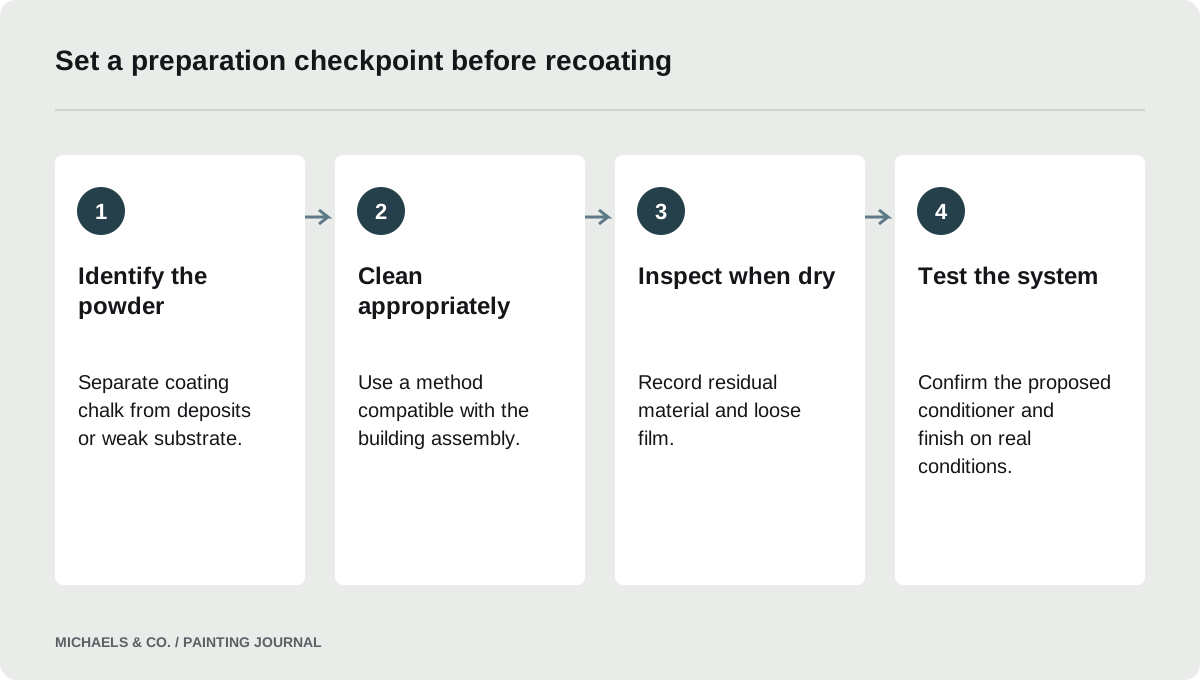
Chalk on an exterior paint film should be assessed and removed as required before recoating. Determine whether the powder comes from weathered paint, whether the remaining film is sound and whether the selected system permits any residual condition. A conditioner may have a role on a suitable substrate, but it does not justify painting over loose contamination or an unstable coating. Test the preparation and finish together before broad application.
Confirm where the powder comes from
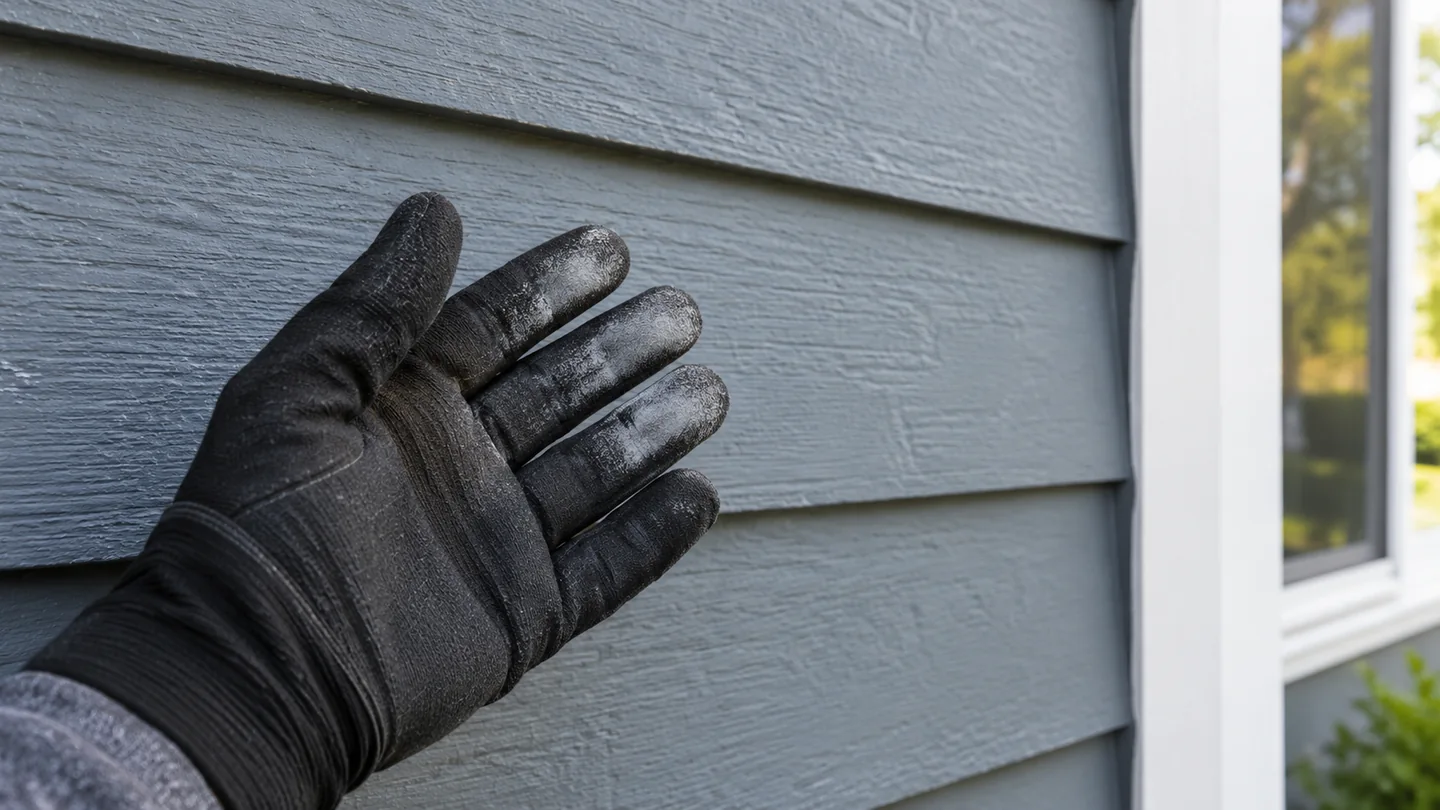
Inspect the surface and compare several areas rather than judging from one swipe of a hand. Note whether the powder follows the paint color, whether the film is thinning and whether the substrate itself is also friable. Deposits, dirt and deterioration of the underlying masonry can raise different questions from weathered paint.
The homeowner in this Reddit discussion asked whether a primer could go directly over mildly chalky exterior paint. Replies proposed several different products and additives. The useful editorial question is what surface condition those systems actually require. The existence of a product described as bonding or conditioning is not evidence that any amount or type of loose material can safely remain beneath it.
Inspect the coating beneath the chalk
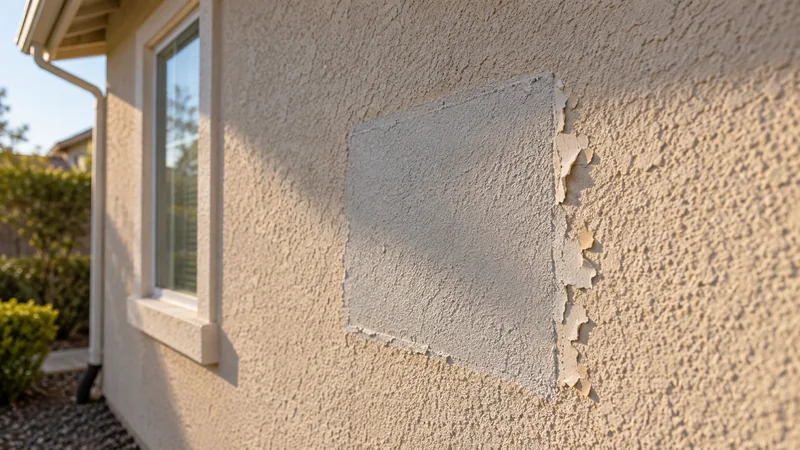
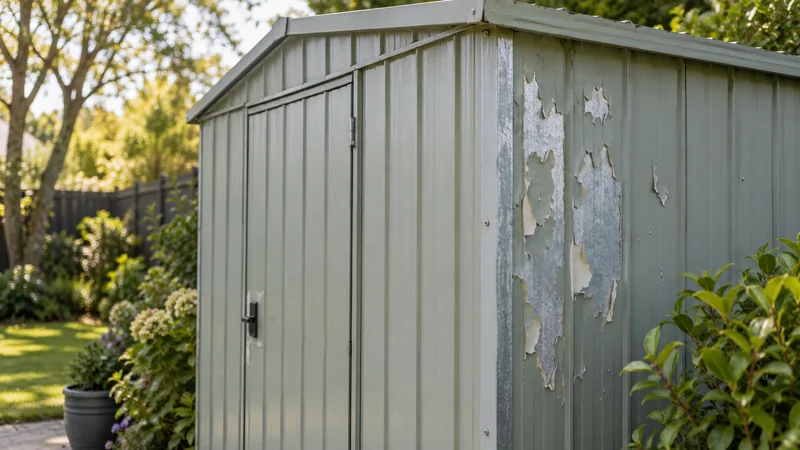
Look for peeling edges, cracks, exposed substrate and areas where several layers have released. A powdery surface on otherwise attached coating is different from a film that has lost adhesion. Map those conditions separately so the preparation scope does not treat the whole elevation as one uniform problem.
Sherwin-Williams: Chalking (Powdering) describes chalking as powder formation associated with paint weathering and emphasizes removing chalk before recoating. The condition below the powder still matters. A cleaned surface may reveal loose coating that was not obvious during the first inspection. Conversely, a sound film should not automatically be stripped solely because its surface has weathered. The chosen system and observed condition should guide that decision.
- Check several exposures with a clean cloth and record where powder transfers most heavily, distinguishing weathered coating from nearby dirt or deposits before choosing preparation.
- Examine whether the remaining film is attached or also peeling; washing away surface powder does not repair a weak layer underneath an apparently clean finish.
- Inspect cleaned trial areas after they dry using the proposed manufacturer's readiness criteria, and document whether residual chalk remains before selecting a compatible primer.
- Keep the washing method appropriate to the substrate and building details, then confirm the surface condition again before coating rather than relying on the wash date.
Compare exposure across the building
Check sunny, shaded, sheltered and regularly wetted areas. Factory-finished components and site-painted repairs may also behave differently. Record which surfaces transfer powder and whether nearby brick, windows or other finishes show runoff staining.
These comparisons help the contractor plan preparation and explain why one area needs more work than another. They do not establish a coating's age or quality by themselves. A building with mixed materials may need different cleaning and priming approaches even when it shares one color. Keep substrate identification in the record so a method suitable for masonry is not applied automatically to metal, wood or a vulnerable factory finish.
Clean using a method suitable for the assembly
Choose cleaning based on the coating, substrate and building details. Follow the cleaner instructions, protect adjacent materials and rinse as required. Sherwin-Williams: Chalking (Powdering) notes that repeat washing or scrubbing may be necessary where chalk remains. Evaluate the result after the surface dries rather than only while it looks dark and wet.
Do not equate higher pressure with better preparation. Aggressive washing can damage surfaces or introduce water at joints and openings. Older or unknown coatings also require consideration of lead before disturbance. The preparation plan should address access, runoff and containment as appropriate to the actual work. A clean-looking wall is not the only measure of whether the cleaning method was suitable.
Reassess the dry surface before priming
Repeat the surface inspection in representative areas once the cleaning stage is complete. Note remaining powder, loose film and newly exposed defects. Ask the contractor to show the condition the selected coating manufacturer requires, rather than relying on an informal percentage of chalk allowed on a hand.
A universal wipe-test threshold is not appropriate across every product and substrate. If residual material remains, compare it with the actual system guidance and consult the supplier when needed. This checkpoint is valuable because it occurs before the new coating conceals the preparation. Document it with photographs and concise notes, especially on larger projects where different crews may clean and paint on separate days.
Understand what the proposed conditioner does
A conditioner or penetrating primer may be intended for particular marginal surfaces, but its label and data sheet define that role. Ask which substrate it is approved for, what preparation it requires and what finish coatings may follow it. Do not treat the word conditioner as permission to skip removal of loose material.
Likewise, do not add an adhesion additive to finish paint without confirming that the coating manufacturer permits the combination. The proposed repair should be a documented system. If the painter recommends an unfamiliar product, ask for the relevant technical instructions and the specific condition it is intended to address. That makes the recommendation reviewable without demanding that the owner become a coatings chemist.
Test the prepared surface and complete finish
Use a representative area that includes the actual residual condition and any exposed substrate. Apply the proposed preparation, primer or conditioner and finish according to their instructions. Evaluate the sample at the appropriate stage and use an agreed adhesion assessment where the supplier considers it necessary.
A sample on the cleanest protected section cannot establish suitability for a badly weathered elevation. Include the relevant difficult condition while keeping the trial controlled. If the sample fails, identify the layer involved before changing products. A failure within the old coating calls for a different discussion from a new topcoat releasing from its primer. Preserve that distinction in the repair record.
Tie the estimate and acceptance to preparation evidence
The scope should identify cleaning, loose-film removal, substrate repairs, the selected system and the condition required before coating. Include how additional failure uncovered during preparation will be handled. Comparing bids is easier when these assumptions are stated rather than buried beneath a promise of premium paint.
At closeout, keep the preparation photographs, sample result and product records. Observe future chalking and runoff as maintenance conditions rather than automatically treating every powder trace as an immediate full repaint. If a new coating fails, the recorded preparation helps determine whether the issue involves retained old material, application or another building condition. Without that record, the next repair often returns to the same unsupported primer debate.
Questions & answers
Can a bonding primer replace washing?
Not automatically. The primer instructions define the surface it can accept, and loose contamination can remain a weak layer regardless of the product above it. Assess and clean the surface as required, then evaluate whether a compatible primer or conditioner has a role.
How much chalk is acceptable before painting?
There is no single hand-wipe percentage that applies to every coating and substrate. Use the selected system requirements and a representative preparation assessment. If residue remains and the guidance is unclear, have the manufacturer review the condition before the full exterior is coated.
Does chalking mean the entire paint film must be removed?
Not necessarily. Surface weathering and loss of adhesion are different conditions. Inspect the remaining film after cleaning, remove unsound material and follow the proposed system guidance. The removal scope should be justified by actual condition rather than by powder alone.
Sources & further reading
- Sherwin-Williams: Chalking (Powdering)Weathered paint can leave powder; loose chalk must be removed before recoating.
Reader discussions
These conversations describe problems people encountered. They do not establish the cause of a defect or replace product instructions and applicable requirements.