Overspray Damage During Building Painting: Prevention, Documentation, and Claims
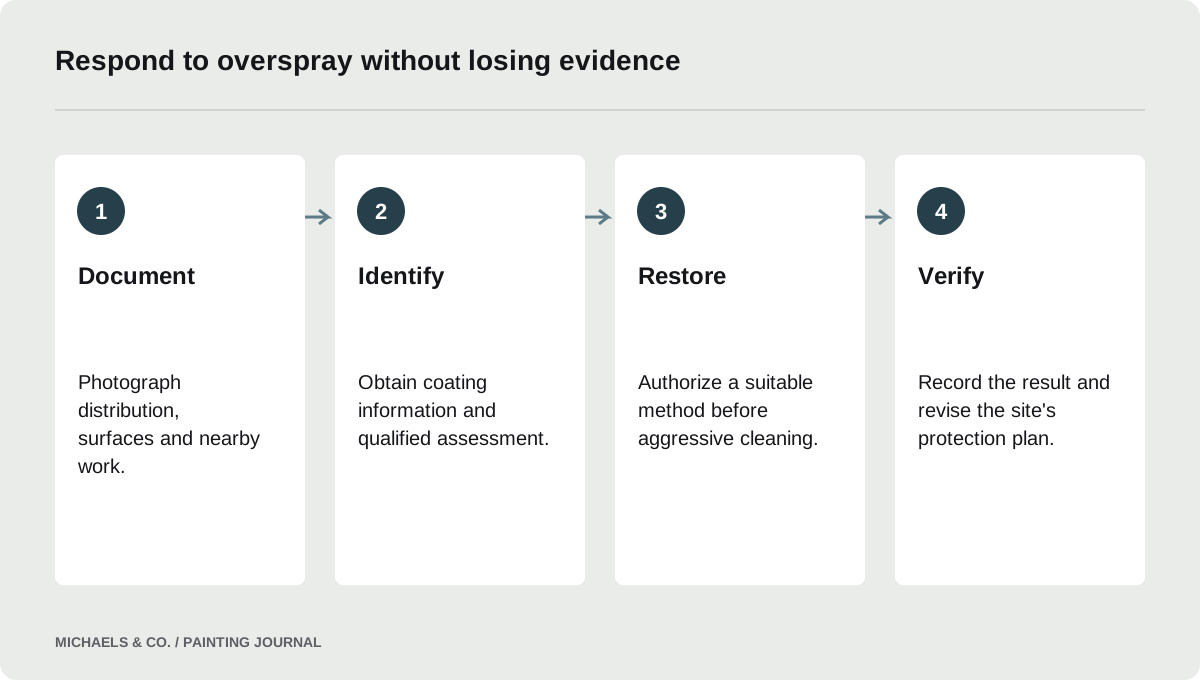
If building painting causes suspected overspray damage, preserve evidence before trying to remove it. Photograph affected surfaces and surrounding conditions, identify the contractor and coating if possible, and notify the relevant parties promptly. Obtain a qualified restoration assessment before using solvents or abrasives on vehicles, glazing or furnishings. Prevention belongs in the painting scope: survey nearby property, arrange relocation and protection, and define when site conditions require work to stop.
Survey the area beyond the building face
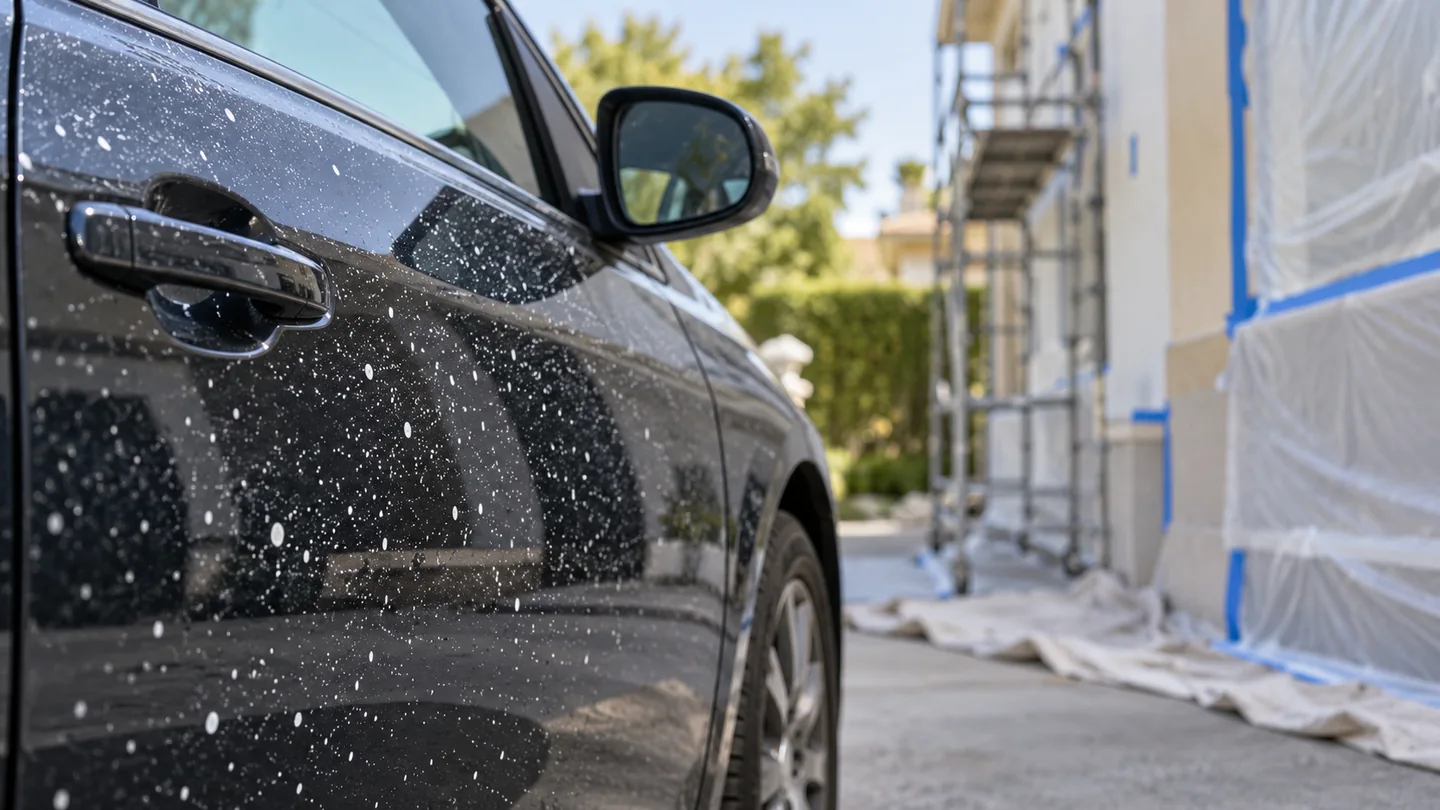
Spray work can affect property that is not part of the paint contract. Before work, identify parked vehicles, nearby glazing, outdoor equipment, landscaping, entrances and neighboring properties. Ask who controls parking and who can arrange relocation. A request to move a car is not a protection plan if nobody confirms that it has actually moved.
A vehicle owner's account describes a neighboring contractor allegedly starting before a new truck could be relocated. The report is not a liability determination, but it illustrates a preventable coordination failure. Record the agreed clearance and protection before spraying starts. Include properties that may become occupied or accessible later in the shift, rather than surveying only what is present at arrival.
Make protection and stop-work decisions explicit
The contractor should evaluate the application method and site conditions, then describe the protection needed for the proposed work. The owner should identify operational constraints the painter cannot discover alone, such as delivery schedules or reserved parking. Assign responsibility for notifications, relocation and confirmation.
State who can stop the activity when protection is incomplete or conditions change. Avoid treating the initial setup as adequate for an entire day without review. The precise control measures depend on the equipment, coating and site; a generic distance or wind figure from another project should not be substituted for that assessment. Include the cost and schedule consequences of changing the method or postponing work, so the crew is not pressured to continue merely because an opening date was promised.
Record the condition as soon as damage is noticed
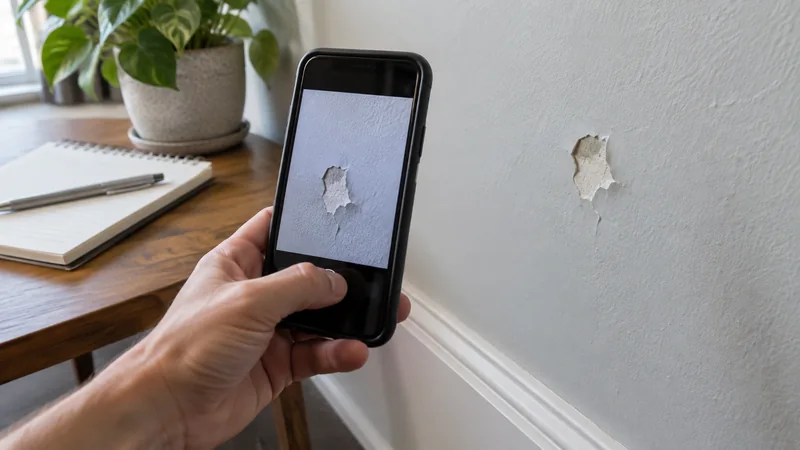
Take photographs before cleaning or moving affected items where practical and safe. Capture the distribution, close details and surrounding context. Note the date, approximate time, location and nearby work. Keep communications with the contractor and property manager. If other owners are affected, each should preserve their own observations rather than relying on one person's account.
Do not scrape material off a valuable surface simply to obtain a sample without guidance. A restoration specialist or insurer may want to inspect it in place. Record what you know separately from what you infer: visible droplets, the location of painting, the reported product and the suspected cause. That distinction keeps the report credible and helps a professional assess whether the material is actually overspray from the identified work.
Identify the coating without guessing
Ask the contractor for the product name, application date and relevant product documentation. Different coatings and substrates can require different restoration approaches. A white haze after tub refinishing is not automatically the same material or removal problem as droplets from an exterior wall repaint.
An apartment resident's discussion describes suspected spray contamination across furniture and kitchen surfaces. Comments proposing household solvents are not a reliable restoration specification. Keep the coating information available for the person assessing the affected materials. If the contractor disputes the product identification, record that uncertainty. Do not let a confident guess determine the cleaning method on a surface that could be permanently damaged.
Avoid turning cleanup into a second loss
Vehicle clear coats, coated glass, plastics, stone and furniture finishes can react differently to solvents and abrasives. A method that removes paint from one material may dull, stain or dissolve another. Household advice that worked for a commenter does not establish suitability for your property.
- Preserve photographs before any attempted treatment.
- Ask a qualified specialist to identify the affected finish.
- Request a written restoration method and expected result.
- Clarify who authorizes testing and accepts the outcome.
- Keep invoices and records of any unsuccessful cleaning.
If urgent action is needed, obtain prompt professional advice rather than waiting for the dispute to resolve. The objective is to limit further damage while preserving evidence, not to prove a point by leaving a treatable condition unattended or experimenting without a plan.
Notify the contractor, owner and insurers factually
Provide a concise written notice with locations, photographs and the date the condition was found. Ask who will coordinate inspection and response. Depending on the situation, the affected owner's insurer, the contractor's insurer or the property manager may need the information. Follow the applicable claim process and retain reference numbers.
Do not assume that a certificate of insurance proves coverage for the incident or that a particular policy must pay. Coverage, responsibility and the amount of loss require their own assessment. The FTC's consumer guidance reinforces the value of clear records and written project terms, but it does not adjudicate an overspray claim. Keep statements factual and avoid agreeing to a final release before the proposed restoration and any remaining effects are understood.
Compare restoration proposals by their scope
A quote to wash a vehicle is not necessarily equivalent to a proposal addressing all contaminated glass, trim and painted panels. Similarly, cleaning visible furniture surfaces may leave overlooked appliances or finishes. Ask each assessor to identify the affected items, proposed treatment, limitations and how success will be evaluated.
The account of overspray shortly before a vehicle lease return shows why timing and acceptance matter. The article cannot predict a leasing company's response, but the owner needs a record of the condition and completed restoration. Include any specialist inspection required to establish the result. Separate confirmed damage from speculative future loss so the claim remains supportable and the repair can proceed on an agreed basis.
Close the incident and correct the project controls
After restoration, inspect the affected items with the appropriate specialist and record any remaining concerns. Retain before-and-after photographs, product information and invoices. If the work is accepted subject to an unresolved item, state that clearly rather than relying on a broad statement that everything is fine.
The painting project should also change its controls before the same activity resumes. Review whether the failure involved incomplete relocation, unsuitable protection, communication or changing conditions. Assign the corrective action and confirm it has happened. A paid cleaning bill alone does not prevent another incident. For building managers, the useful outcome is both restored property and a revised work process that accounts for neighboring people and belongings beyond the original contract boundary.
Questions & answers
Should I try a solvent before making an overspray claim?
Avoid experimenting on valuable surfaces. Photograph the condition and obtain advice from a specialist familiar with the affected material and coating. Solvents and abrasives can create additional damage or complicate assessment. If prompt treatment is needed, document the advice, method and result as part of the incident record.
Does the contractor's insurance automatically cover overspray?
No. Insurance coverage depends on the actual policy and circumstances, and responsibility must be assessed. Obtain the relevant business and claim information, notify appropriate parties and preserve evidence. A certificate or a verbal assurance is not a decision that the insurer will pay for every affected item.
What should a prevention plan say about parked cars?
It should identify who notifies owners, who arranges relocation and who confirms the area is clear before spraying. It should also address vehicles arriving later and the response if relocation is incomplete. The painter's protection assessment and the property's operating schedule need to work together.
Sources & further reading
- FTC: How to avoid a home improvement scamFTC consumer guidance favors written scope and documented payments and identifies pressure and advance-payment warning signs.
- Massachusetts home improvement contract sample languageCovered HIC contracts require detailed scope, materials, dates and payment terms; applicability must be checked.
Reader discussions
These conversations describe problems people encountered. They do not establish the cause of a defect or replace product instructions and applicable requirements.