Painting in a Multi-Tenant Building: Preventing Complaints Beyond the Work Area
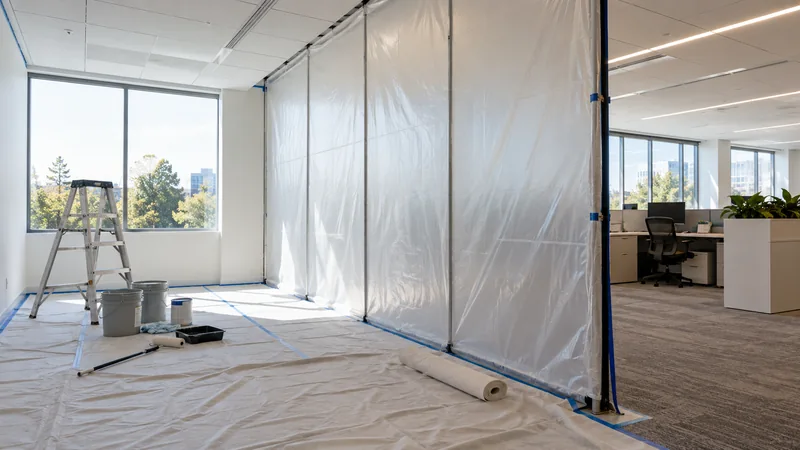
A multi-tenant repaint must account for people outside the contracted rooms. Map shared ventilation, entrances, corridors and service spaces before deciding how work will proceed. Give affected occupants specific notice, identify a contact for problems and coordinate building systems with facilities personnel. For residential units, the landlord's repair and access responsibilities are separate from the painter's scope. Do not assume an adjacent tenant is unaffected because their walls are not being painted.
Define the affected building, not just the paint area
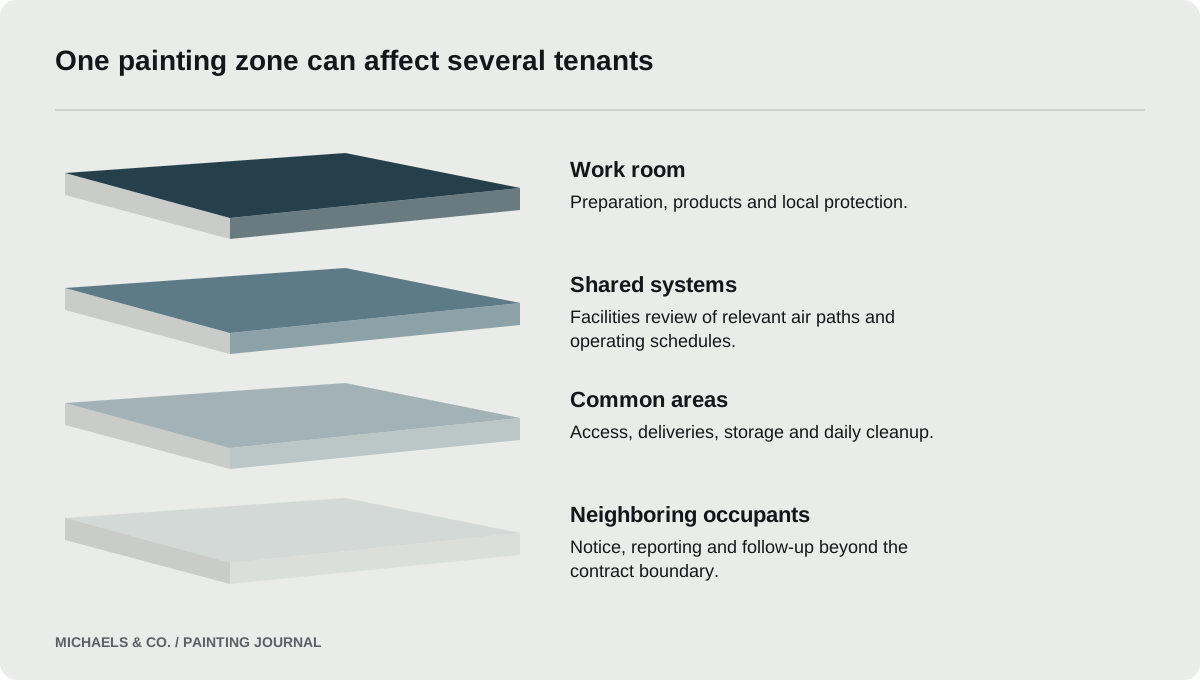
The contract may cover one suite, but the work can affect adjoining units, common corridors and shared equipment. List every space connected by access or air movement. Include occupants above and below, delivery routes, cleaning staff and businesses with extended hours. Ask building management which systems serve the area before the contractor establishes the work boundary.
An apartment occupant's report describes paint and varnish odors arriving from work in another unit, together with an uncertain completion date. That account does not identify the exact transport mechanism or exposure level. It does show why a manager should investigate the building conditions rather than dismiss a concern because the complainant is outside the painting scope.
Establish who represents each affected party
Multi-tenant projects often involve an owner, management company, business tenant, facilities contractor and painting subcontractor. Each may have different authority. The person approving colors may not be able to change HVAC operation or authorize a temporary relocation. Record those roles before work begins.
Create a contact sheet that distinguishes routine updates, urgent work-zone concerns and commercial approval of changes. Tell the painting supervisor who can decide when a complaint requires assessment or a pause. If a residential tenant reports a condition, ensure the message reaches the person responsible for the tenancy rather than remaining with a subcontractor who cannot resolve it. Clear authority prevents the familiar sequence in which everyone acknowledges a problem but nobody owns the next action.
Provide notices that describe the actual disruption
A useful notice says where work will occur, which entrances or rooms are affected, when preparation and application are planned, and how occupants can report a problem. It should identify any approved changes to normal access. For a phased project, provide the next phase's information before the previous notice becomes obsolete.
Do not promise an exact odor-free time unless the project has a defensible basis for that commitment. Give a realistic schedule and explain how changes will be communicated. Commercial and residential agreements may impose different access or notice requirements; the manager should review the applicable agreement and jurisdiction. In Massachusetts residential buildings, use the Attorney General's landlord and tenant guidance for the relevant legal context, rather than importing another state's notice period.
Protect common areas throughout the shift
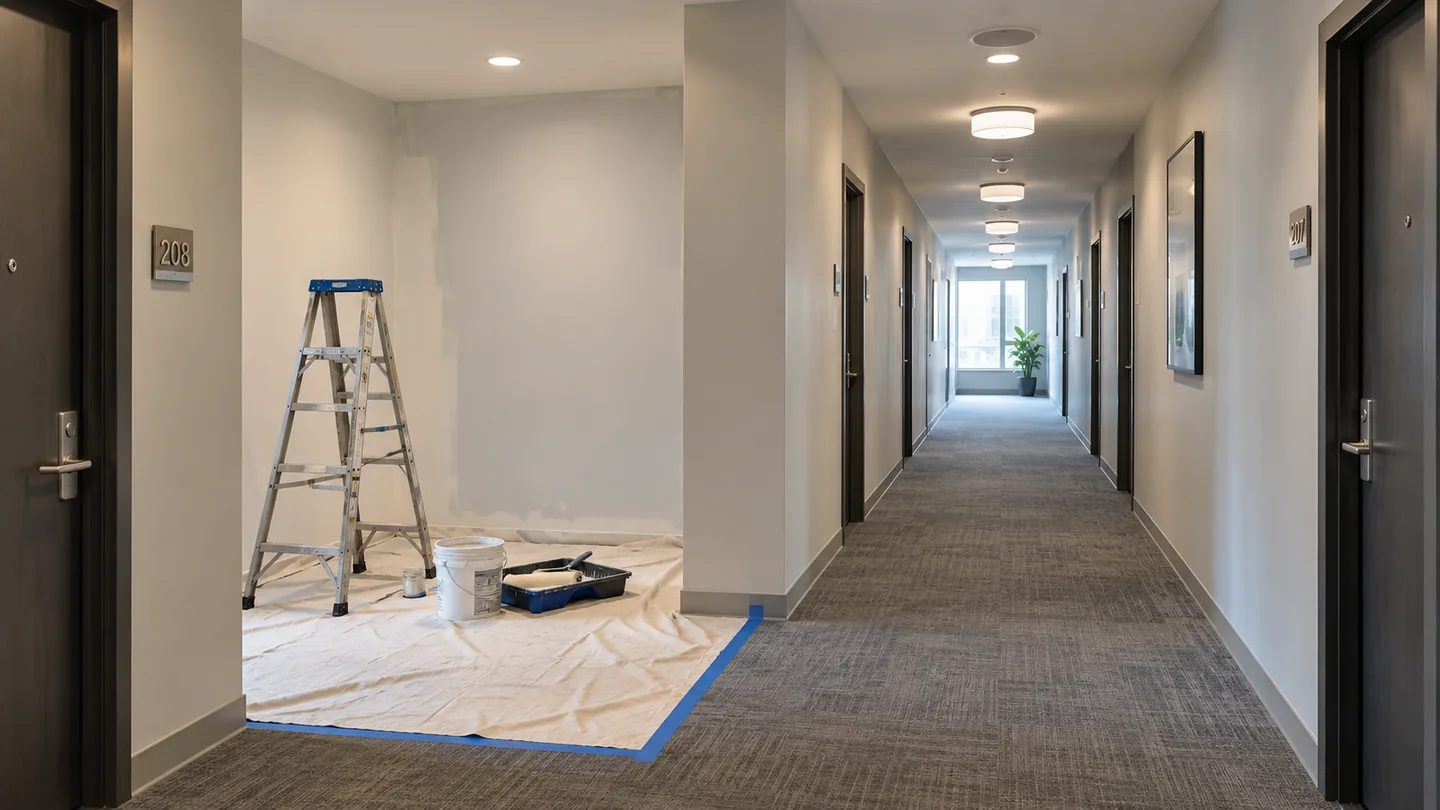
Corridors and elevators can become unplanned staging areas when a suite fills with furniture and painting equipment. Agree in advance where supplies, debris and protected contents may be placed. Coordinate circulation with building personnel and keep the arrangement usable for the people who still need the property.
- Identify approved storage and loading locations.
- Assign protection and cleanup of shared finishes.
- Photograph existing damage in common areas.
- Schedule deliveries and waste movement to reduce conflicts.
- Check the condition of shared areas at each daily handover.
These tasks belong in the scope and schedule. Otherwise, one tenant may receive newly painted walls while another is left with dust or damaged corridor finishes. Record responsibility for correction before an incident makes the discussion harder.
Respond to complaints with facts and a next action
When someone reports odor, dust or irritation, record the location, time, work underway and products in use. Check whether the agreed controls and building arrangements were operating as planned. Do not diagnose the person's health or use another tenant's lack of symptoms as evidence that the complaint is invalid.
Management should arrange appropriate technical or medical guidance when needed and communicate the immediate next step. Depending on the circumstances, that may include changing occupancy, pausing a particular activity or seeking a facilities assessment. Explain who will follow up and when. Smell is not a reliable measurement of concentration, but a report from outside the work zone can identify a route or scheduling problem that the original plan missed.
Keep building defects separate from finish repairs
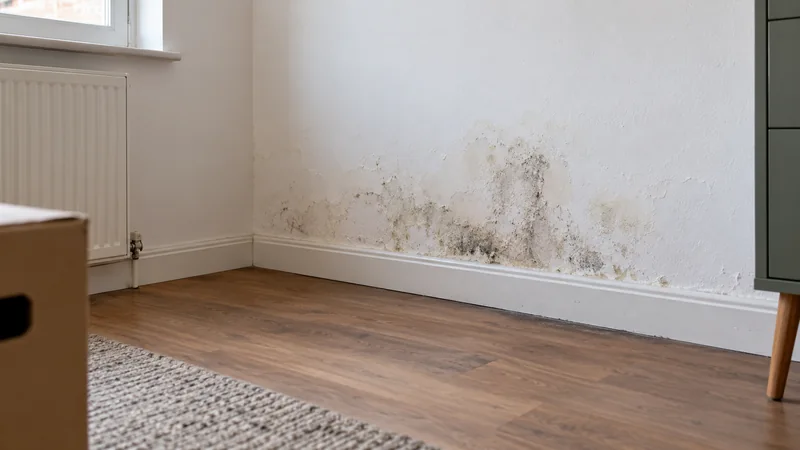
Sometimes a painting complaint exposes a pre-existing condition, such as a damp wall or an unresolved leak. Painting over the visible mark may improve appearance without addressing why it appeared. Establish whether the work is routine redecoration or part of a wider repair before the crew closes or coats affected surfaces.
A tenant in a reported water-damage dispute described wet material followed by patching and paint. That is an allegation, not an inspection result, but it illustrates the need for separate repair responsibilities. Record who investigates the source, who repairs damaged material and who confirms readiness for finishing. Do not let the painting completion date become a substitute for resolving the building condition.
Close every affected area, including neighboring ones
The final handover should cover the contracted rooms and the common areas the work used. Confirm removal of temporary protection and storage, document any remaining restrictions and record unresolved complaints. Give management the final product schedule and the contact for later coating issues.
Where the project affected several occupants, send a concise completion update rather than assuming the end of visible work communicates everything. Record lessons about delivery timing, shared air paths and the effectiveness of notices. That information is particularly valuable when future suites will be repainted. A multi-tenant project is complete when the agreed scope and operational handover have been addressed, not merely when the crew leaves the last unit with wet walls behind it.
Questions & answers
Can a landlord tell an affected tenant simply to open windows?
Opening windows may be one element of a suitable plan, but it should not replace investigation of the source and building conditions. The appropriate response depends on the products, air paths and tenancy circumstances. Report the location and timing of the concern to management and ask what assessment or corrective action will follow.
Are commercial tenant notices the same as residential notices?
No universal notice period applies to both. Commercial access and operational arrangements often depend on the lease and project agreement, while residential tenancies have their own legal framework. The property manager should check the relevant terms and local requirements instead of borrowing a notice rule from an unrelated online discussion.
Who should receive a complaint about painting in another unit?
Start with the building manager or owner contact responsible for coordinating the project. Provide the affected location, time and observed condition. The painter may need the information, but building management usually must coordinate shared systems and neighboring occupants. Keep a written record of the report and the promised follow-up.
Sources & further reading
- EPA renovation and repair IAQ guidanceEPA guidance recommends unoccupied scheduling, separation, ventilation coordination and daily cleanup; this is not a universal reopening rule.
- Massachusetts Attorney General landlord and tenant rightsState guidance describes habitable-condition duties and local board-of-health or code-enforcement inspection routes.
- EPA controlling pollutants and sourcesEPA guidance connects coating selection, application schedules, furnishings protection and manufacturer instructions to indoor-air planning.
Reader discussions
These conversations describe problems people encountered. They do not establish the cause of a defect or replace product instructions and applicable requirements.