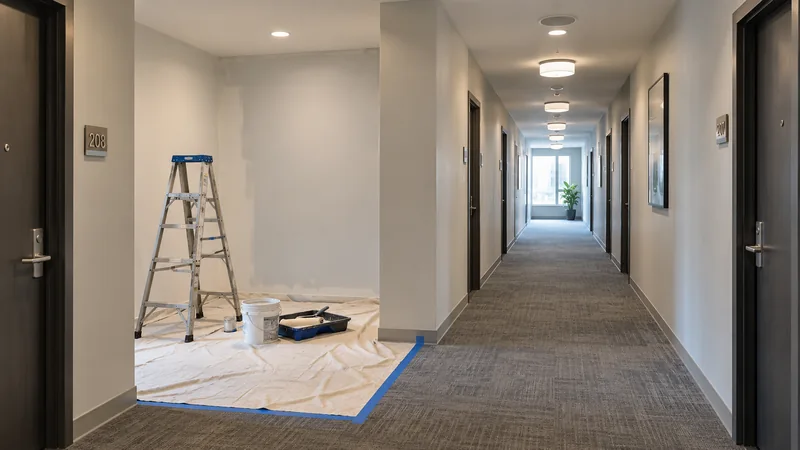
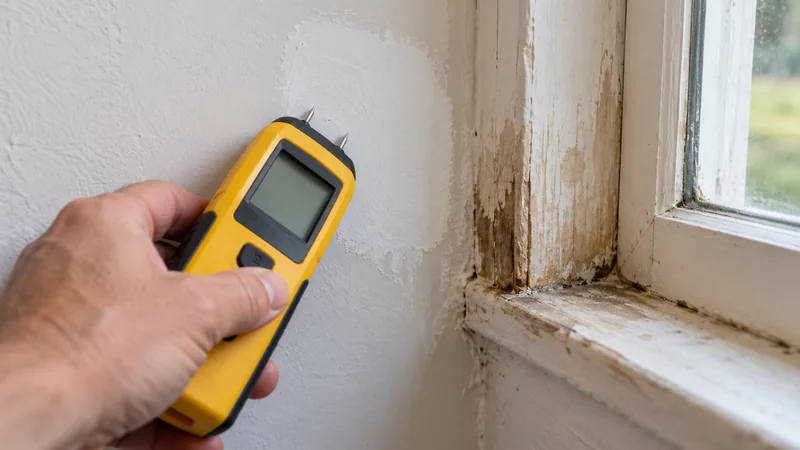
Your Landlord Painted Over a Damp or Moldy Wall: Document the Condition and Request the Right Repair
If a damp or moldy wall has only been repainted, document the condition and ask what moisture source was corrected and what affected materials were assessed. Do not identify mold species from a photograph or disturb older coatings to investigate. Massachusetts tenants can request help from the local board of health or code-enforcement authority when housing conditions are unresolved. Rent withholding, moving out and lease remedies require separate, fact-specific legal advice.
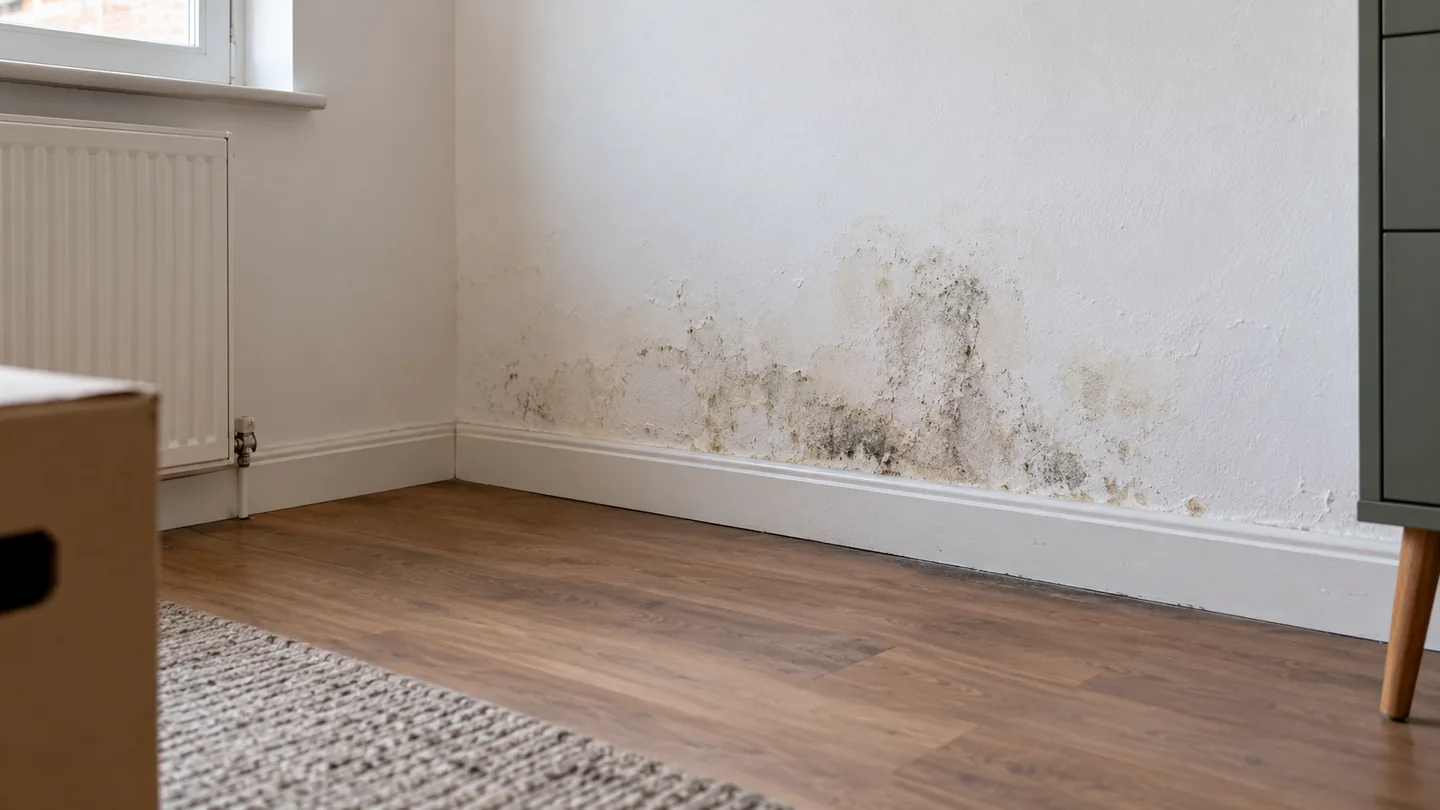
Record the condition and its recurrence
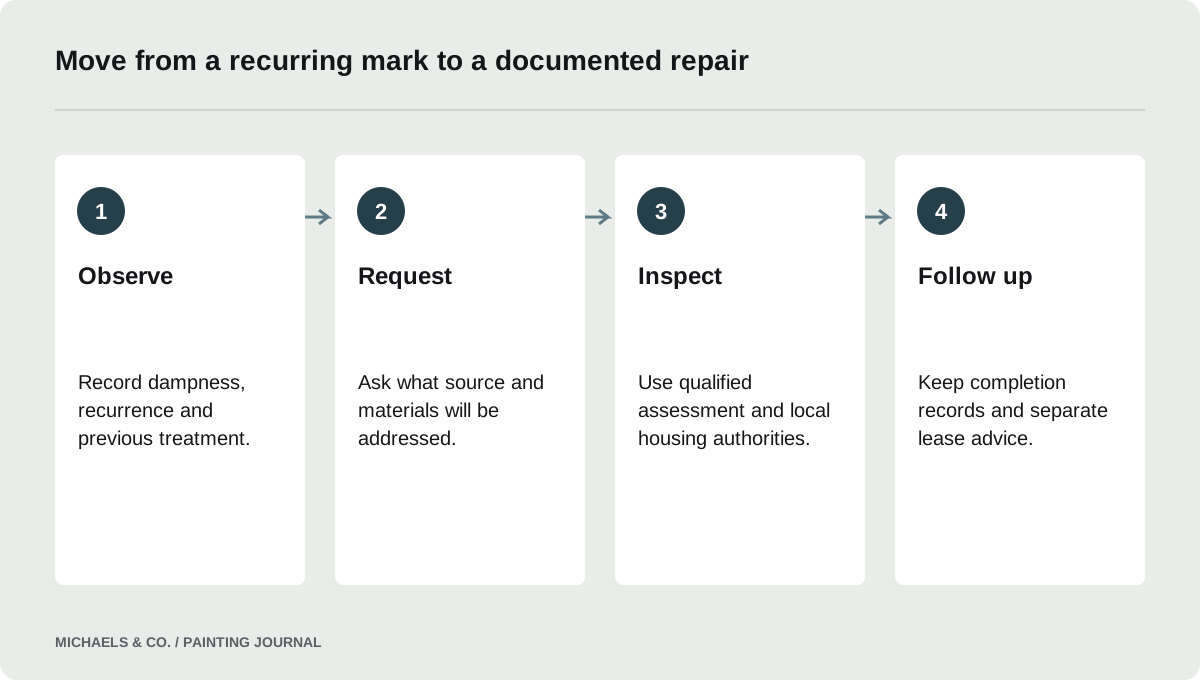
Take photographs showing the affected area and its location in the room. Note when dampness, staining, odors or visible growth first appeared and whether they returned after treatment. Keep copies of repair requests and responses. A timeline can show that the problem recurs without requiring you to diagnose its exact cause.
A tenant's account of a newly painted apartment describes growth near a bathroom window shortly after moving in. The post cannot identify the material or establish what the landlord knew. Its practical lesson is to record the sequence rather than treating new paint as evidence that the underlying condition was resolved. Include relevant events such as a pipe leak or repeated wetting where you actually observed them.
Describe observations without naming a species
Use plain descriptions: dark spotting, a damp patch, peeling paint, a musty odor or water entering at a location. Do not state that a particular mold species or health diagnosis has been established from color alone. If someone is experiencing symptoms, they should seek appropriate medical advice rather than relying on a painting discussion for a diagnosis.
Avoid scraping or sanding to expose what is behind the finish. Older or unknown coatings may present lead or other hazards, and opening an assembly can spread material or damage evidence. Ask an appropriate professional what investigation is warranted. Clear observations help the landlord and inspector identify the problem while preserving the distinction between a reported condition, a suspected cause and a verified finding.
Ask what was repaired beneath the new finish
A written request should ask whether the water source was identified, what work addressed it and what happened to affected materials. The answer may involve ventilation, a plumbing repair, exterior water entry or another building condition. Do not assume the same cause for every damp bathroom or basement.
The EPA's mold guidance emphasizes moisture control and advises against painting moldy surfaces. Painting can be part of restoration after appropriate work, but it does not itself demonstrate that the source was corrected. Ask for the repair plan in terms of the condition rather than demanding a particular product. A label describing stain blocking or mildew resistance is not a substitute for explaining the source and material assessment.
Separate cleaning, material repair and painting
Different conditions may require different treatment. A surface-cleaning task is not the same as evaluating damaged porous material, and both are distinct from the final finish. Ask who is responsible for each step and what must happen before the wall is closed or painted.
A tenant's account of repeated pipe breaks describes walls allegedly being closed before drying and later repainting being proposed. That report is not an inspection finding, but it illustrates why the sequence matters. Avoid prescribing wholesale demolition based on a photo, and avoid accepting cosmetic work as proof of readiness. An appropriate assessment should determine the scope and identify any limitations or further work needed.
Send a focused written repair request
Keep the request short enough for a manager to act on, but specific enough to establish the concern.
- Identify the unit, room and affected location.
- State the dates of leaks, recurrence and earlier treatment.
- Attach photographs and prior request references.
- Ask what source and materials will be addressed.
- Request the planned access and repair schedule.
- Ask who will provide the completion update.
Do not threaten to stop rent in the same message simply because a commenter recommends it. Keep the initial request centered on correcting the condition and obtaining a usable plan. If the landlord responds verbally, send a factual written summary and invite correction so the record does not depend on memory.
Use the Massachusetts housing inspection route
The Massachusetts Attorney General's tenant guidance explains habitability responsibilities and the role of local board-of-health or code-enforcement inspections. If a condition remains unresolved, contact the appropriate local office and describe what has happened. Ask how to request an inspection and what records to provide.
The inspector's role differs from that of the painter or a private consultant. They can assess conditions within their authority and determine whether applicable housing requirements are violated. Do not assume an online photograph or private test automatically produces a particular enforcement outcome. Keep the resulting report or order, note any deadlines and continue documenting material changes in the condition. Use the actual local process rather than another state's tenant advice.
Plan access and occupant communication
Repairs may require entry, temporary restrictions or work that affects adjoining rooms. Ask the landlord for the schedule and practical arrangements, and review access requirements under the applicable tenancy rules and agreement. Do not assume a universal notice period from an out-of-state discussion.
If dust-generating work or older paint disturbance is proposed, ask what qualified contractor and applicable protective process will be used. The tenant should not be expected to improvise hazardous cleanup or open the wall to prove the complaint. Record any agreed temporary arrangements and whom to contact if conditions change. A clear access plan supports repair while reducing conflict over missed visits, belongings left in the work zone or unexpected entry by a subcontractor.
Keep lease decisions separate from the paint dispute
A tenant may consider withholding rent, ending a lease or seeking compensation when repairs are not made. Those choices can have significant consequences and depend on the facts and legal framework. The Massachusetts guidance itself distinguishes available remedies from the steps needed to use them appropriately. Obtain qualified legal assistance before relying on a general internet instruction.
Preserve the repair history, inspection findings and communications for that advice. After work, document what was done and whether the condition recurs. A freshly painted wall is neither proof that the landlord acted improperly nor proof that the problem is solved. The useful outcome is a corrected source, appropriately addressed materials and a clear record that lets occupants and authorities evaluate any continuing concern.
Questions & answers
Can mold be identified by the color showing through paint?
No reliable species identification or health conclusion should be made from color alone. Describe and photograph the visible condition, record dampness or recurrence and obtain appropriate assessment. Avoid disturbing the coating to investigate, especially in older buildings, and seek medical advice for individual health concerns.
Who can a Massachusetts tenant contact about an unresolved damp wall?
The local board of health or code-enforcement office is an appropriate place to ask about a housing-condition inspection. Provide the location, repair history, photographs and communications. The office can explain its process and authority; a painting contractor's opinion is not a substitute for that determination.
Should I withhold rent if the landlord only repaints?
Do not make that decision from a general painting article or forum comment. Rent and lease remedies have legal conditions and potential consequences. Document the problem, use the appropriate inspection route and obtain qualified Massachusetts tenant advice before withholding payment or moving out.
Sources & further reading
- EPA basic mold cleanup stepsEPA says repair moisture sources, clean affected surfaces and dry them before painting; coating mold is not remediation.
- Massachusetts Attorney General landlord and tenant rightsState guidance describes habitable-condition duties and local board-of-health or code-enforcement inspection routes.
Reader discussions
These conversations describe problems people encountered. They do not establish the cause of a defect or replace product instructions and applicable requirements.