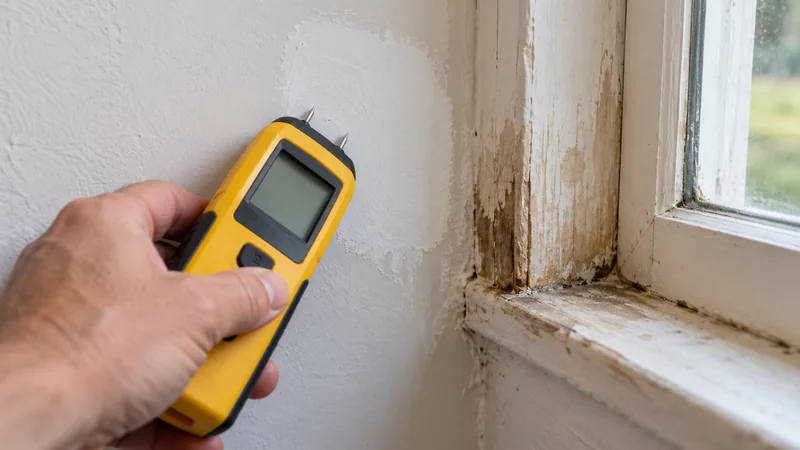
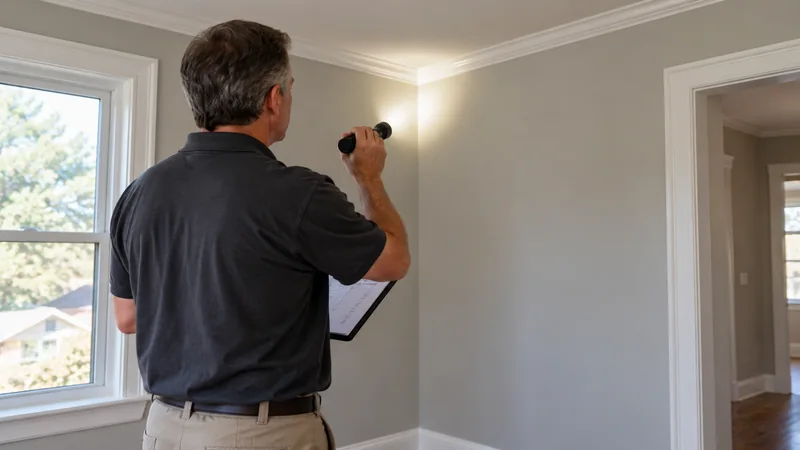
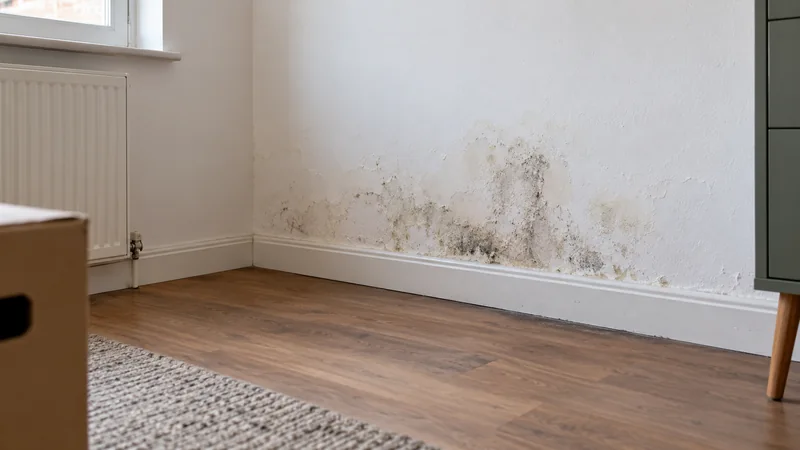
The Seller Offers to 'Paint Over It': Verify the Repair Before Closing
When a seller offers to repaint a water-damaged area, first establish whether the water source and affected materials have been properly addressed. Request a written repair scope, relevant records and appropriate verification before the surface is closed or painted. Cosmetic completion is not evidence that a leak has stopped. Closing terms, credits and contractual remedies should be handled with the buyer's transaction professionals rather than decided from the appearance of fresh paint.

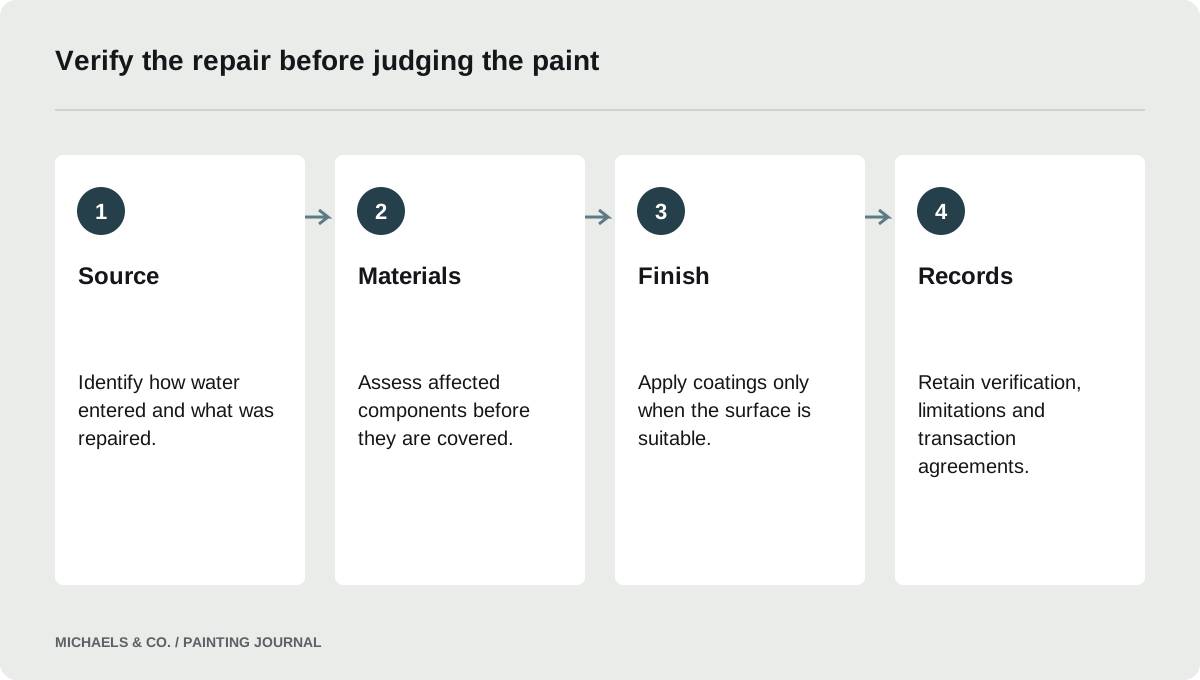
Name the condition that needs resolution
Start with the inspection finding or observed damage, not the seller's preferred repair. Identify the affected location, whether moisture is currently suspected and what remains unknown. A stained ceiling after a documented old repair presents a different question from a soft wall with recurring wetness.
In a buyer's account of damage discovered late in a transaction, cosmetic painting was proposed while separate assessment identified leak-related concerns. The post contains one party's allegations and does not determine legal responsibility. Its useful lesson is to define the building problem before accepting the finishing solution. Ask what the proposed painting is intended to accomplish and which underlying questions it leaves unanswered.
Separate source repair, material repair and finishing
A complete plan may involve several distinct stages: identifying and stopping water entry, assessing affected materials, drying or replacing them as appropriate, and restoring the finish. Not every case requires every possible intervention, but the sequence should be explained.
Painting belongs after the conditions necessary for the coating and assembly have been established. The EPA's mold cleanup guidance emphasizes moisture control and cautions against painting moldy surfaces. A stain-blocking primer can address certain cosmetic effects after suitable repair; it is not proof that the source was resolved. Ask who is responsible for each stage so the painter is not presented as having certified plumbing, roofing or concealed materials outside the agreed scope.
Request a written scope before evidence disappears
The repair proposal should identify the location, suspected or confirmed source, materials to be addressed and work to be performed. Ask for photographs before areas are covered where practical. If the source is uncertain, the proposal should include an investigation step rather than conceal that uncertainty behind a fixed cosmetic description.
A useful scope also states what is excluded and what discovery would change the work. For example, a localized finish repair may be appropriate after a verified limited event, while a larger affected assembly may require another specialist. Do not prescribe demolition simply to demonstrate seriousness. The purpose of documentation is to support a proportionate repair and later verification. Preserve the original inspection report and communications alongside the proposed scope.
Identify the professional for each question
A general home inspector, plumber, building-envelope specialist, remediation professional and painter bring different expertise. Ask who is qualified to assess the particular source and resulting condition. A coating contractor's willingness to repaint does not automatically answer a question about concealed damage.
The Massachusetts inspection fact sheet explains that a standard home inspection has limitations and may lead to recommendations for further investigation. Use those recommendations to define the follow-up scope. Avoid hiring someone merely to provide a reassuring letter without specifying the question they must answer. A useful report states what was examined, what was found, what remains inaccessible and what limitations apply to the conclusion.
Agree on verification before the repair is accepted
Verification should match the original concern and the completed work. It may involve reviewing source-repair records, observing accessible repaired components or obtaining a specialist's follow-up assessment. The method depends on the building and damage, so there is no universal moisture number or photograph that proves every wall is ready.
| Question | Useful evidence |
|---|---|
| Was the source addressed? | Specific repair description and relevant professional findings |
| Were materials assessed? | Scope, observations and records before covering |
| Is finishing appropriate? | Condition review and applicable product requirements |
| What remains uncertain? | Written limitations and recommended follow-up |
Agree who will review this evidence and when. A deadline without a verification process encourages a last-minute dispute.
Do not let product claims replace building evidence
Terms such as waterproof, sealing or mold-resistant can be misunderstood. A product may have a defined use within a properly prepared system, but that does not establish that an unresolved leak or damaged assembly has been repaired. Ask for the actual product and the claim relevant to the proposed application.
Avoid arguing about marketing language while the source remains unexplained. The practical question is whether the repair addresses how water entered and what it affected. If the seller says the painter will fix the entire problem, request the specific scope and qualifications for the nonpainting work. The answer may reveal that a suitable repair is planned, or it may show that only the visible mark is being addressed. Either outcome should be documented before acceptance.
Keep the closing negotiation separate from technical findings
An inspection report can inform a transaction decision, but it does not decide whether the buyer should accept a credit, delay closing or pursue a particular legal remedy. Those choices depend on the contract, deadlines, financing and professional advice.
Give the agent and attorney the factual record: original finding, proposed repair, available verification and unresolved uncertainty. Avoid treating a seller's refusal to agree to your preferred remedy as proof of concealment. Likewise, do not let pressure from a closing date turn an incomplete technical answer into a completed repair. If a different financial arrangement is negotiated, document exactly what it covers and what risk or remaining work the buyer is accepting. The agreement should be understandable after the urgency of the transaction has passed.
Retain the repair history after the sale
Keep the before-and-after photographs, reports, invoices, product information and written acceptance or limitations. Note any recommended monitoring or maintenance. Future contractors may need this history to interpret a recurring stain or a new symptom in the same area.
A later cosmetic change should not erase the record of the original event. If a problem recurs, document it promptly and consult the appropriate professional rather than automatically repainting again. Good records also help a seller show that a legitimate repair was completed and help a buyer distinguish new damage from an earlier resolved condition. The objective is a traceable repair, not a freshly painted surface that requires everyone to take the result on trust.
Questions & answers
Is a new coat of stain-blocking primer enough after a leak?
It may be part of finishing after the source and affected materials have been appropriately addressed, but it does not prove those steps occurred. Review the actual condition and repair history. Ask what was repaired, what was assessed and why the surface is ready for the proposed coating system.
Should the buyer hire an independent inspector for the repair?
An independent assessment can be useful where the condition, source or repair adequacy remains uncertain. Define the question and the professional's scope first. A standard home inspection, specialist moisture investigation and coating review are different services, so choose the assessment that addresses the unresolved issue.
Can I demand a closing delay until the repaint is verified?
That is a transaction and contract question for your agent and legal adviser. Provide the findings, repair proposal and remaining uncertainty promptly so they can evaluate available options and deadlines. A technical concern may be important, but it does not independently establish a particular contractual right.
Sources & further reading
- EPA basic mold cleanup stepsEPA says repair moisture sources, clean affected surfaces and dry them before painting; coating mold is not remediation.
- Massachusetts home inspectors consumer fact sheetA standard home inspection is visual and limited; findings may call for specialized investigation.
Reader discussions
These conversations describe problems people encountered. They do not establish the cause of a defect or replace product instructions and applicable requirements.