Painting an Occupied Office: A Plan for Work Zones, Airflow, and Staff
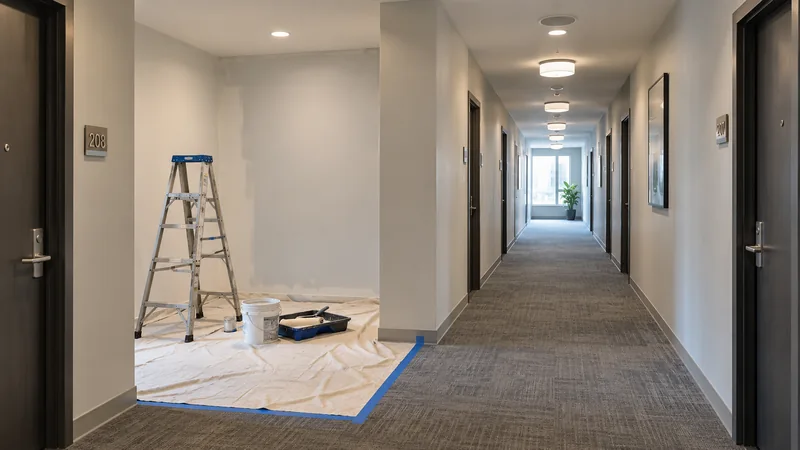
An occupied office repaint needs a written plan for where people will work, how preparation dust and coating emissions will be controlled, and who decides when each area can reopen. Scheduling the crew after hours can help, but shared ventilation may carry contaminants elsewhere. Select the actual products before setting the schedule, coordinate building systems with facilities staff, and provide a practical relocation option when a work area cannot be adequately separated.
Start with the people and the air paths
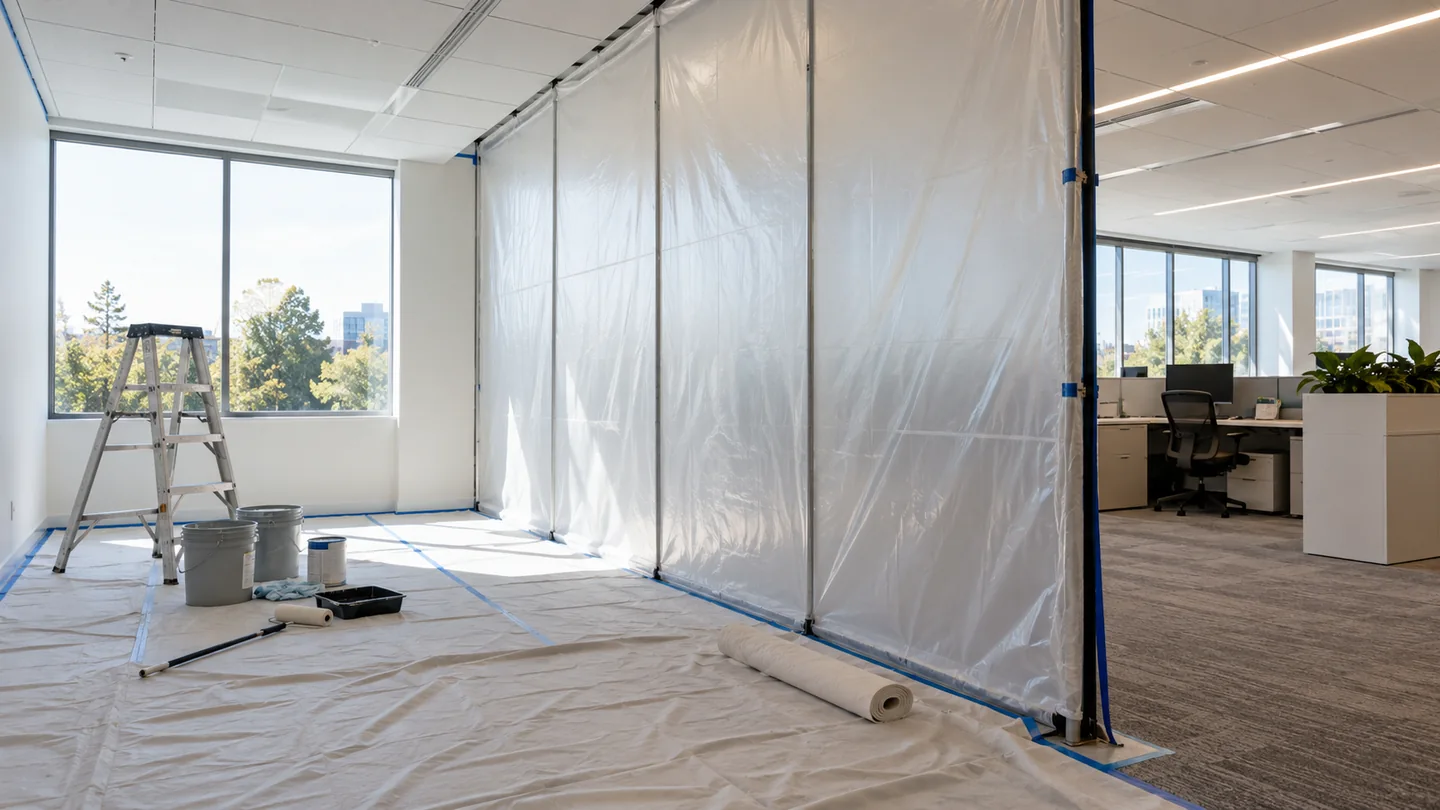
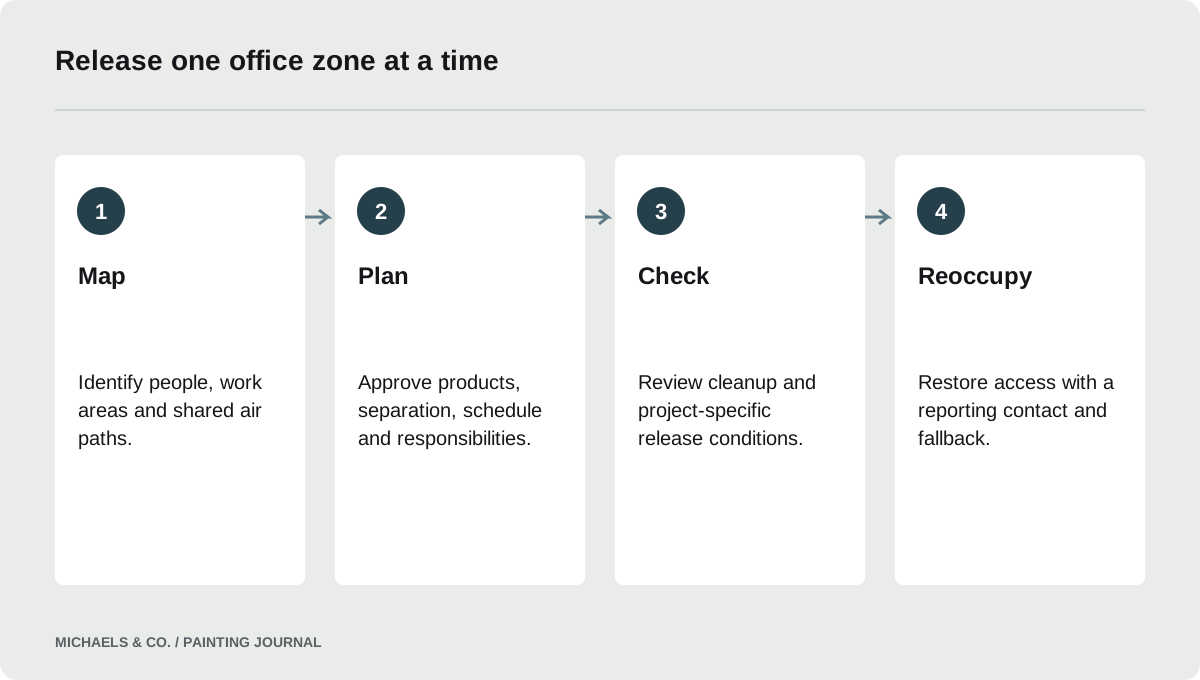
A floor plan showing only the walls to be painted misses the most important operational question: who will still be nearby? Mark workstations, meeting rooms, reception, restrooms and routes that employees or visitors must use. Add the spaces above suspended ceilings and the supply and return paths that connect rooms. A closed conference-room door does not establish an isolated air zone.
In one office worker's Reddit account, conference-room paint odor reportedly traveled through HVAC to every room. That report does not establish a measured exposure, but it identifies a planning failure worth preventing. Have facilities staff explain the actual system before the contractor promises that a room can remain occupied. Include cleaners, security staff and people working unusual shifts in the occupancy map.
Identify products before promising an overnight finish
Request the exact coating, primer, filler and cleaner names, not simply “water-based paint.” A project that mostly uses a familiar wall coating may include a different stain-blocking primer or specialty coating in one room. Those products can change the application conditions and the ventilation plan.
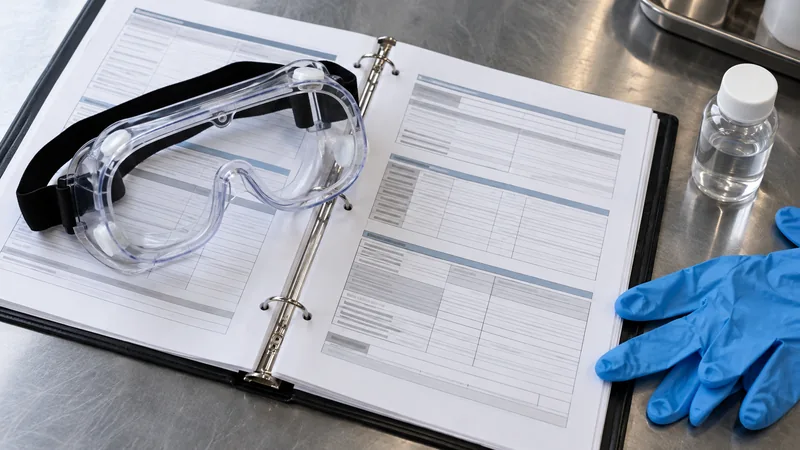
Read the safety data sheets with the person responsible for workplace safety, and read the product data sheets with the applicator. The first describes hazards and handling; the second addresses application and coating performance. Neither document is a universal certificate that everyone can return the following morning. List approved substitutions and require a review before another product arrives. Product selection should also consider the office's cleaning practices and whether staff will touch freshly coated doors or lean furniture against walls.
Use scheduling and separation together
Unoccupied periods reduce the number of people near the work, but only if the schedule accounts for preparation, application, cleanup and the interval before reoccupation. A Friday evening start is not automatically suitable when a Saturday team uses the same building. Identify the complete activity window for each zone.
The EPA's renovation guidance recommends timing, distance, barriers and ventilation coordination to protect occupants. It is useful planning guidance rather than a mandatory office reopening timetable. A qualified facilities professional should decide how the building systems can support the proposed separation. Improvised changes to air grilles or equipment can create new problems. If a zone cannot be separated effectively, reconsider its occupancy or the work sequence before application starts.
Put an owner beside every practical task
A plan fails when each party assumes the other will move equipment, maintain barriers or run ventilation after the crew leaves. Assign a named person for each task and identify who can authorize a change. The painting supervisor should not need to search for an unavailable office manager while employees enter a restricted area.
- Facilities: explain air systems and coordinate approved operating changes.
- Office management: move staff, communicate access restrictions and protect business operations.
- Painting supervisor: maintain the agreed work zone and report product or schedule changes.
- Project contact: record complaints, arrange assessment and coordinate the release of areas.
Include evening handover, weekend access and cleaning arrangements. Record telephone contacts where the people actually working can find them. A document stored only in the purchasing department does little to help the night crew.
Protect furnishings and limit repeated disruption
Computers, paper files, upholstered partitions and inventory complicate an occupied repaint. Decide what will be removed, what can remain protected and who is responsible for moving it. Moving a desk a few inches may give access for a roller while leaving inadequate room for preparation or safe circulation.
The EPA's source-control guidance discusses protecting furnishings that can absorb emissions and coordinating the order of wet finishing work. Apply that principle to the particular office rather than covering every item indiscriminately and assuming the problem is solved. Plan each zone so that employees are not repeatedly relocated for missed trim, patching or another coat. Keep equipment protection distinct from the controls intended to protect people.
Give employees useful notice and a reporting route
A notice should state which areas are affected, when work begins, the expected sequence and whom employees should contact if conditions differ from the plan. “Painting this weekend” is too vague if reception remains in service while an adjacent corridor is prepared. Explain available alternative work locations without asking employees to disclose private medical information to the painting crew.
If someone reports irritation or feeling unwell, respond to the report rather than debating whether other people notice the odor. Workplace management should arrange appropriate assessment and medical guidance where needed. Record the time, location, product and work activity so the responsible professionals can investigate. An odor complaint is useful information, but smell alone neither measures exposure nor proves that a room is ready to occupy.
Define release conditions and a fallback
Agree who will check the completed area, what documents will be reviewed and what must be resolved before normal use resumes. The check may include completion of cleanup, removal of restrictions, appropriate operation of building systems and confirmation that product instructions and the project-specific plan have been followed. Do not turn a manufacturer's dry-to-touch time into an occupancy rule.
A fallback should be practical enough to use. Reserve a meeting room elsewhere, permit remote work where available or adjust the next work zone. Budget for additional mobilization if conditions require it. A fixed opening promise can pressure everyone to ignore unexpected conditions. The plan should make the consequences of delay visible while preserving the ability to pause work or postpone access when necessary.
Close the project with information the office can use
Retain the final product schedule, color and sheen information, approved substitutions, affected room list and maintenance instructions. Include unresolved observations and the date of any follow-up visit. These records help facilities staff distinguish later cleaning damage, building moisture or a coating defect from an incomplete item at handover.
After the first occupied period, check whether the sequence created avoidable problems. Were people notified before they arrived? Did shared air paths behave as expected? Were there rooms that needed more time or another arrangement? Use those observations when planning the next floor. The goal is a repeatable building-specific process, with clear decisions and responsibilities, rather than a generic assurance that office paint is harmless or that every room will be ready by a particular hour.
Questions & answers
Can employees remain in the office while it is painted?
Sometimes, but the decision depends on the work, products, ventilation, separation and people affected. A closed door or a low-odor label is not enough to decide. Have the responsible facilities and safety personnel assess the actual arrangement, then document occupied zones, restricted zones and an alternative if the separation is ineffective.
Does painting at night eliminate the need for ventilation planning?
No. Preparation dust and emissions can remain after application, and cleaners or security personnel may still be present. The building's normal night settings may also differ from daytime operation. Coordinate the full work and reoccupation period with facilities staff rather than assuming an empty daytime schedule solves the problem.
Should everyone wear a mask if the office smells of paint?
Distributing masks is not a substitute for evaluating and controlling the source. Respiratory protection has to match the hazard, and required workplace use brings employer responsibilities. Employees should report the condition to management; qualified personnel should decide whether work, occupancy or controls need to change.
Sources & further reading
- EPA renovation and repair IAQ guidanceEPA guidance recommends unoccupied scheduling, separation, ventilation coordination and daily cleanup; this is not a universal reopening rule.
- EPA controlling pollutants and sourcesEPA guidance connects coating selection, application schedules, furnishings protection and manufacturer instructions to indoor-air planning.
- OSHA respiratory protection standardEmployers evaluate respiratory hazards, prioritize feasible engineering controls and operate required respirator programs.
Reader discussions
These conversations describe problems people encountered. They do not establish the cause of a defect or replace product instructions and applicable requirements.