Is Washable Matte Paint Durable Enough for a Hallway?
A product specifically formulated as washable matte can suit a hallway, but matte alone is not a durability specification. Identify whether the problem is fingerprints, scuff transfer, repeated cleaning or physical impacts. Compare a suitable product's maintenance instructions and a dried sample under corridor lighting. Where carts, furniture or door handles strike the wall, paint choice may need to be combined with physical protection.
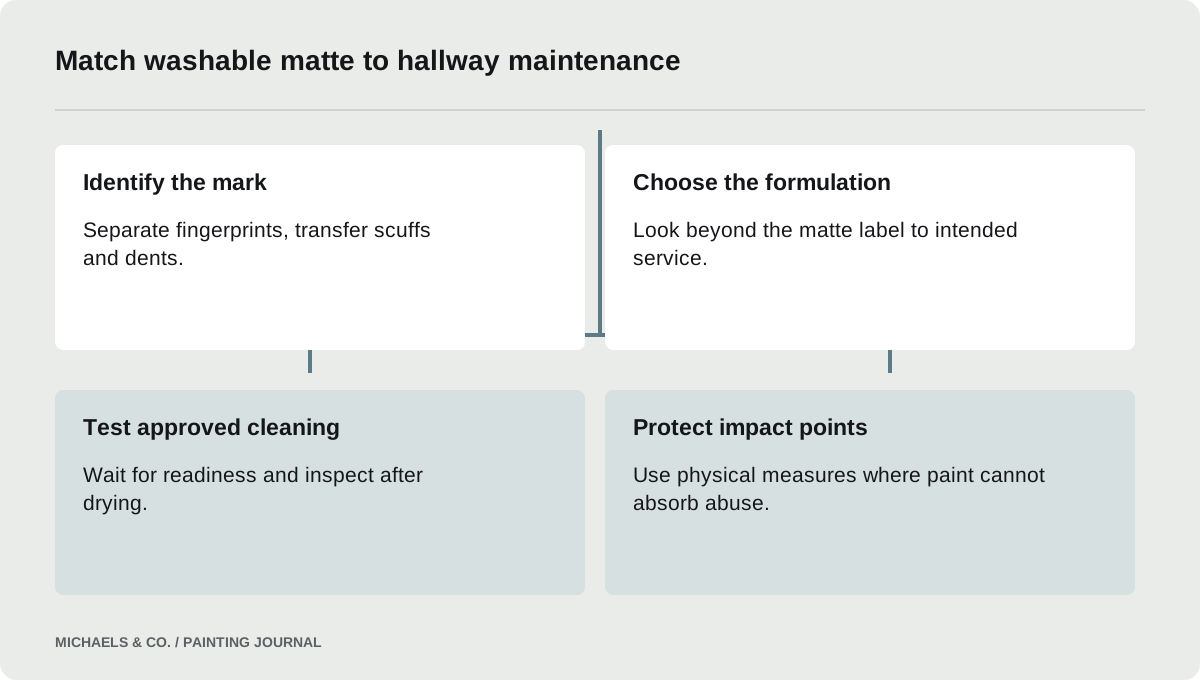
Define what the hallway does to the coating
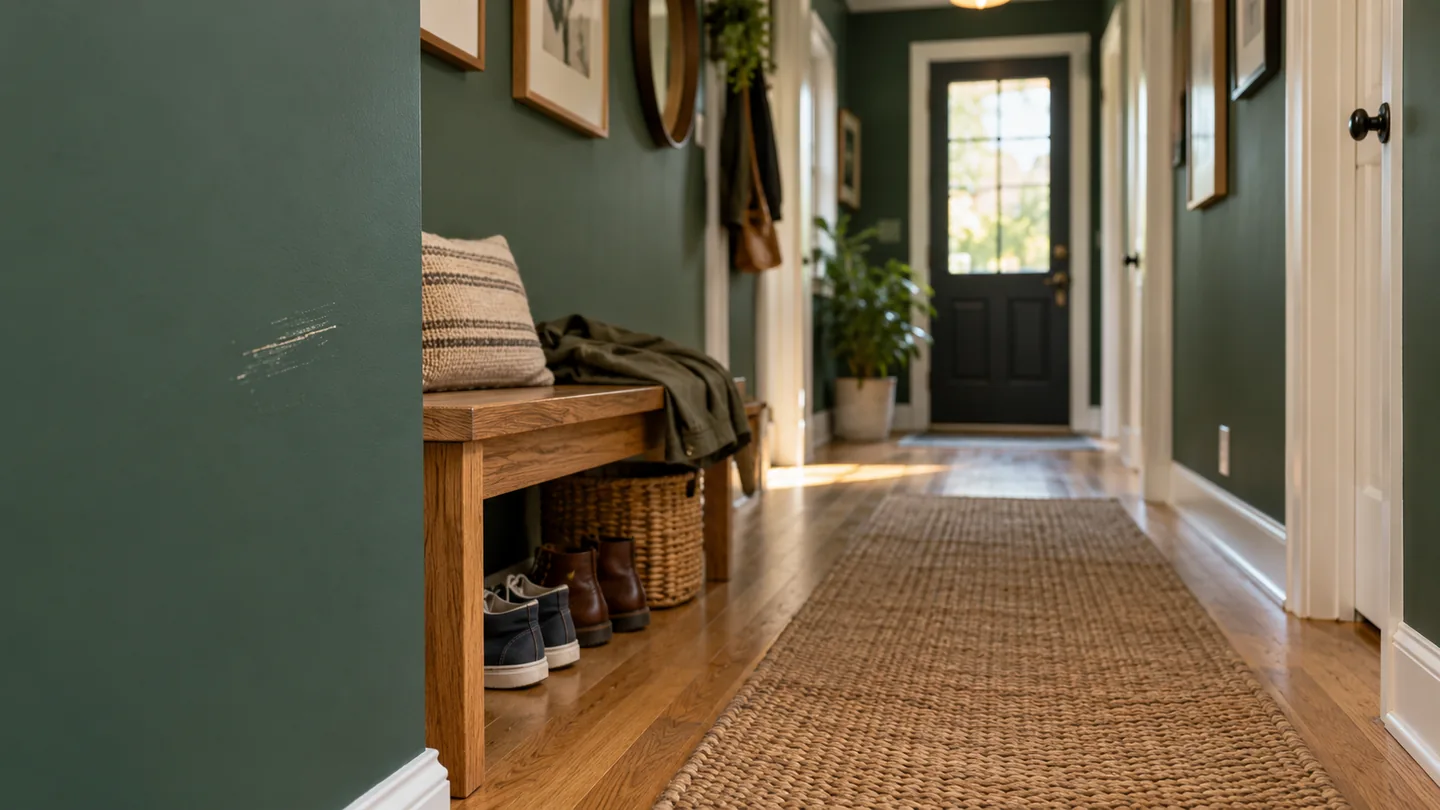
A residential hallway may collect hand marks near bedrooms and shoe scuffs beside a bench. A commercial corridor may receive bags, carts and routine cleaning over long stretches. These produce different damage. A mark sitting on the surface may be removable; a gouge in drywall needs repair. Calling both a scuff leads to unrealistic expectations of paint.
A Reddit debate about eggshell versus matte walls asks whether modern washable matte products make higher sheens unnecessary. The useful answer is narrower: some low-sheen formulations can meet demanding maintenance needs, but the actual service still determines suitability. Walk the hallway before choosing a finish. Mark the height and location of repeated contact and note how staff or household members clean it. This turns a broad preference for matte into a testable requirement rather than a promise that the wall will remain unmarked.
Choose a named washable product, not a generic matte
Matte is primarily an appearance description. A basic decorative matte and a product designed for repeated washing may not behave the same way. Benjamin Moore's sheen guidance discusses low-sheen options for busier spaces, but the exact product's technical information remains the relevant specification.
For a concrete example, Scuff-X Matte N484 is marketed for high-traffic areas, scuff resistance and repeated washing. That product example demonstrates that matte and service durability are not mutually exclusive. It does not establish that every matte paint has the same properties or that it will suit every cleaner used by a facility. Confirm substrate approval, application requirements and maintenance limitations. If a proposal merely says two coats matte, ask for the product line and code. Without them, the appearance category is being mistaken for a complete coating specification.
Separate washing resistance from scuff resistance
A coating can resist being worn away by cleaning without necessarily preventing a dark mark from transferring onto it. Conversely, a surface that resists certain scuffs may reduce the amount of cleaning needed. These are related maintenance concerns but different properties.
Benjamin Moore's technical bulletin on scrub and scuff testing explains that abrasive scrub testing and scuff resistance are not equivalent measures. Treat the bulletin as a manufacturer explanation, not an independent ranking of competing products. Avoid choosing solely from a claimed number of scrub cycles without knowing the test and what it represents. For the hallway, identify the marks you actually encounter and whether the proposed cleaning method removes them without unacceptable appearance change. A practical sample cannot prove long-term performance, but it can expose a mismatch between a product's intended use and a routine that depends on aggressive scrubbing.
Check matte appearance in corridor lighting
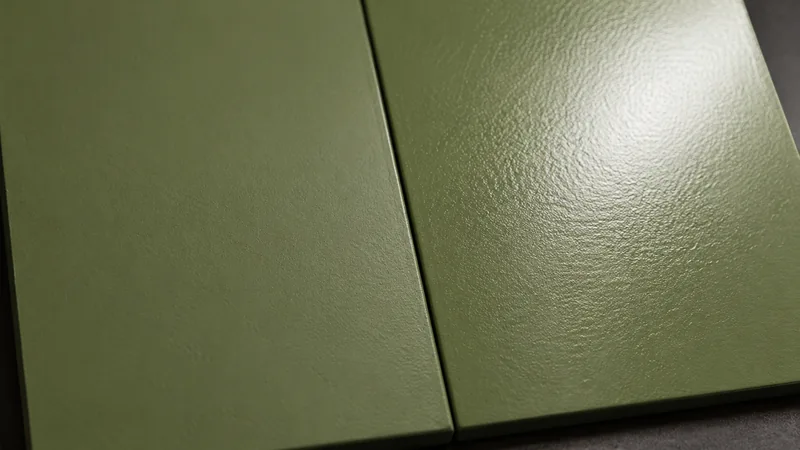
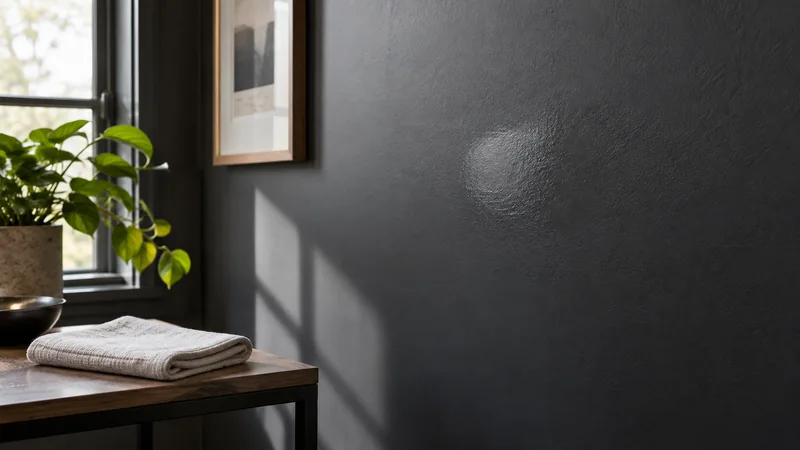
Hallways often create strong lengthwise views. A window, row of ceiling fixtures or wall-mounted light can reveal application texture and changes in sheen. A product called matte may look more reflective than another matte under those conditions. Do not approve it from a small color chip alone.
Prepare a sample large enough to include the intended roller pattern and inspect from both ends of the corridor. Include a representative repaired area if the wall has many patches. Allow the required drying before judging the appearance, since wet coating and developing film can look different. If low glare is the priority, compare suitable products directly rather than selecting the one with the most reassuring label. Record which sample was accepted. The agreed result should be a visible example under the actual light, not an abstract promise that matte means no reflection from every viewing angle.
Test the maintenance method after the proper wait
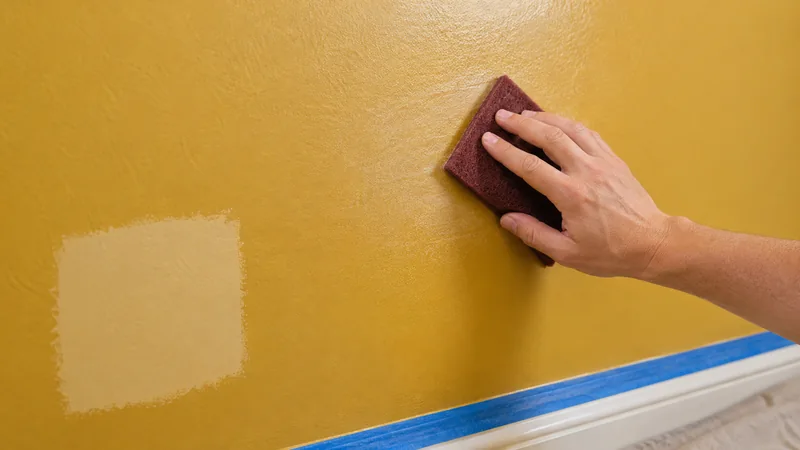
Use a separate sample board or designated test area prepared with the full system. Let the coating reach the manufacturer's permitted cleaning stage. Then use the specified cleaner, cloth or sponge and method. Do not begin with an abrasive pad simply because the goal is to find the toughest paint; that may test a maintenance method the product does not permit.
Observe both mark removal and the dried appearance afterward. Look for a polished spot, altered sheen or color transfer onto the cleaning material. Keep the test controlled and modest so it represents ordinary service rather than an improvised destructive trial. For a facility, involve the person responsible for routine cleaning in selecting the method. A coating that performs well with gentle cleaning is useful only if that process can actually be adopted. Document the cleaner and waiting period with the finish specification so the maintenance team receives more than a paint color.
Combine coating choice with targeted protection
If the same door handle, chair or cart repeatedly strikes the wall, a more durable paint may still be asked to solve the wrong problem. Consider door stops, corner guards, chair spacing or other appropriate protection at the contact point. These measures can reduce repeated repair without changing the appearance of every wall.
| Hallway problem | Selection or maintenance response |
|---|---|
| Fingerprints | Check stain release and approved gentle cleaning |
| Bag or shoe transfer marks | Compare scuff-resistant formulations on a sample |
| Polished cleaning spots | Review product and cleaning method together |
| Dents and broken corners | Add physical protection or adjust traffic contact |
For an apartment building or office, distinguish everyday cleaning from periodic repair in the maintenance plan. A coating can reduce workload without eliminating every future repaint or patch.
Keep touchup expectations realistic
Even a well-chosen washable matte finish may show a spot repair. The surrounding coating ages, gets cleaned and develops a service history that a fresh patch does not share. Texture, film build and application method also affect the result. Keep the original product information and tools in the record, but avoid promising that leftover paint guarantees an invisible touchup.
If a visible repair is likely, plan a logical repaint boundary such as a corner or full wall section. For a long corridor, discuss that maintenance strategy before choosing the initial finish and color. A sample of the intended application gives the maintenance team a reference for texture as well as sheen. Washable matte can be a sound choice when its properties match the hallway, the appearance is approved and cleaning is controlled. It should be selected as a complete service system, not as a way to make a high-traffic wall maintenance-free.
Questions & answers
Is washable matte the same as ordinary flat paint?
No. Product formulations and intended uses differ, even when their appearance is similar. Confirm the exact product's washing and service claims. A generic flat or matte label does not establish the performance of a specific high-traffic coating.
Can I use a scrub sponge on washable matte?
Use only the cleaning tools and methods the coating manufacturer permits after the required waiting period. Washable does not mean every abrasive is harmless. Test the approved method on a sample and inspect after drying for sheen or color changes.
Will scuff-resistant paint prevent dents?
It should not be expected to protect drywall from every physical impact. Surface marks and substrate damage are different. Where carts, furniture or handles repeatedly strike the same location, suitable guards or layout changes may be more effective than changing paint alone.
Sources & further reading
- Benjamin Moore: How to Choose a Paint FinishSheen changes reflectivity, visibility of defects and suitability for cleaning; select within the actual product family.
- Benjamin Moore: Scuff-X Interior Paint Matte N484The product is a specific matte formulation marketed for scuff resistance and repeated washing in high-traffic areas.
- Benjamin Moore: Why Scrub Testing Does Not Measure Scuff ResistanceScrub erosion tests and scuff resistance measure different performance characteristics.
Reader discussions
These conversations describe problems people encountered. They do not establish the cause of a defect or replace product instructions and applicable requirements.