Bathroom Paint Keeps Peeling After Repainting: A Moisture-First Repair Plan
Repeated bathroom peeling needs a moisture and surface investigation before another coating. Check whether the defect follows showers, whether exhaust actually removes humid air, and whether leaks or damaged wall material are present. Then remove unsound coating and rebuild a compatible finish on a clean, dry base. A new fan or a bathroom-labeled paint can help the right situation, but neither repairs a concealed leak or weak old coating.
Record what happens during ordinary bathroom use
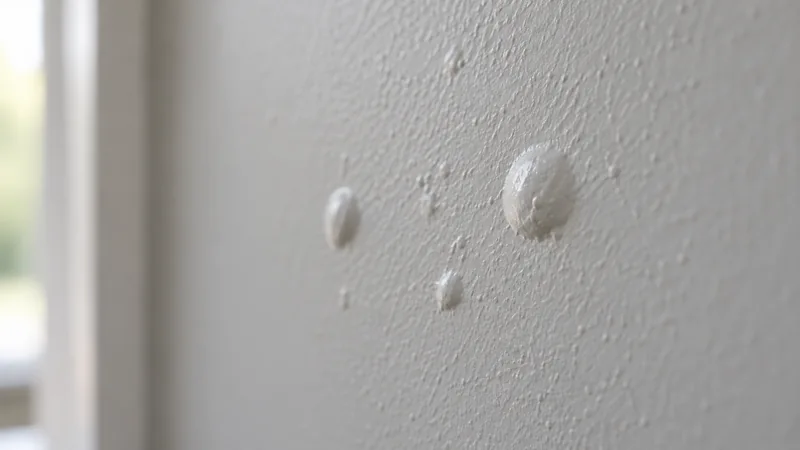
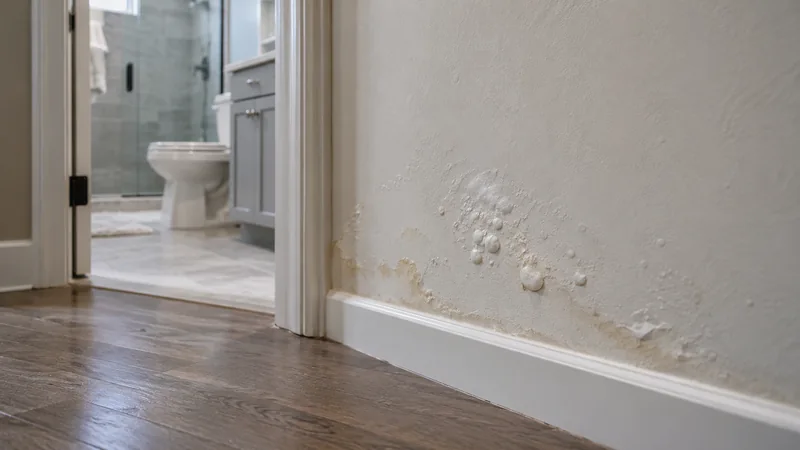
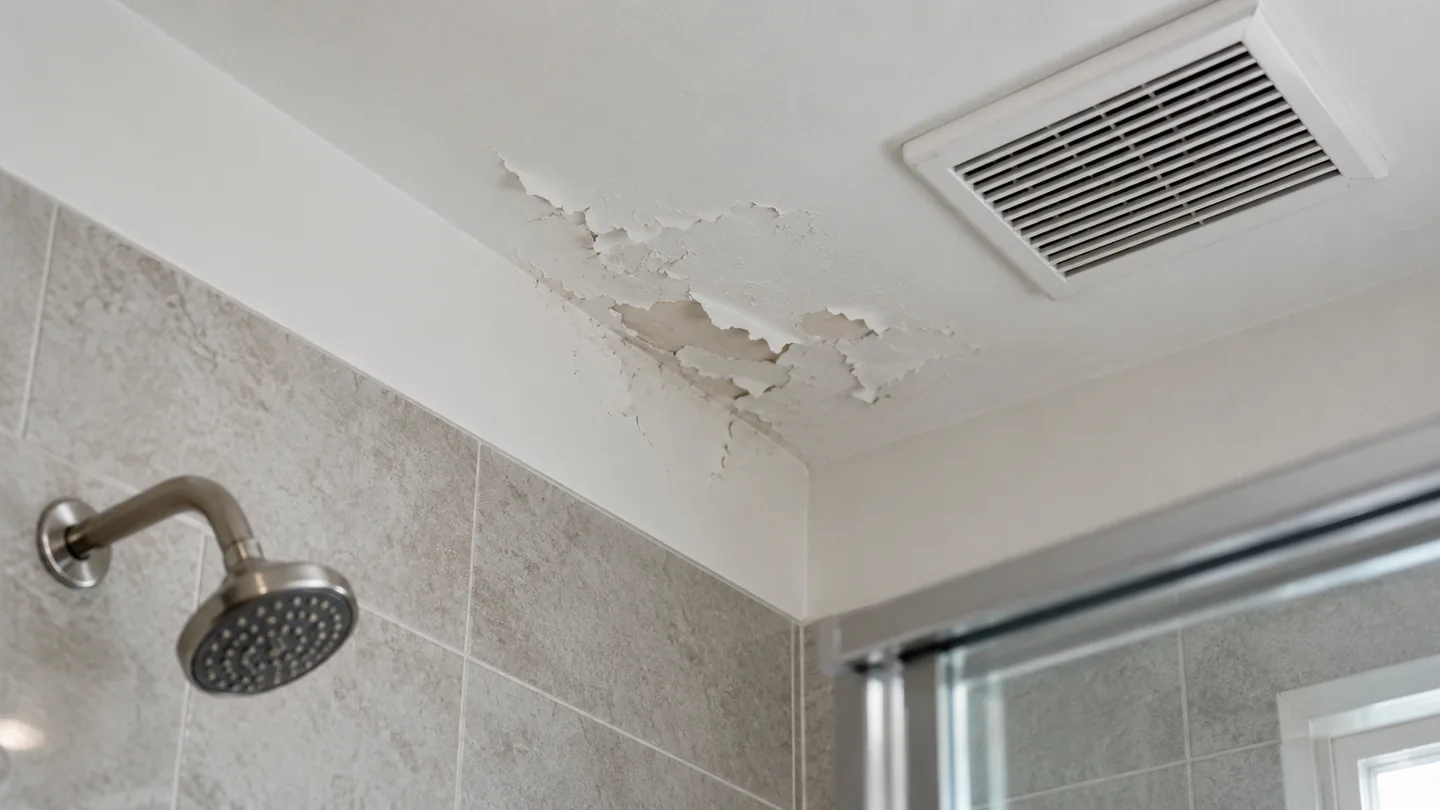
Photograph the wall when the room is dry and again after normal shower use, without deliberately flooding or overheating it. Note whether bubbles appear temporarily, whether edges remain lifted, and whether the problem is concentrated at the ceiling, a window or a plumbing wall. This pattern is more informative than a single close-up.
In this Reddit discussion, a homeowner had already sanded, patched, primed, repainted and installed a new fan, yet bubbles appeared with showers. That report does not establish why the work failed. It does show why a repeat repair should document both the moisture conditions and the layers beneath the finish instead of simply specifying a stronger paint.
Check what the exhaust system actually does
A fan that runs is not necessarily removing moisture effectively. Confirm that it discharges where it should, that the accessible grille is clear and that the system is functioning as intended. If duct routing or performance is uncertain, an appropriate ventilation professional can inspect it. Do not infer airflow from noise alone.
Sherwin-Williams: Peeling Due to Moisture Inside identifies excess indoor moisture and ventilation as relevant to peeling. The room's use also matters: a closed door, repeated showers or a cold exterior surface can change how quickly visible condensation clears. Discuss operation of the bathroom with the occupants. A repair plan based on an empty, heated room may not represent the conditions after everyone moves back in.
- Record whether peeling concentrates above the shower, along an exterior corner, around an exhaust grille, or across the entire ceiling after normal use.
- Check the exhaust path and accessible grille for obvious obstruction; a running fan alone does not establish that moisture is leaving the room effectively.
- Compare condensation after a typical shower with conditions later in the day, recording persistent dampness instead of relying on a single dry inspection.
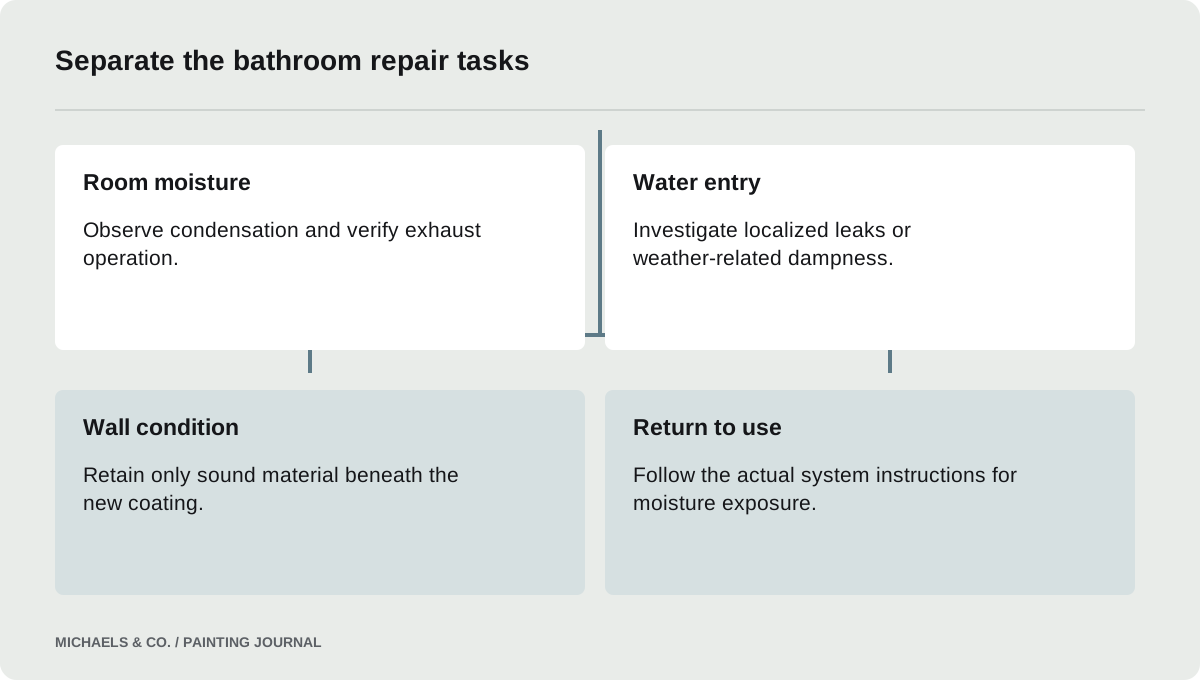
- Require the repair scope to distinguish ventilation corrections, removal of unsound coating, substrate repairs, and the specified bathroom coating before approving another repaint.
Do not let ventilation distract from a leak
A local defect near a supply pipe, shower connection, window or ceiling below another room deserves a separate water-entry check. Look for changes unrelated to bathing, such as after rain or use of plumbing elsewhere. Softened material, staining or an expanding damp patch should not be dismissed as ordinary steam.
The right next trade depends on the evidence. A painter can document coating condition, but concealed plumbing or enclosure faults may require a plumber or building specialist. Record what was repaired and how the condition was checked afterward. A new exhaust fan cannot solve water entering the wall from a failed connection, and waterproof-sounding paint is not a replacement for that repair.
Inspect the layers and the condition of the wall
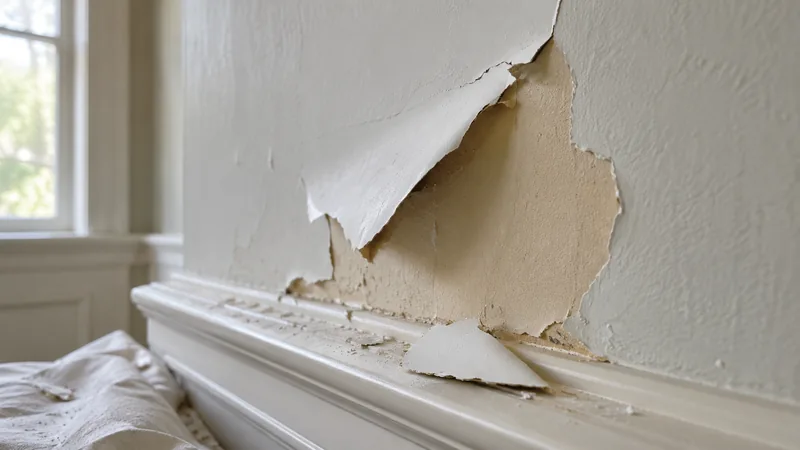
Where paint has already detached, note whether only the new finish released or whether older colors, primer or wall paper came with it. A bathroom can have moisture exposure and a preparation problem simultaneously. Understanding the remaining surface helps determine whether local stabilization is sufficient or damaged material needs replacement.
Do not patch over soft or crumbling wallboard to restore its appearance. EPA: A Brief Guide to Mold, Moisture and Your Home explains that moisture problems must be corrected and that some affected porous materials may need removal. It also advises against painting moldy surfaces. A photograph cannot establish the type or extent of growth, so uncertain or substantial conditions should be assessed rather than covered by a cosmetic coating.
Prepare a clean, dry and stable repair area
After the cause has been addressed, remove unsound coating using an approach appropriate to the age and materials of the wall. Establish applicable lead precautions before disturbing older or unknown paint. Prepare the edges so the repair meets firmly attached coating rather than ending on a flap that will lift during the next wet stage.
Cleaning, drying, filling and priming are separate decisions. Choose the materials for the exposed substrate and the expected bathroom conditions. A fixed promise that a wall will be dry tomorrow ignores the depth of wetting and room conditions. Use the assessment and product requirements to determine readiness, and keep drying equipment from creating unsafe heat or airflow around the work.
Choose a complete coating system
Specify the primer and finish as a compatible system for the repaired surface. A paint intended for humid rooms may improve performance in that environment, but it does not remove the need for proper substrate preparation. Likewise, a glossy finish is not automatically the answer to every bathroom defect.
Ask what problem each product is intended to solve. Is the primer equalizing absorption, bonding to an existing coating or isolating a residual stain? These are different purposes. If a product is being substituted, check the actual instructions rather than assuming that a similar label means identical requirements. Include a representative repair sample where the original failure was persistent or the coating history is uncertain.
Plan when the bathroom can return to use
The schedule should account for all materials in the repair, not only the final coat feeling dry. Follow the specified recoat and service conditions for the actual products. Discuss when cleaning, showering and normal moisture exposure can resume; do not substitute a universal overnight or one-week rule for those instructions.
For the household or tenants, agree on a practical alternative while the room is unavailable. A technically appropriate coating plan can fail operationally if occupants must use the shower before the system is ready. Put the agreed restrictions and ventilation instructions in writing so the painter, property manager and occupants are working from the same schedule.
Verify the correction under real conditions
Inspect the finish once it is ready and record the appearance of the repair edges. Then observe the room during normal use over time. The purpose is to check whether the original pattern recurs, not to create an extreme steam test that the product was never intended to withstand.
A useful closeout checklist records the moisture source or ventilation issue, any building repairs, retained versus replaced substrate, the coating system and the return-to-use instructions. If peeling returns in the same place, compare those records with the new failure. If a different area fails, investigate it independently. Repeatedly repainting every symptom with the same assumption can conceal separate problems within one bathroom.
Questions & answers
Is semi-gloss always the best choice for a bathroom?
No single sheen fixes every bathroom condition. Select a coating whose intended use and cleaning properties fit the room, and follow its system requirements. Surface stability, moisture control and application conditions remain important regardless of whether the finish is matte, satin or semi-gloss.
Can mold-resistant paint cover existing mold?
It should not be used to avoid cleaning and moisture correction. EPA advises cleaning affected surfaces and drying them before painting, with replacement or specialist assessment where appropriate for damaged porous material. A coating label does not establish that concealed material is sound.
Why did the problem return after a new fan was installed?
The fan may not be addressing the relevant moisture path, or another issue such as a leak or weak old coating may remain. Check actual exhaust operation and the location of the failure. The presence of a new fan alone does not verify that the conditions behind the original peeling were corrected.
Sources & further reading
- Sherwin-Williams: Peeling Due to Moisture InsideAddress excess moisture and ventilation before removing failed paint and preparing the underlying surface.
- EPA: A Brief Guide to Mold, Moisture and Your HomeFix water problems and clean and dry affected surfaces before painting; damaged porous materials may need replacement.
Reader discussions
These conversations describe problems people encountered. They do not establish the cause of a defect or replace product instructions and applicable requirements.