Paint Peeling Off in Sheets: How to Find the Layer That Failed
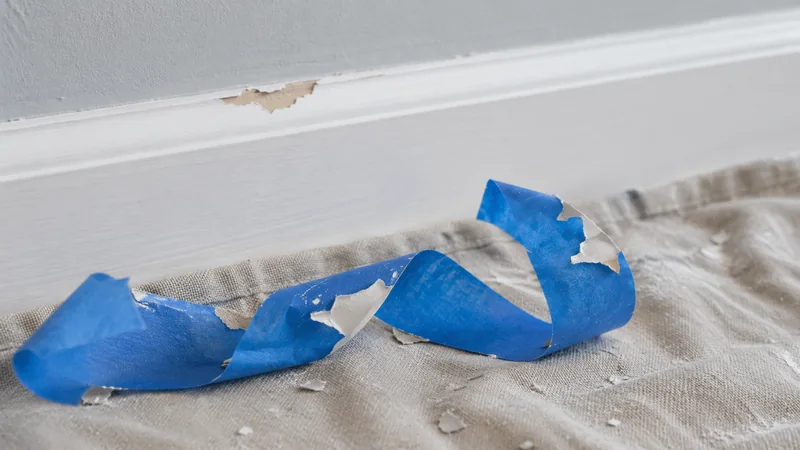
Paint that peels in sheets has lost its bond somewhere in the coating system. The visible topcoat may be sound while an older coat, primer or the surface underneath has failed. Find that separation first, then check for moisture, contamination and unstable material. A bonding primer cannot restore a layer that is already pulling away from the wall, so the repair must start with a sound base.
Stop pulling until you know the extent
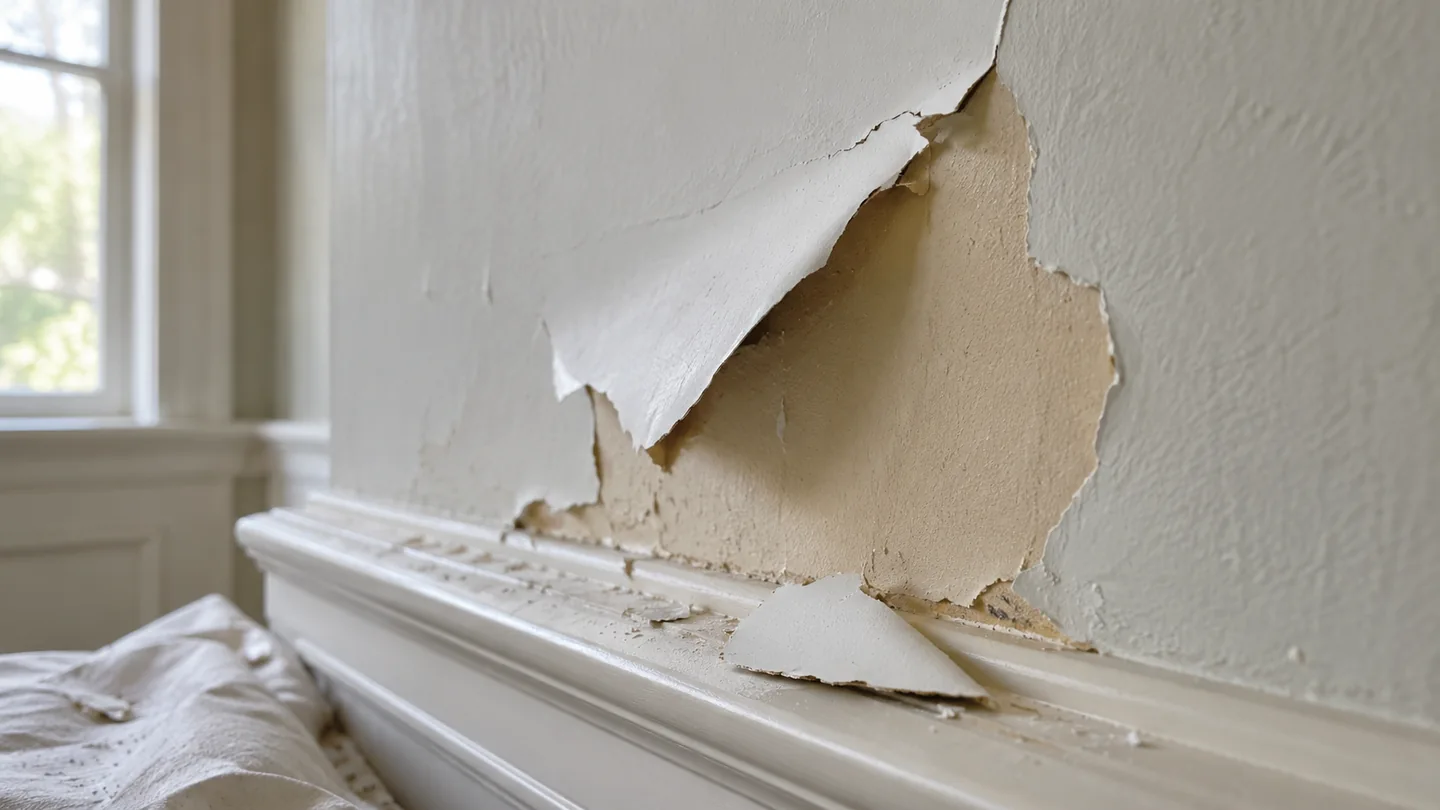
A loose flap makes it tempting to peel until nothing comes off. That can turn a small investigation into a room-sized removal project before you have considered the age of the coating, protection of the room or the repair method. Photograph the intact defect and its boundaries first. Keep a sample that has already detached, and note where it came from.
In this Reddit discussion, repeated patching and priming produced new bubbles, followed by paint releasing in sheets. That is evidence of a frustrating sequence, not proof of a particular chemical incompatibility. The important question is what each attempt was being applied over and which interface continued to release.
Read the layers rather than the paint brand
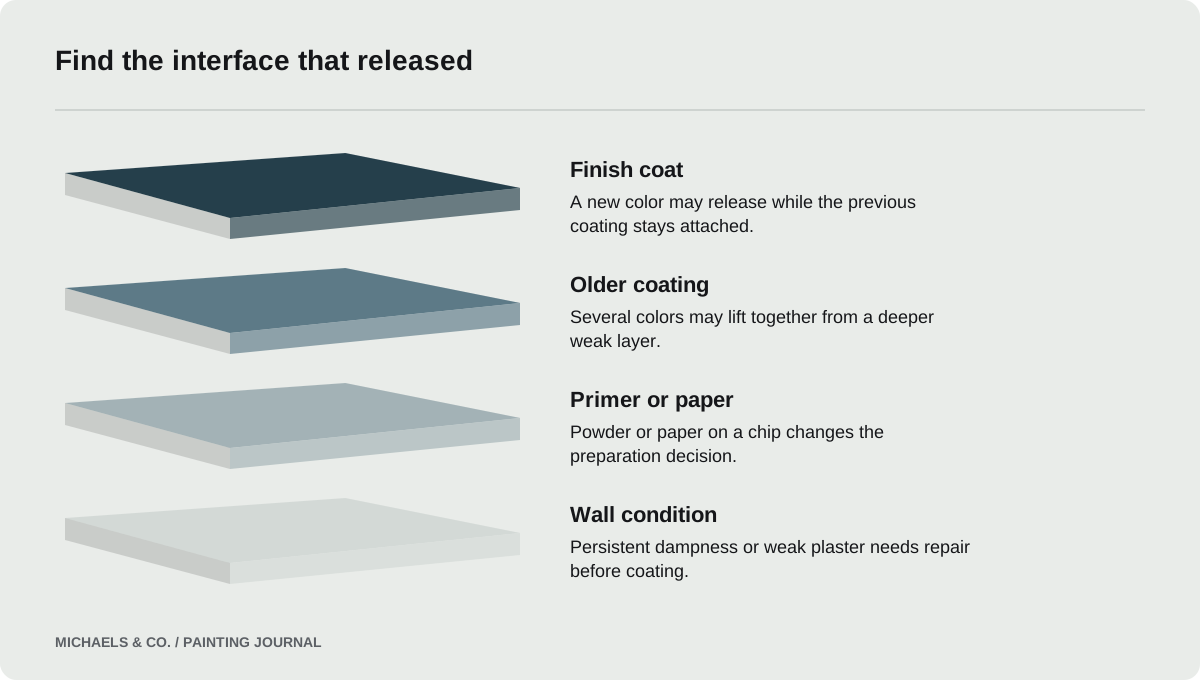
Examine both the wall and the back of a detached piece. If the new color lifts while the previous color remains firmly attached, the problem may be between coats. If several colors come away together, a deeper interface deserves attention. Paper, powder or pieces of plaster on the chip suggest that preparation must address the wall material itself.
Record these observations without treating them as a complete laboratory diagnosis. A chip from one location cannot establish the condition of every wall. Compare a failure near a window with one in a protected interior area. Different patterns can mean that more than one repair is needed within the same room.
- Photograph both sides of a naturally detached flake beside the exposed wall, keeping the location identifiable so a contractor can compare neighboring failures.
- Record whether the exposed layer is bare substrate, primer, an older color, or a soft compound; different interfaces require different preparation decisions.
- Compare a damaged area with an undisturbed area on the same wall, looking for cleaning residue, gloss, powder, or a change in substrate.
- Ask the repair proposal to identify which existing layers will remain and how their attachment will be evaluated before a replacement system covers them.
Check the surface that the new paint had to grip
A glossy, greasy or dusty layer can interfere with adhesion. Ask whether the wall was cleaned, whether cleaning residue was removed, and whether the selected primer was intended for that surface. A product described as stain blocking does not necessarily perform the same job as one selected to bond to a slick finish.
Sherwin-Williams: Peeling Over Hard, Slick Surfaces identifies contamination, gloss and preparation to a sound surface as relevant considerations. That does not mean every repaint requires aggressive sanding. It means preparation must suit the actual surface and the coating instructions. When the old coating is unknown, do not assume its resin type from its color or flexibility alone.
Investigate moisture when the evidence points there
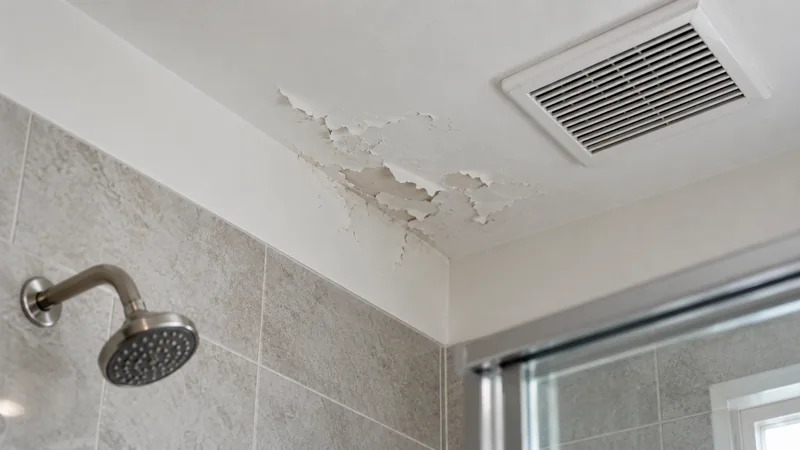
Moisture deserves attention when peeling follows rain, concentrates beside plumbing, returns around windows, or accompanies softened wall material. Look for a pattern, record when it changes and involve the appropriate building professional if the source is concealed. A dry-looking face does not establish that everything behind it is dry.
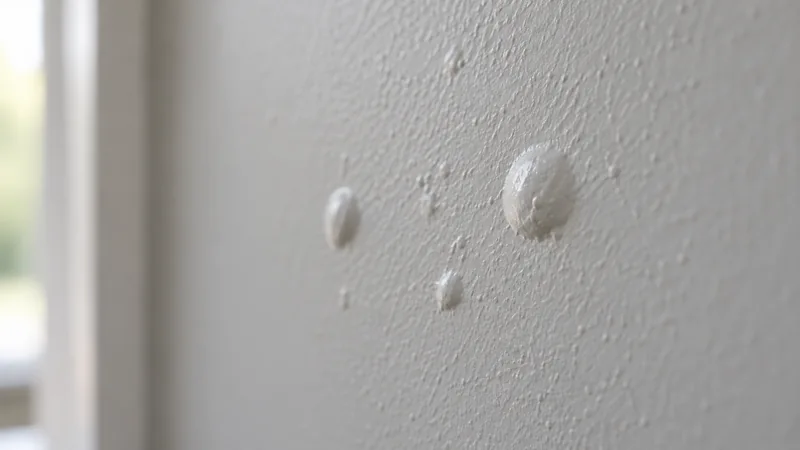
Sherwin-Williams: Blistering describes both moisture-related and other forms of blistering. The location of the failed layer helps organize the investigation, but it is not a substitute for checking the building. Do not seal an actively damp wall merely to see whether the finish will hold. A successful coating repair depends on correcting ongoing conditions that caused the loss of bond.
Decide how far preparation must extend
A local repair is reasonable when its boundary reaches firmly attached coating and sound wall material. Wider removal becomes more likely when gentle inspection finds loose layers continuing beyond every edge, or when similar failures appear across a broad surface. The objective is a stable repair boundary, not an arbitrary promise to strip every wall bare.
Before disturbing older paint, establish whether lead precautions apply. Unknown coatings and plaster materials may need assessment before abrasive work begins. The condition of the remaining paper or plaster also matters: removing paint successfully does not leave every wall ready for a finish coat. Torn paper, gouges and weak plaster require their own repair decisions.
Make a small repair prove the proposed system
Choose a representative area that includes the failed surface and the edge of retained coating. Prepare it according to the proposed materials, then complete the patching, priming and finish sequence. Record products and the conditions under which each stage was performed. Follow their specified drying and recoating requirements rather than compressing the work into a convenient afternoon.
Evaluate the sample for lifting, edge visibility and finish appearance. A thumbnail scratch immediately after application is not a standardized acceptance test for every paint. If adhesion testing is necessary, agree on an appropriate method and timing with the coating supplier. A sample reduces uncertainty; it cannot guarantee that unexamined areas have identical conditions.
If a contractor proposes a full-wall skim coat, ask what will support that new material. Skimming can improve the profile of a sound wall, but it does not establish the strength of a coating underneath. The estimate should connect the preparation method to the retained layers and explain how representative areas were assessed before new material is added.
Put the diagnosis and repair limits in the estimate
A useful proposal describes the observed failure layer, the area to be prepared, the condition required before coating, and the products or performance requirements for the replacement system. It should also explain how concealed damage will be handled if preparation reveals more than the initial inspection could see.
Use this inspection checklist with the proposal: photograph the original condition; identify the retained layers; record any moisture repairs; approve the representative sample; agree on the final finish area; and keep the product labels. These records make it possible to distinguish a new failure from a previously unaddressed section instead of starting the same argument again.
Repaint to a visual boundary that makes sense
A structurally sound patch can still be visible because its texture or sheen differs from the surrounding wall. Decide whether the work includes just stabilizing the damaged area or producing a uniform appearance across the entire wall. These are different scopes, and the latter may require coating to corners or another natural break.
Inspect after the finish has reached its specified evaluation stage and under the room's ordinary lighting. Keep an eye on the repaired area through the conditions associated with the original problem, such as normal bathroom use or a period of rain. Record changes rather than repeatedly adding more paint. If the same interface releases again, return to the diagnosis before choosing another primer.
Questions & answers
Does peeling in sheets prove that latex was painted over oil?
No. That is one possible compatibility question, but several different failures can produce a similar appearance. Examine the released layers and review preparation, contamination and moisture. Old coating identity should be established before selecting a repair system, rather than inferred from a photograph.
Can I glue the loose paint down with primer?
A primer is not a substitute for removing coating that has already lost its bond. Some products are intended for specific marginal surfaces, but their limits matter. Identify and prepare a sound boundary before deciding whether any such product is suitable.
Must the entire room be stripped?
Not automatically. A localized failure with stable surrounding coating may permit a local repair. Widespread loose layers or weak wall material can justify a larger scope. Test representative areas and separate the extent of necessary removal from the extent needed for a visually uniform finish.
Sources & further reading
- Sherwin-Williams: Peeling Over Hard, Slick SurfacesContamination, gloss and weak underlying layers can impair adhesion; preparation must reach a sound surface.
- Sherwin-Williams: BlisteringBlistering has multiple possible causes; the failed layer and moisture conditions guide repair.
Reader discussions
These conversations describe problems people encountered. They do not establish the cause of a defect or replace product instructions and applicable requirements.