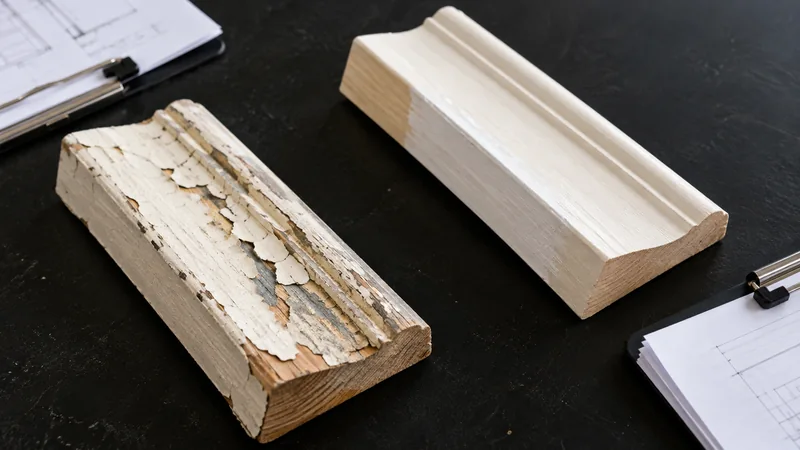
California Painting Contractor Licenses and Lead-Safe Credentials
California has a C-33 painting and decorating contractor classification. Whether a license is required depends on the project and applicable exceptions, not simply on whether work is indoors. Covered work that disturbs older paint can also require separate federal renovation certification and California lead qualifications. Verify each relevant record against the business, people and work involved.

Describe the entire project
Before checking credentials, write down the work the contractor will perform. A proposal may involve coating interior walls, scraping an older exterior, repairing damaged trim or coordinating another trade. Those activities do not all have identical licensing or safety implications. Identify the property, approximate building age, full project price, employees, required permits and any repairs that go beyond painting.
California's Contractors State License Board (CSLB) lists C-33 Painting and Decorating as a contractor classification covering preparation and application of a range of finishes to structures. That describes the classification; it is not proof that a particular business holds it, that every repair is within its authorized scope, or that the firm has separate lead credentials.
Understand when a license is required
CSLB explains that a contractor must generally be licensed if the project requires a building permit, uses employee labor, or the total cost of labor, materials and other items on one or more contracts for the project is $1,000 or more. Its licensing guidance describes a limited small-project exemption when no building permit is required, no employee labor is used and the combined project cost is less than $1,000.
Do not divide a larger project into smaller agreements to avoid the threshold. Other exemptions may exist for particular situations, so identify the facts and check CSLB when uncertain. An indoor-only painting proposal is not automatically exempt from California contractor licensing. Likewise, a small quoted price alone is not enough to establish an exemption if a permit or employee labor is involved.
Verify the record for the contracting party
Use the license number and legal business name shown on the proposal to search CSLB's current license record. Compare the entity, active status and classification to the party signing the agreement and the scope proposed. If the record shows a different name, inactive status or an unexpected classification, ask for an explanation and verify it before signing or paying. Save the check date with your project records.
A contractor may use a trade name, corporation or limited liability company, so matching the parties is more useful than merely seeing a number in an advertisement. If several contractors will work directly for the owner, check each relevant party. A salesperson, estimator, subcontractor and prime contractor can have different roles. Ask who will actually hold the agreement and supervise the work.
Treat insurance and bonding as separate checks
A valid license is one part of due diligence. Discuss workers' compensation and general liability coverage for the actual work and request current evidence from the appropriate provider. Check the details and dates rather than assuming every certificate in a proposal proves coverage for every person, activity or location. A workers' compensation exemption shown on a record requires its own factual context; it does not establish that a business has employees covered by insurance.
Bonding is another separate subject. A standard contractor license bond is not the same thing as a special blanket performance and payment bond, and neither guarantees that the owner will like the finished color. CSLB explains different types of contractor bonds. Read the written warranty, exclusions and dispute terms alongside the license and insurance information.
Check federal lead renovation requirements
For covered paid renovation that disturbs painted surfaces in pre-1978 housing or child-occupied facilities, the federal Renovation, Repair and Painting program generally requires a certified firm, an assigned certified renovator and lead-safe work practices. Painting preparation can be covered. There are specific exclusions, including some minor work and properly documented lead-free components; check the EPA's conditions instead of assuming every pre-1978 job or every painted surface is covered.
Ask for the firm's applicable certification and the assigned renovator's qualifications, along with a written description of containment, cleanup, notification and recordkeeping for the proposed work. EPA identifies a California enforcement case involving failure to certify a firm and assign a certified renovator. A contractor license by itself is not evidence of federal renovation certification, and certification does not replace safe practices on the site.
Check California lead qualifications separately
California Department of Public Health (CDPH) lead-related construction certification is a separate system. According to CDPH guidance on when certification is required, paid lead inspections and risk assessments in residential or public buildings generally require a state-certified inspector/assessor. A certified lead project monitor may perform clearance inspections only, under the applicable rules. The department also identifies circumstances involving lead hazard abatement and worker exposures where certification is required. Funding conditions and project specifications may impose additional requirements.
Lead-safe renovation and work specifically intended to abate lead hazards are distinct scopes. Do not use a painting license, an EPA firm certificate or a training class as proof of every CDPH qualification. Ask the health department or CDPH which credential applies to the testing, preparation or hazard-control work proposed, and verify the relevant people in the state's records. Cal/OSHA and other requirements can still apply where a particular CDPH certificate is not required.
Ask for a work plan, not just a logo
In an older-home discussion from New York, an owner describes confusion between repainting precautions and hiring an abatement firm. It is an example of a practical question, not California legal evidence or a diagnosis of that home. The useful lesson is to discuss the specific work before preparation begins.
Identify the surfaces to be disturbed, the planned preparation method, how occupants and adjacent areas will be protected, how debris will be controlled and cleaned, and who will document the work. For an older building, ask how existing paint information will be evaluated and whether a qualified inspection is appropriate. Do not assume that a new finish makes old coatings harmless or that a license number alone explains the containment plan.
Keep the evidence with the agreement
A short record makes it easier to compare bids and resolve questions later. Keep copies of the current license search, the signed scope, applicable lead qualifications, insurance information, any inspection results, written changes and final documentation. Record dates and confirm who is responsible for each stage. If a contractor proposes subcontracting a specialized task, identify that firm and verify the credentials relevant to its work.
- List the complete work and whether employees or permits are involved.
- Check the current CSLB entity, status and classification.
- Review insurance and bond information separately.
- Evaluate EPA renovation and California lead requirements for the actual surfaces and methods.
- Put the work plan, changes and any warranty in writing.
References and finished-job examples can inform your choice, but they do not replace official verification. If the scope is mixed or a credential is unclear, get a specific answer from the responsible agency before work begins.
Questions & answers
Does an interior painter need a California contractor license?
Interior painting is not automatically exempt. CSLB generally requires a license when the project requires a permit, uses employee labor, or costs $1,000 or more in total. A limited small-project exemption requires all of its conditions to be met; check the complete scope and applicable exceptions with CSLB.
Does a C-33 license prove a painter is lead-safe certified?
No. C-33 is a contractor classification. Federal renovation certification and California lead-related construction certifications are separate requirements that can apply to different work. Check the firm’s and individuals’ relevant qualifications for the property and tasks.
Does every pre-1978 painting job require lead abatement?
No. Covered paid renovation that disturbs paint can trigger federal RRP rules, while abatement is a distinct scope intended to address lead hazards. Exceptions and separate California requirements depend on the facts. Ask EPA, CDPH or the local health department about the proposed work.
What should I do with a license number in an estimate?
Search the current CSLB record and match the business name, active status and classification to the contracting party and scope. Ask about discrepancies and keep the date of your check. Also review insurance, bond and any lead qualifications separately.
Sources & further reading
- CSLB: C-33 painting and decorating classificationDefines the painting and decorating contractor classification.
- CSLB: Who must be licensedLicense triggers and the limited small-project exemption.
- EPA: Renovation, Repair and Painting program for contractorsFederal certification, covered renovation, lead-safe practices and exclusions.
- CDPH: When lead-related construction certification is requiredState certification depends on task, building, hazard control and other circumstances.
- CSLB: Finding the right contractorLicense verification and differences among bond types.
Reader discussions
These conversations describe problems people encountered. They do not establish the cause of a defect or replace product instructions and applicable requirements.