Choosing Bathroom Wall and Ceiling Paint for Humid Conditions
Choose a coating specifically suitable for bathroom humidity and the surface you are painting. Sheen alone does not establish moisture performance: some designated bathroom products have a matte finish. Separate ordinary walls and ceilings from shower interiors, leaking areas and persistently damp substrates. Paint selection works only after moisture sources, ventilation and the condition of the existing coating have been addressed.
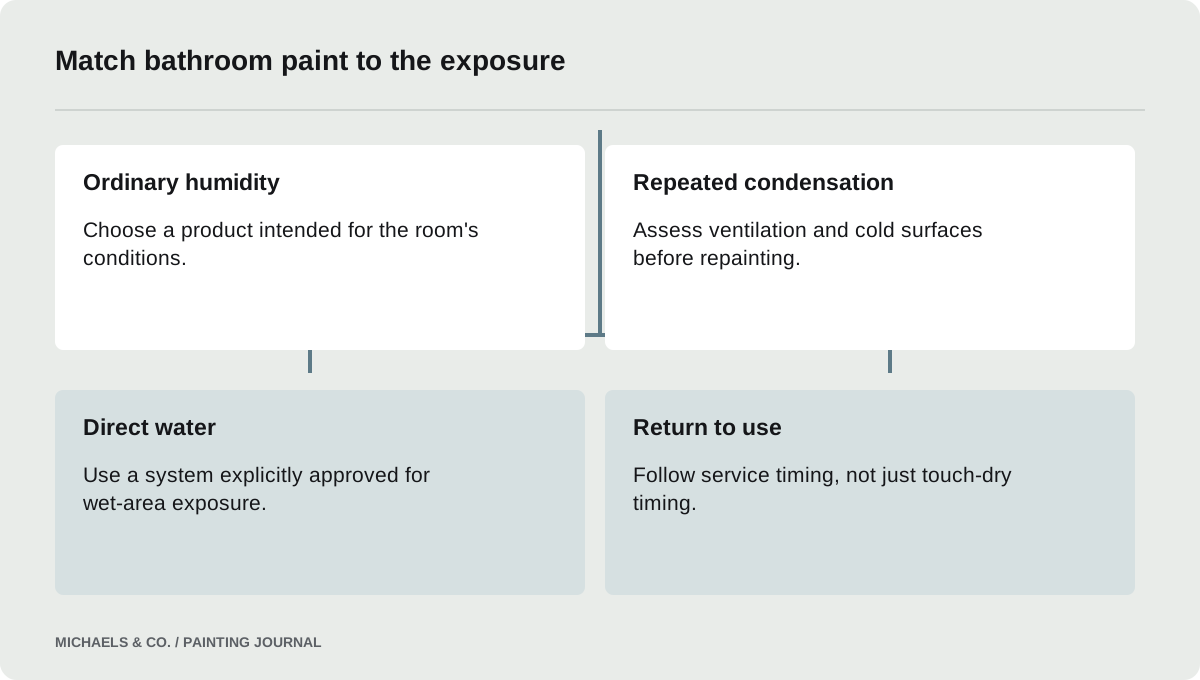
Map where water actually reaches the room
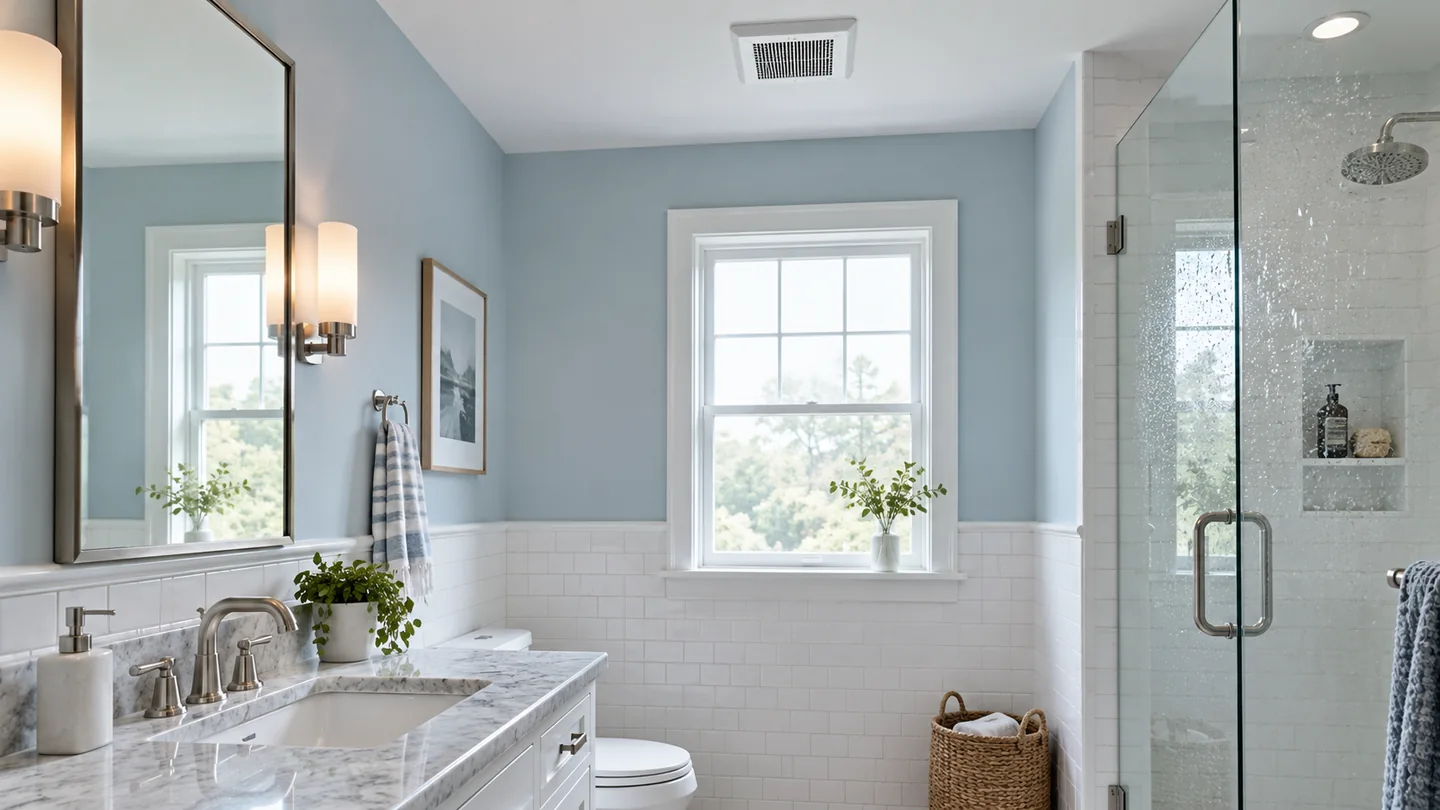
Start with exposure rather than a sheen chart. A wall beside a vanity receives occasional splashes and cleaning. A ceiling above a shower experiences humid air and possible condensation. A shower enclosure receives repeated direct water and requires a system intended for that exposure. These are different service conditions even when they share one room.
A Reddit discussion about recommended bathroom finishes shows the familiar uncertainty between matte, eggshell and more reflective options. The useful question is not which sheen is always best, but which exact product is suitable for the room's conditions. Note whether surfaces dry between uses, whether condensation forms in the same place and whether any water comes from a leak. A coating selected for humid rooms is not a substitute for repairing a plumbing defect, correcting failed waterproofing or improving a ventilation arrangement that leaves the room wet for long periods.
Read bathroom claims as product claims
A bathroom designation describes a particular formulation and its intended use. It cannot be transferred to every paint with the same sheen or brand name. Benjamin Moore's Aura Bath & Spa matte product information is an example of a coating marketed for high-humidity environments in a low-reflectance finish. That example disproves the simple rule that bathroom walls must always be semigloss, but it does not establish that any matte wall paint is appropriate.
Check the current technical sheet for approved substrates, primer requirements, application conditions and return-to-service directions. Also distinguish mildew resistance of the dried paint film from treatment of existing microbial growth. Product language about the coating's surface does not promise that damp drywall, hidden leaks or contaminated cavities have been resolved. If the label is unclear about the planned exposure, obtain guidance for that exact system before purchasing enough paint for the room.
Choose sheen for appearance and maintenance together
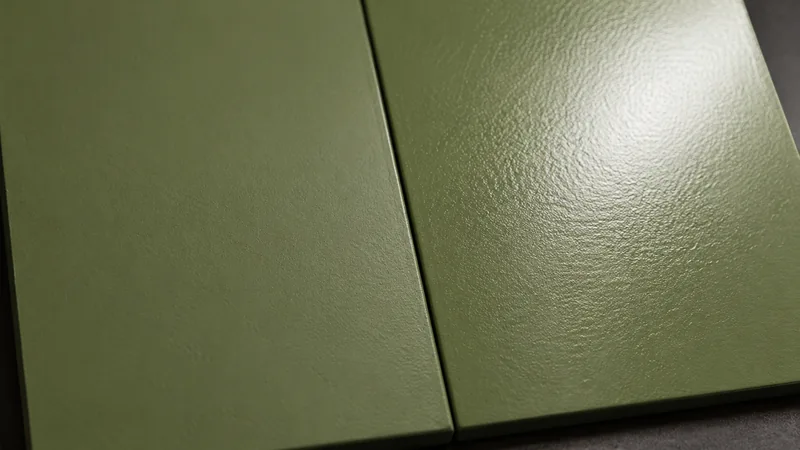
Higher sheen makes reflected light more noticeable and can emphasize uneven drywall, patch edges or surface texture. Lower sheen can make a room look calmer, but cleanability varies considerably between product lines. Benjamin Moore's finish-selection guidance is useful for understanding the appearance and maintenance tradeoffs without treating sheen names as standardized durability ratings.
Consider how the room is cleaned. A guest bathroom used occasionally has different wear from a busy family bath where toothpaste and fingerprints are wiped repeatedly. Ask whether the product allows the cleaning method you expect to use after it has developed its service properties. Do not select a highly reflective finish simply to compensate for weak ventilation. Likewise, do not choose an ordinary decorative matte solely to hide defects if its intended use does not include the room's humidity. Appearance and exposure must both fit the selected coating.
Assess the ceiling separately from the walls
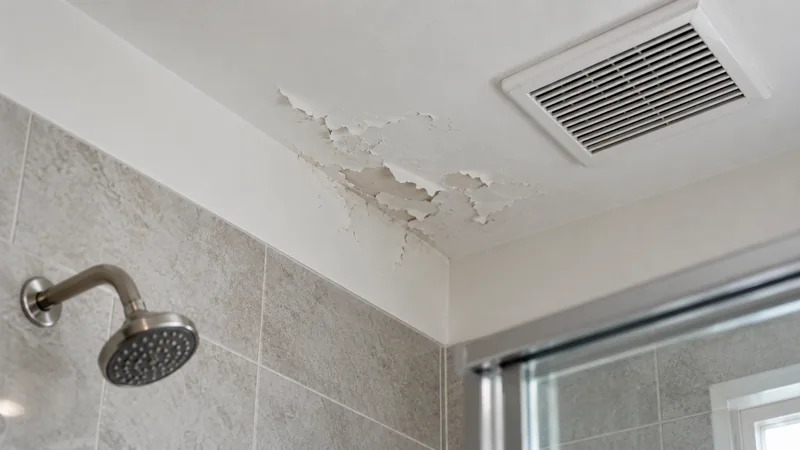
Ceilings can experience different conditions from nearby walls. Warm humid air may condense on a cold ceiling area even when lower surfaces look dry. Existing staining, peeling or recurrent spots need investigation before the ceiling receives another coat. A fresh finish can conceal evidence temporarily without changing the reason that area stays damp.
Choose a ceiling system that is approved for its substrate and exposure. A general-purpose ceiling paint may be attractive because it hides reflected light, but its label still needs to support the intended room conditions. If the wall product is also being considered overhead, confirm that use and the expected appearance rather than assuming one can will serve every surface. Examine light placement too. A ceiling fixture or window can produce strong side lighting that makes application texture more visible. A representative sample helps settle the desired finish before the whole ceiling is committed.
Prepare sound surfaces without trapping unresolved moisture
Clean away ordinary residues using a method suitable for the existing coating, then follow the specified rinsing and drying steps. Soap, personal-care products and cleaning residues can remain on surfaces that appear visually clean. Glossy sound paint may need deglossing or an approved bonding step, while porous repairs can need a different primer. One bathroom can therefore require more than one preparation decision.
Do not coat a damp surface merely because the new paint is sold for humid rooms. Determine why it is damp and allow the substrate to reach the coating's permitted condition. Loose coatings and damaged wall materials also need repair before finish paint is considered. Where old or unknown coatings will be disturbed, assess the relevant hazards before abrasive preparation. The goal is a clean, sound, suitable base. Adding more primer cannot make an unstable or wet substrate equivalent to a properly prepared wall.
Plan the room's return to service
A paint film may become touch-dry well before it can tolerate repeated condensation, wiping or contact. The exact product's technical instructions should determine recoat timing and when the bathroom can return to normal use. Temperature, humidity and air movement can change drying behavior, so do not use a clock alone to justify recoating a surface that has not reached the required condition.
| Surface or condition | Selection question |
|---|---|
| Ordinary bathroom wall | Is the coating approved for humidity and expected cleaning? |
| Ceiling with condensation | Has the moisture pattern been assessed before coating? |
| Direct shower spray | Is a dedicated wet-area system required? |
| Porous repair beside sound paint | What primer system unifies the different substrates? |
Arrange an alternative shower if the coating's service interval requires it. Rushing use immediately after painting can undermine careful product selection and preparation.
Use a sample and a maintenance plan
Paint a representative area that includes the room's lighting and, if relevant, a prepared repair. Evaluate the dried color and sheen before completing all walls. Then retain the product information and note the application date so cleaning can begin at the manufacturer's permitted stage. A sample is especially useful when choosing a specialty matte bathroom finish for the first time.
After the room returns to use, maintain the ventilation and cleaning practices that the coating was selected to support. Observe whether surfaces dry normally and whether the same location repeatedly develops moisture. Those observations are more useful than simply switching to a shinier paint at the next repaint. Keep leftover paint properly labeled for future work, but recognize that a touchup can still differ visually from an aged surrounding surface. Product suitability improves the starting conditions; ongoing moisture and wear determine much of the service experience.
Questions & answers
Can I use matte paint in a bathroom?
Yes, if the exact matte product is intended for that exposure and its preparation and service instructions are followed. Specialty bathroom matte formulations exist. The word matte by itself does not establish humidity resistance, washability or suitability for a shower enclosure.
Does bathroom paint prevent mold?
A coating may claim mildew resistance on its own dried film, but that does not resolve damp materials, leaks or existing growth. Address the moisture and underlying condition first. Read the precise product claim rather than treating bathroom branding as a complete mold-control system.
How long should I wait before showering?
Use the selected coating's return-to-service guidance and account for the actual room conditions. Touch-dry and recoat times do not necessarily mean ready for condensation. If the technical sheet does not answer the exposure question, ask the manufacturer before scheduling the bathroom back into use.
Sources & further reading
- Benjamin Moore: Aura Bath and SpaA bathroom-specific matte coating is formulated for humid environments, demonstrating why sheen alone does not determine bathroom suitability.
- Benjamin Moore: How to Choose a Paint FinishSheen changes reflectivity, visibility of defects and suitability for cleaning; select within the actual product family.
Reader discussions
These conversations describe problems people encountered. They do not establish the cause of a defect or replace product instructions and applicable requirements.