Dark Wall Paint Has Lap Marks After Three Coats: How to Reset the Finish
Dark-wall lap marks are a reason to review distribution, overlap timing and surface texture before applying another coat. Identify whether the lines are changes in sheen or physical roller ridges. Correct ridges first, then work in manageable sections within the paint's permitted conditions, maintaining consistent application. Another coat can improve a prepared surface, but repeating the same process may reproduce the same pattern.
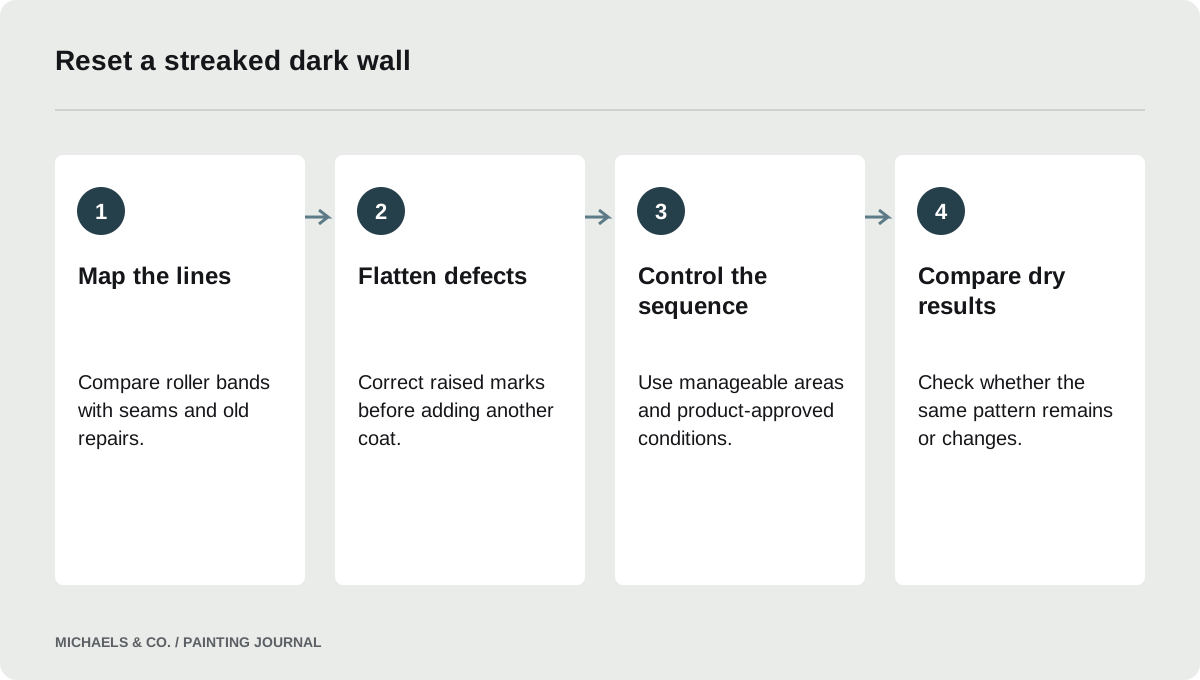
Identify the pattern you are trying to remove
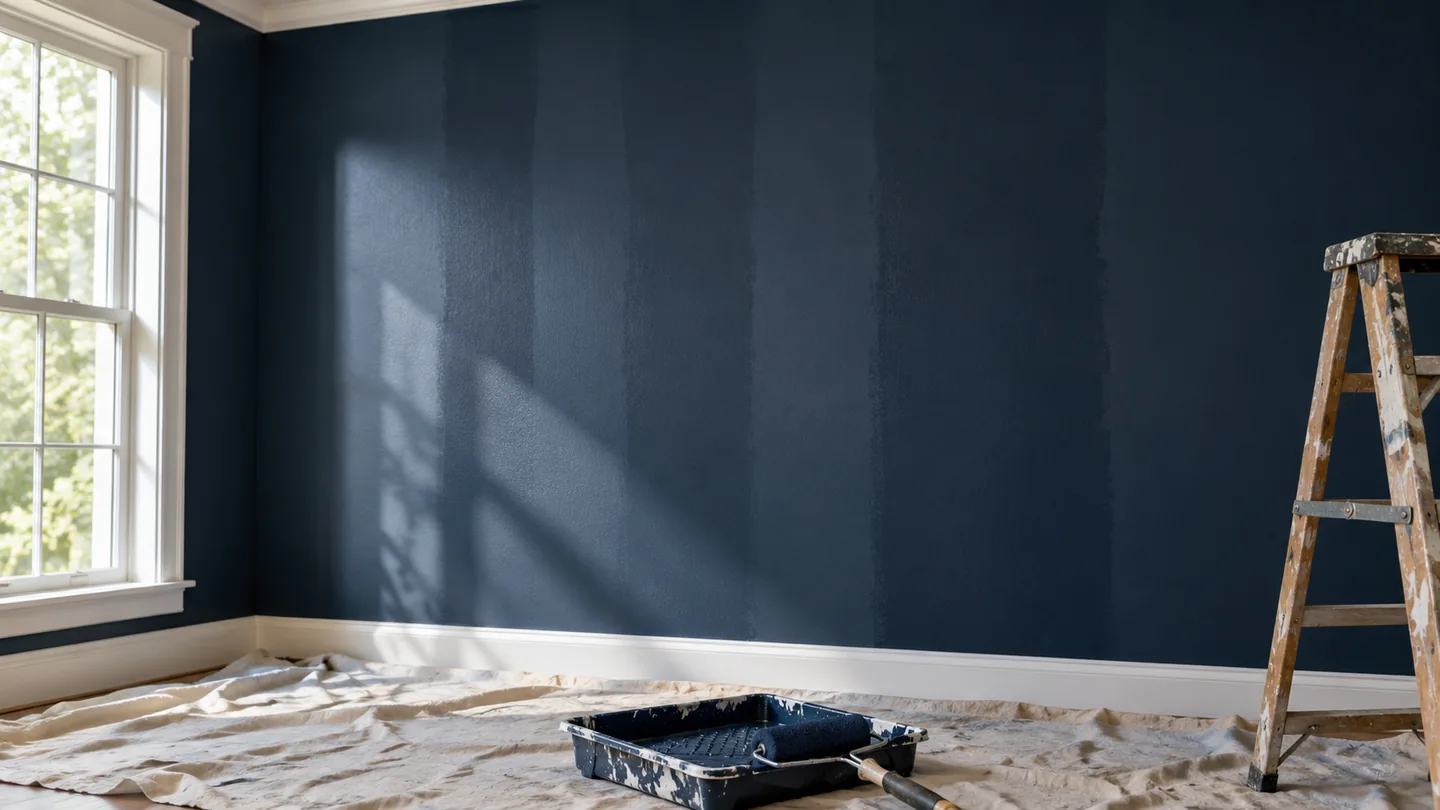
Step back and map the visible bands. Do they follow roller widths, stop-and-start points, repaired areas or underlying drywall seams? Look at the surface from more than one normal position and check whether the lines have physical height. A mark that follows an old wall ridge may not be a paint overlap at all.
The poster in this Reddit discussion used a dark matte coating and quality tools but still saw lap marks. That report illustrates why product cost and a stated intention to keep a wet edge do not establish uniform application. Before changing rollers or buying more paint, determine which part of the result is inconsistent and whether the wall beneath it contributes.
Distinguish a wet-edge problem from a roller ridge
Sherwin-Williams: Lapping describes lapping as a darker or higher-sheen overlap where application layers meet. Losing the wet edge is one possible cause. A raised line left at a roller end is a different physical defect, although the two can appear together.
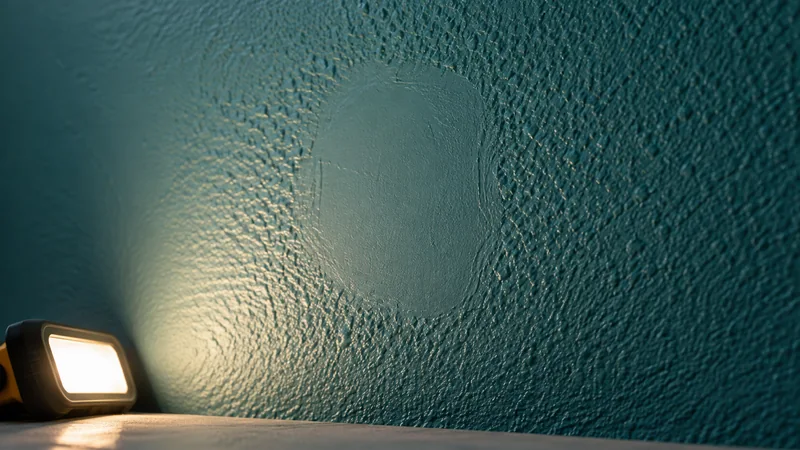
Compare the line in diffuse light and side light. A tactile ridge generally needs surface correction before a finish coat can look even. A flat band may call for a more consistent application sequence or better control of absorption. Avoid assuming that all vertical marks mean the roller was too dry. The diagnosis should fit the pattern rather than the most familiar explanation.
- Map the visible bands against the roller path and cut-in sequence, noting whether their edges repeat at the width of a pass or working section.
- Check for roughness, ridges, or dried roller edges before recoating; an even color coat cannot level a physical buildup already fixed in place.
- Plan the next application around complete wall sections, interruptions, access, and room conditions so the crew can maintain the selected product's workable edge.
- Evaluate a dry sample with the intended roller and finish under the wall's actual lighting before assuming another identical application will change the result.
Correct the surface before changing the technique
Inspect for roller-end buildup, dried debris and old repair edges. If these are present, prepare them appropriately before recoating. Sherwin-Williams: Roller Marks/Stippling identifies roller selection and technique as factors in unwanted stippling, but a new applicator cannot flatten a ridge already hardened on the wall.
Consider the age and identity of existing coatings before abrasive work; lead precautions may apply to older or unknown material. Clean preparation dust according to the system requirements. If sanding exposes porous repairs or damages the wall surface, address those conditions before the next finish. A rushed attempt to flatten lines can otherwise create fresh patches that introduce a different form of unevenness.
Review conditions that shorten working time
Check the actual coating instructions and the room conditions. Heat, moving air and a highly absorbent surface can affect how quickly an edge stops blending. An open window or fan directed at the wall may change the working conditions even when the air temperature seems comfortable.
The answer is not to add a universal quantity of water or extender. Use only adjustments permitted by the product guidance or confirmed by its manufacturer. If conditions do not allow the planned section size to be completed consistently, reduce the section or change the schedule. A technique that worked with another paint may not transfer to a product with different application characteristics.
Plan the wall as a sequence of manageable areas
Before starting, decide where work begins, where supplies will sit and where interruptions can occur. Natural breaks such as corners and openings make better stopping locations than the center of a broad wall. Large uninterrupted areas may need a different work arrangement from a small bedroom wall.
Sherwin-Williams: Lapping recommends manageable work areas and maintaining a wet edge. Translate that into the actual room rather than memorizing one fixed section width. The applicator should be able to distribute material and finish a section before it becomes unworkable. If cutting in and rolling involve different people, coordinate their pace so the edge work does not become an unrelated dried band.
Keep paint distribution and finishing passes consistent
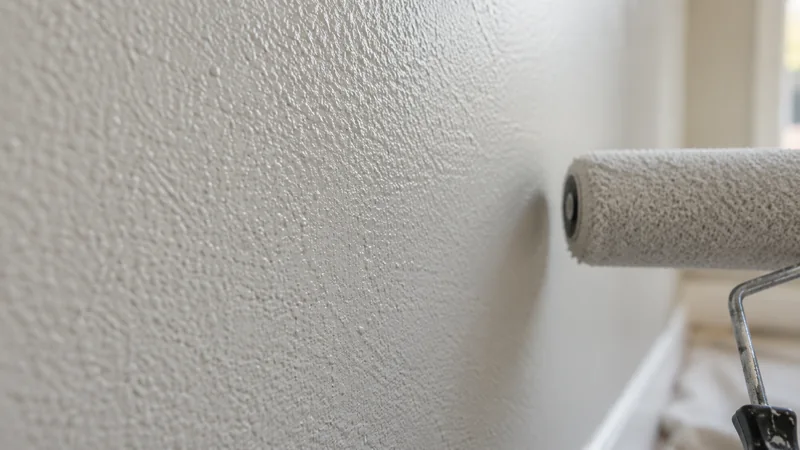
Use the roller type and nap recommended for the coating and surface. Load and distribute material consistently instead of pressing harder to extend a nearly empty roller. Keep an eye on buildup at the ends and avoid repeatedly working areas that have begun to set.
Consistent finishing passes help control the resulting texture, but they are not a magic directional rule for every product. Follow the application guidance and evaluate a representative sample. The aim is an even coating, not simply a wall that has received a counted number of passes. Coverage rate and film requirements belong to the selected product; do not stretch material to meet an arbitrary estimate.
For a wall interrupted by a doorway, plan how both sides and the area above it will remain visually consistent. Unplanned breaks around obstacles can create local overlaps even when the broad central area was rolled carefully. Rehearse the sequence before opening the paint.
Inspect a dry result before committing to more coats
Allow the coating to reach the appropriate evaluation stage. Compare the wall under ordinary lighting and from the same positions used to document the original problem. A photograph taken with dramatically different exposure or light may exaggerate or hide a difference, so keep the comparison consistent.
If the new result still has bands, identify whether their positions match the old ones. Repeated lines in exactly the same places may suggest underlying profile or preparation. A new pattern following the latest roller sequence points elsewhere. This comparison is more informative than immediately adding a fourth coat. Keep the sample or trial area limited until the revised method produces an acceptable result.
Agree on finish expectations for demanding walls
A dark color beside strong side lighting can make small surface differences more noticeable. Discuss the existing wall condition and the desired result before agreeing that ordinary repainting includes substantial leveling. A coating scope and a wall-resurfacing scope are different amounts of work.
Use a sample to establish the achievable appearance with the selected color, sheen and application method. Record the accepted lighting and any existing surface limitations. This is especially useful in commercial interiors with wall-washing fixtures or long corridors. The final review should identify actual remaining bands, ridges or substrate waves rather than reducing every visible difference to a vague claim of bad paint.
Questions & answers
Will buying a wider roller eliminate lap marks?
A wider roller may suit a large wall, but it does not correct poor distribution, unsuitable drying conditions or existing ridges. Choose an applicator compatible with the coating and your ability to maintain consistent work. Test the revised method before relying on width alone.
Should I add an extender to slow the paint down?
Only if the coating instructions permit the specific additive and use conditions. An unapproved addition can change product behavior. Review the environment and work sequence first, and ask the manufacturer when the guidance is unclear rather than following a universal mixing recipe.
Why did the marks remain after several coats?
Each coat may have repeated the same overlap pattern, or the visible lines may be physical ridges or wall defects that paint cannot level. Compare their locations and inspect the surface. Correct the identified condition before deciding whether another finish coat is useful.
Sources & further reading
- Sherwin-Williams: LappingOverlaps become visible when the wet edge is lost; manageable work areas and suitable conditions help.
- Sherwin-Williams: Roller Marks/StipplingRoller cover and application technique affect texture; follow the coating's recommended applicator specifications.
Reader discussions
These conversations describe problems people encountered. They do not establish the cause of a defect or replace product instructions and applicable requirements.