Painting Vinyl Siding Darker: What Vinyl-Safe Claims Do Not Resolve
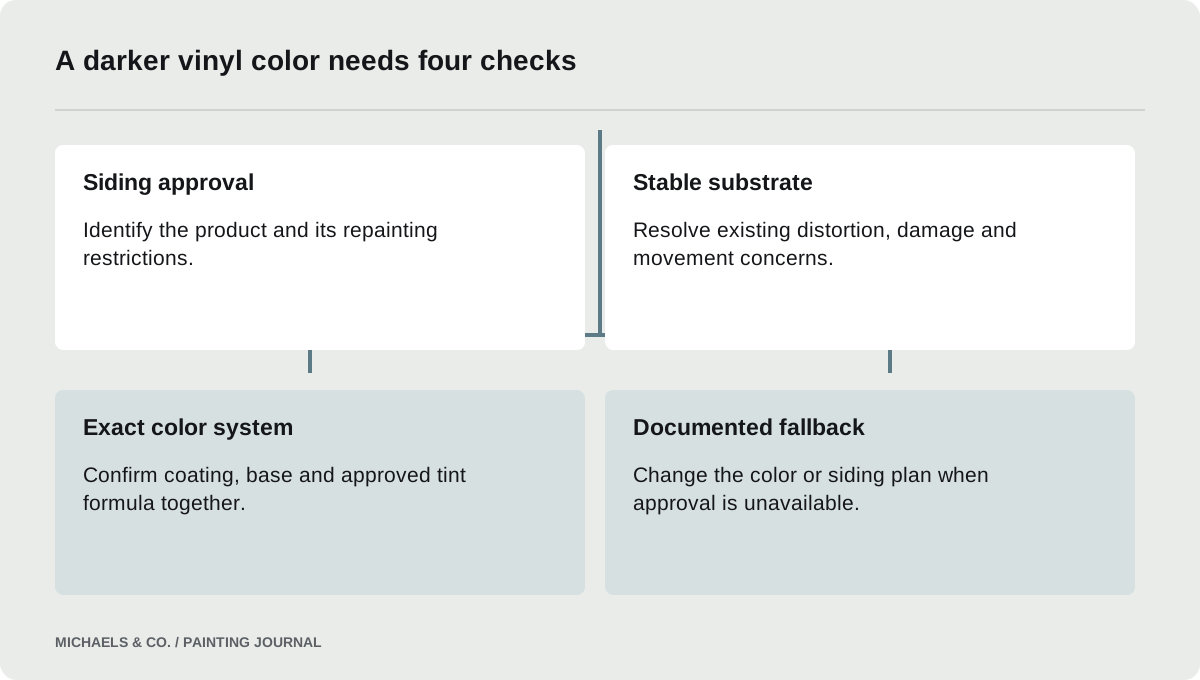
Do not choose a darker vinyl-siding color by appearance alone. Verify the siding manufacturer’s repainting guidance, the exact coating and an approved color formula. Some coating systems offer selected darker colors for sound, stable vinyl, but that does not approve an arbitrary custom match or correct existing distortion. A bonding primer addresses adhesion; it does not establish that the siding can tolerate the thermal conditions created by a color change.
Separate a color decision from a siding decision
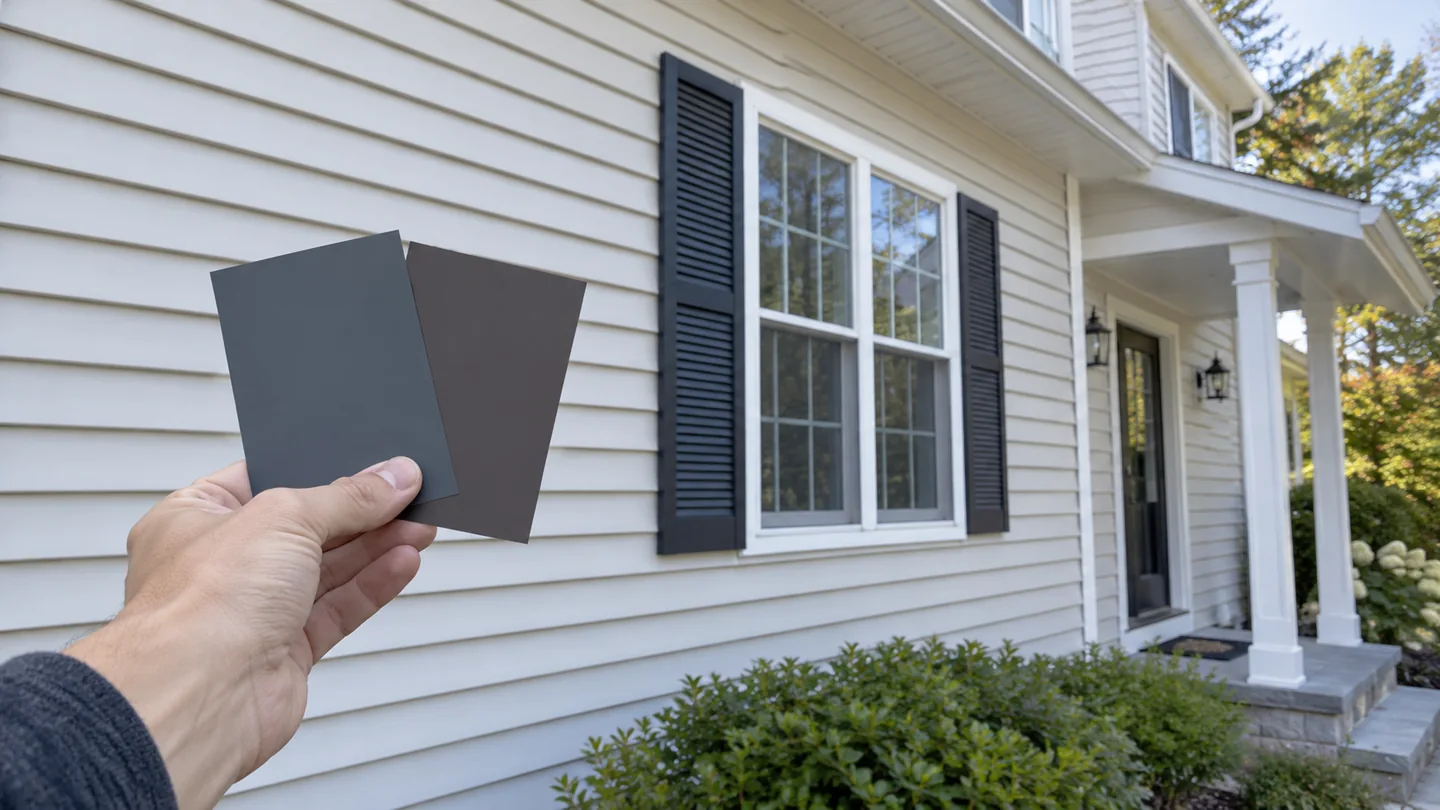
A darker exterior can change how a house looks, but a vinyl repaint also changes the conditions experienced by the siding. Begin with the product beneath the paint: manufacturer, profile, age, original color and any available installation or warranty records. If the siding cannot be identified, acknowledge that uncertainty before committing to a dramatic change.
In a Reddit discussion about darker gray on beige vinyl, the owner received conflicting advice about a vinyl-safe formula. A forum reply cannot approve that house's combination of siding and coating. The useful next step is to gather the actual product information and ask the responsible manufacturers about the proposed system, including any repainting restrictions.
Inspect existing movement and damage first
Walk the exterior before washing or painting changes its appearance. Record bowed panels, loose sections, cracked pieces and areas that appear different in strong sunlight. Look at repaired sections and additions separately; they may not use the same siding as the original house. Photograph the condition from consistent positions.
Painting will not restore a panel that has already distorted, and it can make a later discussion about the cause more difficult if the earlier condition was not recorded. Have a siding professional evaluate installation or movement concerns before a coating contractor promises an appearance improvement. The paint scope should identify repairs and exclusions. If replacement sections are needed, settle those decisions before choosing the final coating sequence and color.
Understand what a vinyl-safe color system actually offers
A color system is more specific than the general phrase exterior paint. Sherwin-Williams' VinylSafe information describes selected colors, including some darker choices, used with named compatible coatings on sound, stable vinyl. That is not a statement that every dark color in every product is suitable.
Confirm the exact product, base and tint formula with the supplier. A visual match to a familiar color name may use a different formula from the approved system. Keep the actual container labels and order record. If a custom match or product substitution is proposed, obtain renewed confirmation before application rather than assuming that similar appearance means identical suitability. The siding manufacturer's restrictions remain a separate part of the decision.
Do not use primer as a heat solution
Adhesion and distortion are different failure modes. A primer can help a coating bond where the specified system requires it. It cannot, by itself, establish that a darker painted panel will behave acceptably under the site's exposure. A coating may remain firmly attached to siding that has changed shape.
The manufacturer's exterior preparation guidance warns about darker repaint colors on vinyl. Read that warning together with the exact approved color-system instructions, rather than discarding either one. Where general guidance and a proposed special system appear to conflict, request clarification for the specific combination. Adding more primer or more finish coats is not a substitute for resolving that question.
Review the exposure instead of relying on a hand test
One shaded sample panel does not reproduce every elevation. Note orientations, shade, nearby reflective surfaces and locations where the siding already appears stressed. These observations help a manufacturer or siding professional understand the project. They do not let a homeowner calculate a universal safe color threshold from a brief surface-temperature reading.
Do not treat touching a painted sample on a mild afternoon as proof that it will tolerate the hottest conditions of the season. A sample remains useful for appearance and application compatibility, but it cannot recreate all future thermal exposure. If the proposed change depends on assumptions that cannot be confirmed, consider a less demanding approved color or replacement siding manufactured for the desired appearance.
Put the approval trail in the proposal
Before ordering material, make the specification clear enough that a purchasing error can be recognized. Ask the proposal to identify the siding assumptions, preparation, coating product, color system and exact color or formula reference. Include the process for handling damaged panels and changes discovered during preparation.
| Record | Question it resolves |
|---|---|
| Siding identification | Which manufacturer's repainting rules apply? |
| Coating and tint label | Was the approved system actually supplied? |
| Existing-condition photographs | Was distortion present before painting? |
| Written clarification | How were uncertain restrictions resolved? |
A verbal statement that the paint is safe leaves too much undefined. Ask what the manufacturer and contractor each stand behind, and read the actual written warranty terms rather than assuming they cover every substrate consequence.
Keep preparation compatible with the siding assembly
Once the system is approved, plan cleaning and application around the condition of the vinyl and the building. Remove contamination using a suitable method, protect openings and avoid driving wash water into the assembly. Allow the surface to meet the coating's preparation requirements before application.
Do not use aggressive washing or abrasion simply because a painter normally uses that method on wood. Vinyl is a different substrate with joints and movement details that should remain functional. Clarify how laps, trim and adjoining materials will be handled. Follow the specified application conditions on each elevation; a convenient crew schedule does not change the surface conditions permitted by the coating. Inspect an initial area before proceeding across the entire exterior.
Choose the fallback before the project is underway
If the siding maker will not approve painting, the product identity remains uncertain or the desired color is outside the coating system, resolve that limitation before preparation starts. The fallback might be a different approved color, repairs followed by a compatible repaint or replacement with a suitable factory-colored product.
This decision should include the cost of access, preparation and future maintenance, not just the price difference between colors. A dramatic repaint is not an improvement if it creates a larger siding problem. Retain the final records after completion so future maintenance does not substitute an unapproved color formula. The most useful outcome is a documented system that fits the actual house, rather than confidence based on a broad marketing phrase.
Questions & answers
Can I paint white vinyl black if the can says vinyl-safe?
Do not infer approval from that phrase alone. The exact color formula, coating product, siding condition and siding manufacturer’s restrictions all matter. Ask the supplier to confirm the specific combination in writing. If it is outside the approved system, choose another color or another siding solution.
Does a successful test patch prove the siding will not warp?
No. It can demonstrate appearance and help evaluate application compatibility, but it does not reproduce every future exposure or prove the condition of the entire installation. Review the siding and coating requirements independently of the sample and document existing movement before starting.
Will repainting automatically void the siding warranty?
Warranty terms vary by manufacturer, product and circumstances. Read the actual warranty and repainting guidance rather than accepting a blanket answer. Ask how the proposed coating and color affect any remaining coverage, and keep that response with the project documents.
Sources & further reading
- Sherwin-Williams VinylSafe paint colorsSelected darker colors and compatible products for sound, stable vinyl; not all colors are approved.
- Sherwin-Williams exterior surface preparationVinyl preparation and the risk of distortion associated with darker repaint colors.
Reader discussions
These conversations describe problems people encountered. They do not establish the cause of a defect or replace product instructions and applicable requirements.