A Preflight Checklist for a Small Airless Paint Sprayer
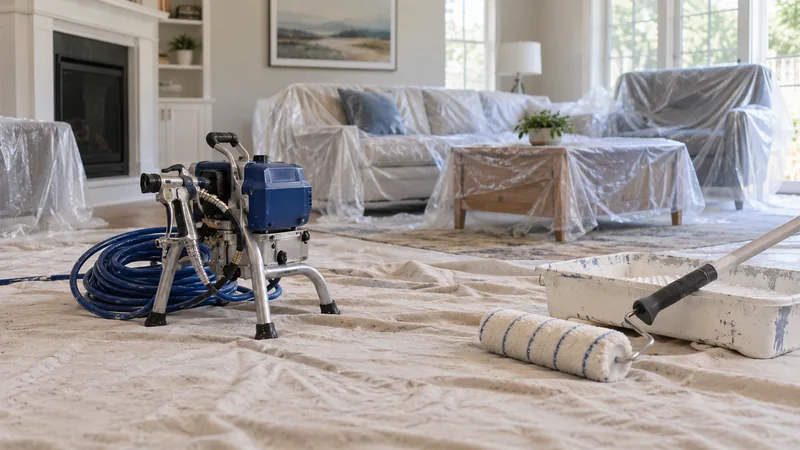
Before spraying, verify that the exact coating, tip and filter setup fit the machine's ratings, then inspect the fluid path and complete the manufacturer's startup procedure. Test on a separate surface before approaching the work. A small airless unit should produce a controllable, repeatable pattern within its approved operating range. Persistent tails, spitting or unstable delivery are reasons to stop and investigate, not to keep coating the project.
Start with a written material-and-machine match
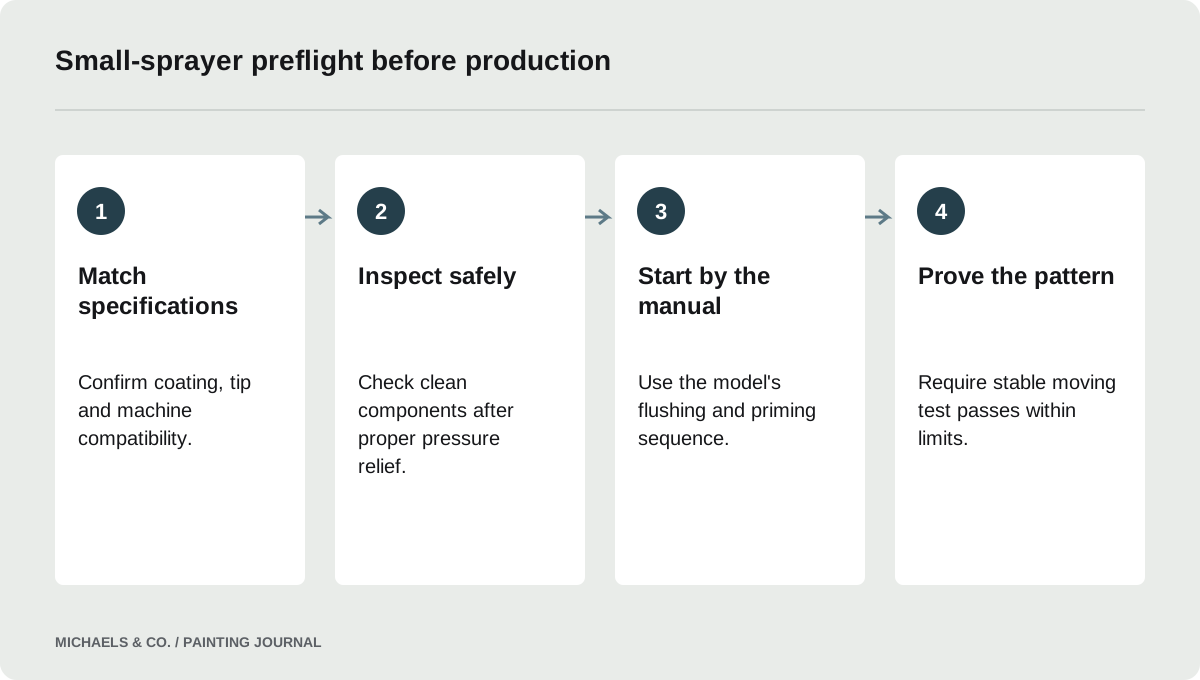
Put the coating's technical sheet beside the sprayer manual. Record the product code, permitted spray method, tip range, reduction rules and cleaning requirements. Then compare the machine's supported materials and maximum tip rating. This check is especially valuable with a compact sprayer bought for occasional use, where a familiar paint category may hide substantial differences between products.
A Reddit report of a QuickShot producing tails and spitting describes a frustrating symptom, but the thread alone cannot establish which component caused it. The better preflight question is whether the complete setup was appropriate before the first trigger pull. A unit that sprayed one enamel successfully may not support a heavier primer in the same configuration. Do not substitute the broad word latex or primer for an exact product identification. Compatibility should be established before the machine is filled, when changing the plan is still straightforward.
Inspect the equipment while it is unpressurized
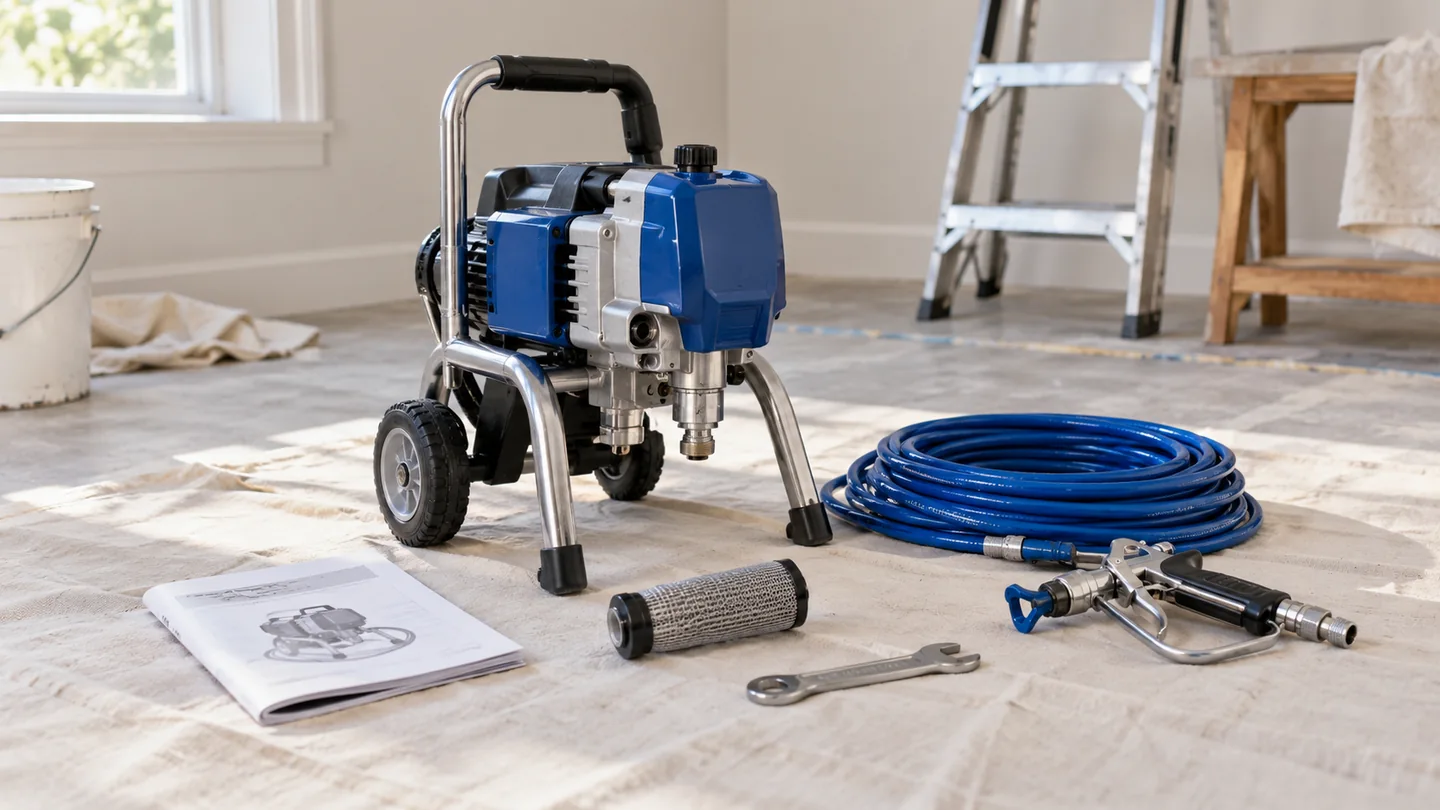
Follow the manual's pressure-relief procedure before inspection or service. Check the gun, guard, hose where fitted, fittings and visible seals for damage or contamination. Look for dried coating in accessible components and confirm that parts are assembled in their intended configuration. An apparently minor damaged connection is not a suitable place for an improvised patch.
Check the power supply or battery arrangement required by the model and stage the equipment so it cannot be pulled over by movement. Keep hoses and cords clear of the walking route. High-pressure equipment can inject material through skin; never test a leak with a hand or cover a suspected leak with a finger. If damage or leakage is found, stop and use the manufacturer's service process. A preflight checklist is not a substitute for the manual, but it makes the manual's important checks part of the routine instead of an emergency reference.
Graco's airless-safety guidance directs operators to the model-specific manual for its warnings and procedures. Review that manual before startup, not only when a problem interrupts spraying.
If high-pressure fluid may have entered the skin, seek emergency medical care immediately and identify the material involved. The manufacturer's injection warning explains why a small-looking wound must not be treated as an ordinary cut.
Confirm the tip and filter as a pair
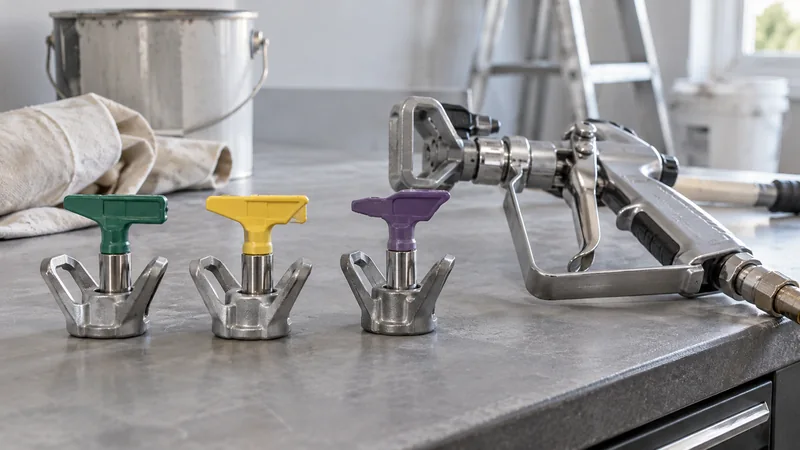
The stamped tip code needs to fit the coating, guard and machine. Graco's spray-tip guidance distinguishes the fan width from the orifice and emphasizes the sprayer's supported tip rating. Check the actual tip family as well as the number. A physically similar component may not be interchangeable with another guard or system.
Inspect the specified filters for cleanliness and damage using the approved procedure. Do not remove a filter simply because the machine seems to flow more easily without it. If the coating requires a different permitted filter setup, install that setup deliberately. Keep a record of what is fitted so troubleshooting does not begin with uncertainty. A known clean tip and correct filter arrangement provide a useful baseline. Old components with an unknown service history can make it difficult to distinguish material problems from wear or obstruction.
Complete startup before evaluating the fan
Use the model's specified flushing, priming and startup sequence. Different small sprayers manage the fluid path in different ways, so do not borrow a valve sequence from a video featuring another unit. Confirm that the proper material has reached the gun and that the equipment is operating normally before judging its paint pattern.
Stage a test surface large enough for a moving pass. A brief stationary burst shows only part of the process. Begin with the approved pressure approach and evaluate the whole fan while moving as intended for the work. Graco's spray-technique guidance is useful for the movement component: distance, alignment and overlap need to remain controlled. If the pattern changes unpredictably between passes, do not compensate by varying speed randomly. Return to the preflight conditions and identify what changed before bringing the sprayer near a finished wall or door.
Use a stop-and-check test sequence
A useful test has a decision at each stage rather than an open-ended search for a setting that barely works. Keep the same paint and test surface while adjusting only permitted variables.
- Confirm the coating and machine specifications overlap.
- Confirm clean, compatible tip and filter components.
- Complete the correct startup sequence.
- Make a moving test pass at the intended distance.
- Adjust pressure only within the approved operating method.
- Inspect distribution and repeatability over several passes.
- Stop if the pattern cannot be made stable without exceeding limits.
Photograph the test and note the setup if technical support is needed. Include the exact coating, tip, filter and machine model rather than reporting only that the sprayer spits. That information helps distinguish a material mismatch from a startup, maintenance or component issue without guessing from a close-up of wet paint.
Preserve the setup through pauses and cleanup
Once the test passes, keep the coating supply protected and recheck after changes such as a new batch, a tip replacement or a long interruption. A working setup at the start of the day can deteriorate if material dries in components or contamination enters the cup. Follow the equipment's pause procedure rather than leaving a pressurized unit unattended.
Plan cleanup before application begins. Confirm the correct cleaner, waste containers and access to the required facilities. Some coatings become difficult to remove if the operator waits until all other job tasks are finished. Clean and store the machine according to its manual, then record any parts that need replacement before the next project. The point of preflight is repeatability: the next startup should begin with known clean equipment and a documented suitable coating combination, not the hope that yesterday's successful settings will overcome today's dried residue.
Questions & answers
Should I turn pressure to maximum if the fan has tails?
Do not assume maximum pressure is the answer. Confirm material compatibility, tip condition, filters and startup first, then adjust within the manufacturer's procedure. If a stable pattern requires exceeding the equipment or coating limits, stop and change the setup appropriately.
Can I test a sprayer with water and assume paint will work?
A water test may help with checks permitted by the manual, but it does not prove that a different coating will atomize correctly. Paint viscosity and application requirements differ. A separate test with the actual approved coating remains necessary before production.
What information should I give technical support?
Provide the exact sprayer model, coating product code, tip family and size, filter setup, cleaning history and the conditions under which the symptom occurs. A photograph of several test passes is more useful than an isolated spot because it shows pattern consistency.
Sources & further reading
- Graco: Spray TechniquesTest the pattern, use suitable pressure and tip, keep consistent distance and overlap passes.
- INSL-X Stix SXA-110 Technical Data SheetClean, sound surfaces and compatible topcoats remain required; degloss challenging glossy surfaces and test questionable substrates.
- Graco: Choosing and Understanding Airless Spray TipsTip numbering distinguishes fan width and orifice; coating recommendations and sprayer capacity constrain selection.
- Graco: Airless Sprayer SafetyFollow equipment-specific warnings and procedures for injection, fire, toxicity and other airless-spray hazards.
- Graco-hosted Airlessco LP Series Operation Manual: Injection WarningsA suspected high-pressure fluid injection requires emergency medical care; it must not be treated as a simple cut.
Reader discussions
These conversations describe problems people encountered. They do not establish the cause of a defect or replace product instructions and applicable requirements.