Paint Sprayer or Roller for an Occupied House? A Practical Decision
Rolling is often the simpler choice for occupied rooms with furniture, several colors and limited isolation. Spraying becomes more attractive when large areas can be emptied and protected, or when an appropriate finish system benefits from that application method. Compare the entire project: preparation, masking, ventilation, equipment setup, back-rolling where specified and cleanup. Fast application alone does not establish the fastest or least disruptive job.
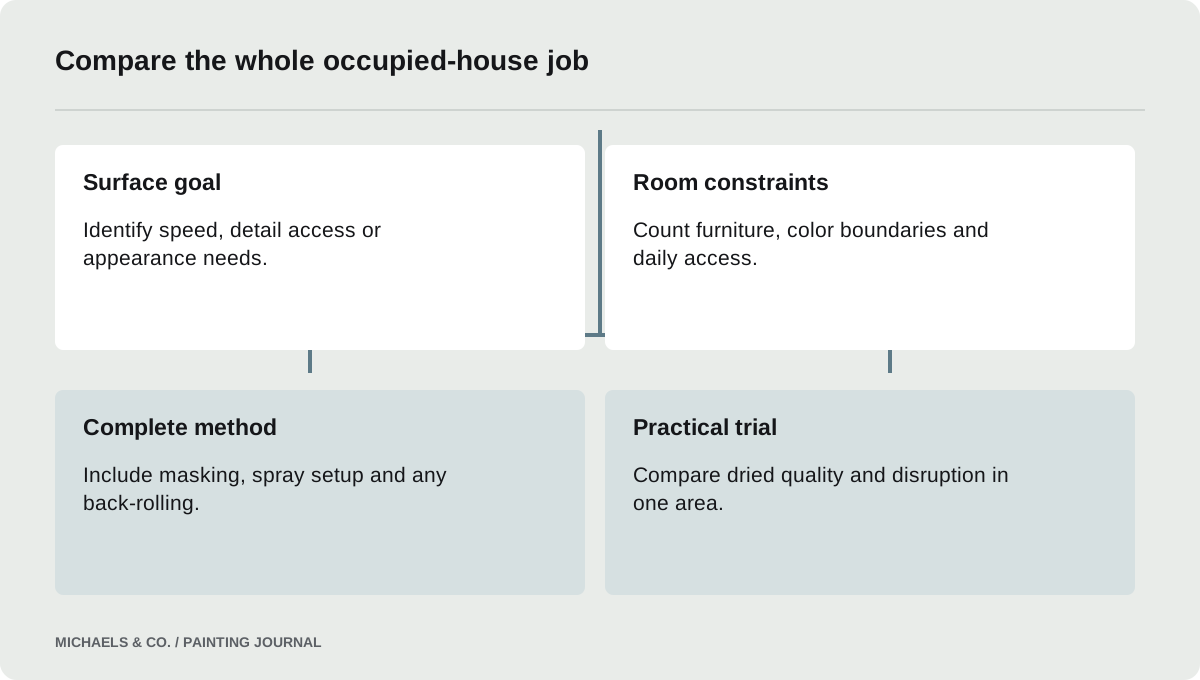
Decide what the sprayer is supposed to improve
A sprayer can be considered for speed, access to complex profiles or a particular surface appearance. Those are different objectives. If the main complaint is old wall texture, spraying another coat will not flatten the substrate. If the aim is to paint many identical doors, a controlled spray setup may offer advantages that do not apply to the furnished rooms around them.
A beginner's Reddit question comparing a sprayer and roller captures the appeal of buying equipment to make a whole-house repaint easier. The decision improves when the project is broken into surfaces and working conditions. List walls, ceilings, doors and trim separately. Then identify which areas can be isolated and which must remain usable. You may choose to spray removable doors in a suitable dedicated area while rolling occupied rooms. A single application method does not need to govern every part of the house.
Count masking as production work
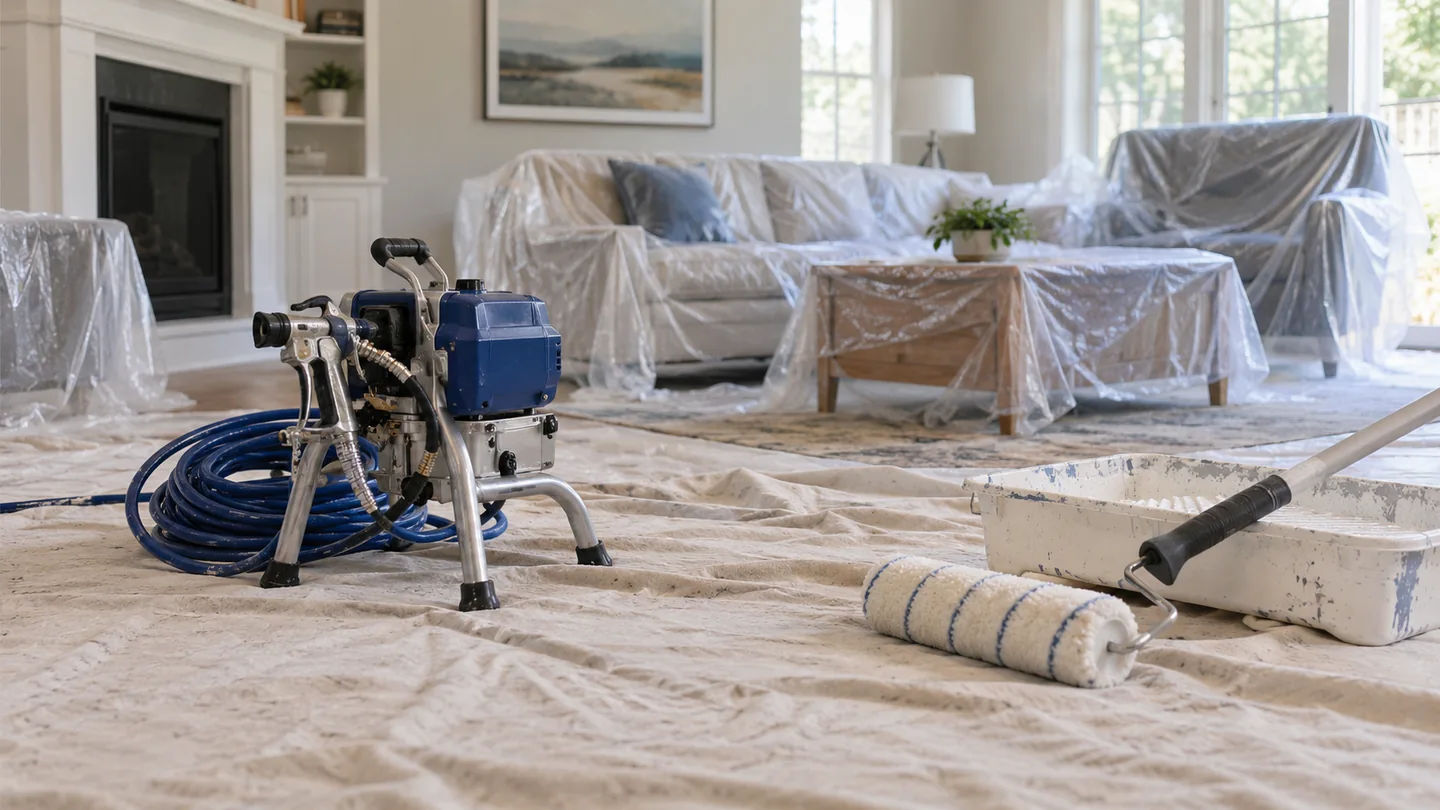
Spray reaches beyond the intended painted surface unless the work area is properly contained and protected. Floors, windows, fixtures, cabinets and adjoining spaces all affect the masking plan. A room with one wall color, contrasting trim and a finished ceiling may require several protection stages. That effort belongs in the time comparison.
Walk through the room and mark every surface that must remain unpainted. Include small gaps, door openings and routes where people or pets could disturb protection. Ask how the masking will be checked, removed and replaced between colors or coats. Rolling still needs protection, but usually allows more localized control around obstacles. If masking must be dismantled every evening so the household can function, spraying may lose much of its application-speed advantage. The most useful estimate separates setup, application and cleanup rather than offering only a fast spraying time.
Check the coating and equipment combination
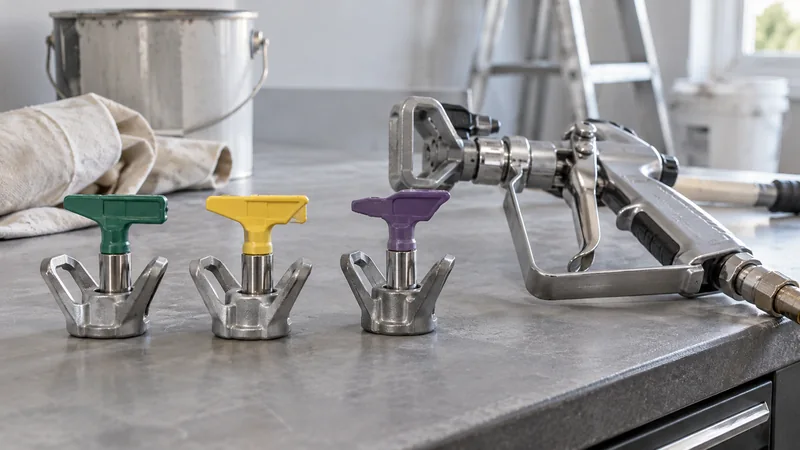
Not every coating can be used in every small sprayer. Tip capacity, material restrictions, filters and cleanup requirements matter. Confirm the exact product and sprayer model before renting or buying equipment. Do not plan to thin a primer or enamel merely to make it pass through a device that is poorly matched to it.
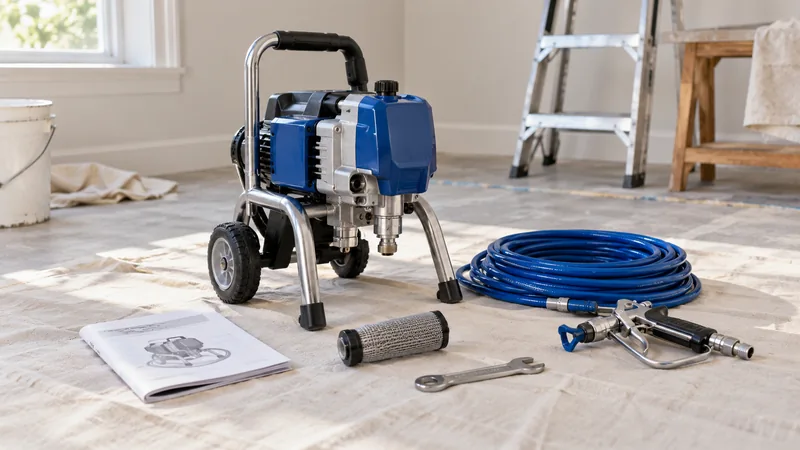
Graco's spray-technique guidance explains controlled movement and pattern overlap, but technique assumes a suitable, functioning setup. Read the equipment manual and coating technical sheet together. If the coating requires a tip beyond the machine's rating, select different equipment or another approved application method. Include a practice area in the plan. Learning pressure, distance and triggering on a prominent finished wall can turn a purchase intended to save labor into a repair project. A rental demonstration is useful, but it does not replace the model's operating and safety instructions.
Define the expected wall texture
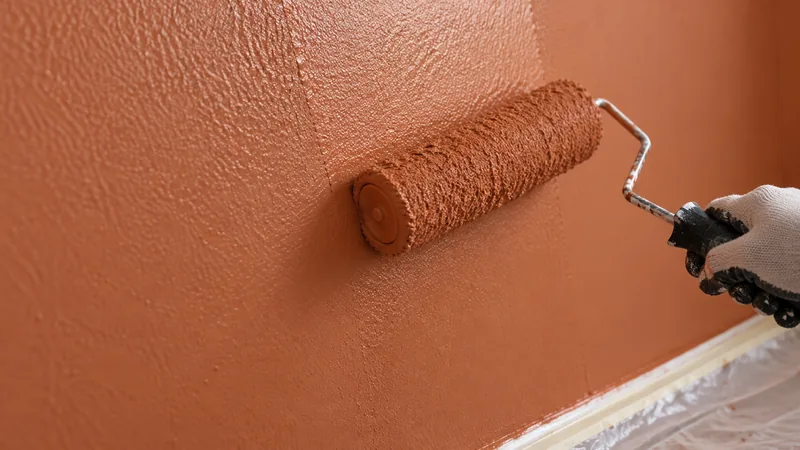
A sprayed wall and a rolled wall may have visibly different application patterns even when they use the same paint. Back-rolling can be specified to work material into the surface and establish a consistent texture. If it is required, the labor comparison includes both spraying and rolling rather than treating the spray pass as the entire coat.
Ask what finish will be accepted under the home's actual lighting. For a renovation that retains some existing rolled walls, matching their appearance may matter more than minimizing texture on the new area. Purdy's roller-system guidance helps frame rolling as a controlled application system, not simply a slower substitute. Approve a sample with the intended sequence and tools. A sprayed sample followed by a different roller or delayed back-rolling is not a reliable preview of the production method you actually plan to use.
Plan occupancy, ventilation and movement
An occupied home contains people, pets and belongings that need a workable separation from painting. Establish which rooms will be unavailable and how access will be managed. Ventilation and protective measures must match the coating and application process; a low-odor label does not by itself answer the questions created by airborne spray.
For airless equipment, understand high-pressure hazards and the manufacturer's pressure-relief procedure before handling tips or clearing problems. Do not improvise cleaning while the system remains pressurized. Keep hoses and cords out of necessary household routes, and make sure protection does not block safe access. If the project cannot provide an appropriate isolated working area, that is a strong reason to choose a different method or bring in a qualified crew. The practical decision includes whether the house can support the process, not only whether the operator can produce a good fan on cardboard.
Graco's airless-safety guidance directs operators to the model-specific manual for its warnings and procedures. Review that manual before startup, not only when a problem interrupts spraying.
Use a room-by-room comparison sheet
Estimate the actual stages for each room. A vacant room with extensive trim may favor a different method from an occupied kitchen with cabinets and appliances. Keep the chosen quality standard and coat count the same so the comparison is fair.
| Condition | Question favoring the decision |
|---|---|
| Furniture cannot leave the room | Can spraying be isolated and protected realistically? |
| Many color boundaries | How much repeated masking is required? |
| Large empty surfaces | Will spray setup save enough application time? |
| Rolled texture must match | Is back-rolling included? |
| Specialty coating | Which methods and equipment are actually approved? |
Include purchase or rental costs, consumables, practice material and cleanup. A homeowner doing one project and a contractor using the equipment repeatedly have different economics even when their application results are equally good.
Choose a method before committing the schedule
Once the comparison is complete, build the schedule around the selected process. If spraying, reserve time for protection inspection, test patterns and equipment cleanup. If rolling, stage manageable sections, suitable covers and efficient access. Neither method excuses incomplete substrate preparation or an unrealistic recoat interval.
For hired work, ask the proposal to identify where spraying, rolling and back-rolling will be used, along with protection and cleanup responsibilities. This prevents a disagreement in which one person expects a sprayed appearance and another expects a conventional rolled wall. For DIY work, complete one representative room or removable component before expanding the plan. Evaluate both the dried finish and the disruption involved. The successful choice is the method you can execute consistently in the actual house, with an acceptable result and a schedule that accounts for more than the minutes spent applying paint.
Questions & answers
Is spraying always faster than rolling?
The spray pass can be fast, but the whole job includes protection, setup, color changes, any required back-rolling and cleanup. Large empty areas may benefit substantially. Small furnished rooms with many boundaries can favor rolling once all stages are counted.
Will spraying hide rough drywall?
No. Spraying changes how the new coating is deposited; it does not level bumps, old texture or poorly prepared repairs. If a smoother substrate is required, plan that work first. Approve a dried sample of the complete preparation and coating sequence.
Can I spray walls and roll only the touchups?
The resulting texture may differ, and touchups can remain visible even with matching paint. Plan the maintenance appearance before choosing the initial method. Where a rolled texture is required, an appropriate back-rolling sequence may be part of the original specification.
Sources & further reading
- Graco: Spray TechniquesTest the pattern, use suitable pressure and tip, keep consistent distance and overlap passes.
- Purdy: How to Use a Paint Roller SystemRoller width, frame, tray and extension pole form a system; larger rollers suit broad surfaces.
- Graco: Airless Sprayer SafetyFollow equipment-specific warnings and procedures for injection, fire, toxicity and other airless-spray hazards.
Reader discussions
These conversations describe problems people encountered. They do not establish the cause of a defect or replace product instructions and applicable requirements.