Yellow Streaks on Painted Cedar: Tannin Bleed, Rust or Sprinkler Deposits?
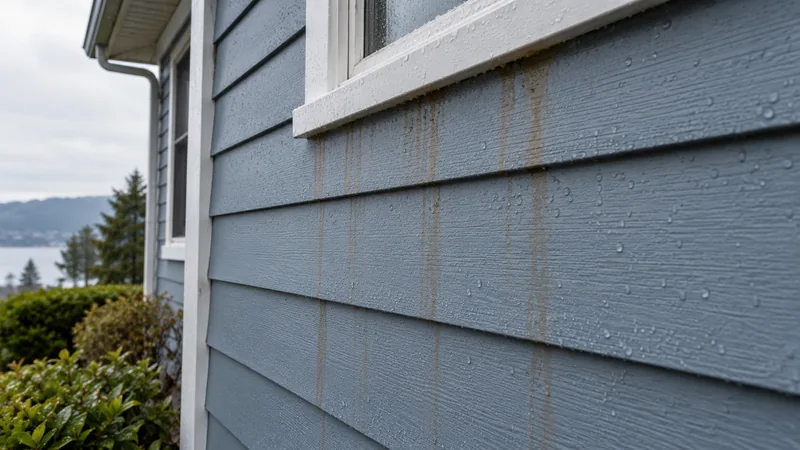
Yellow or brown marks on cedar should be identified before another coat is specified. Compare their pattern with wood grain, fasteners, roof runoff and sprinkler exposure. Wood extractives can migrate through coatings, but similar coloration can come from other sources. If staining develops months later, investigate water exposure as well as the original primer. Test the proposed cleaning or stain-isolation method before treating the whole elevation.
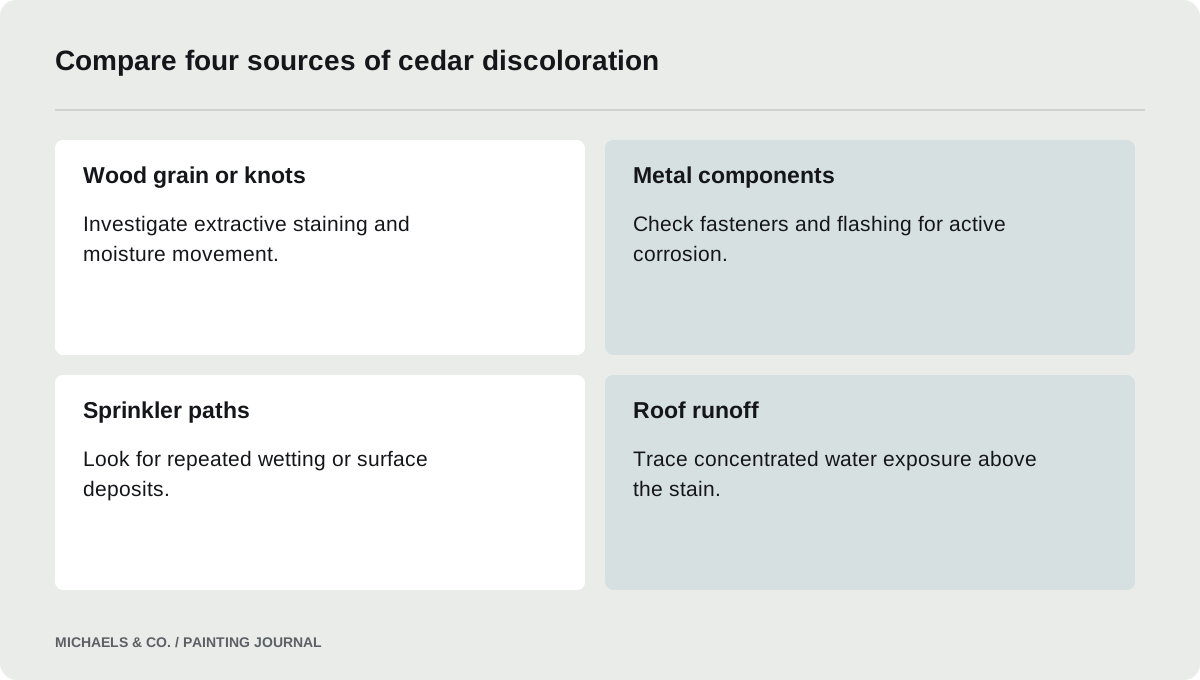
Map the stain against the siding details
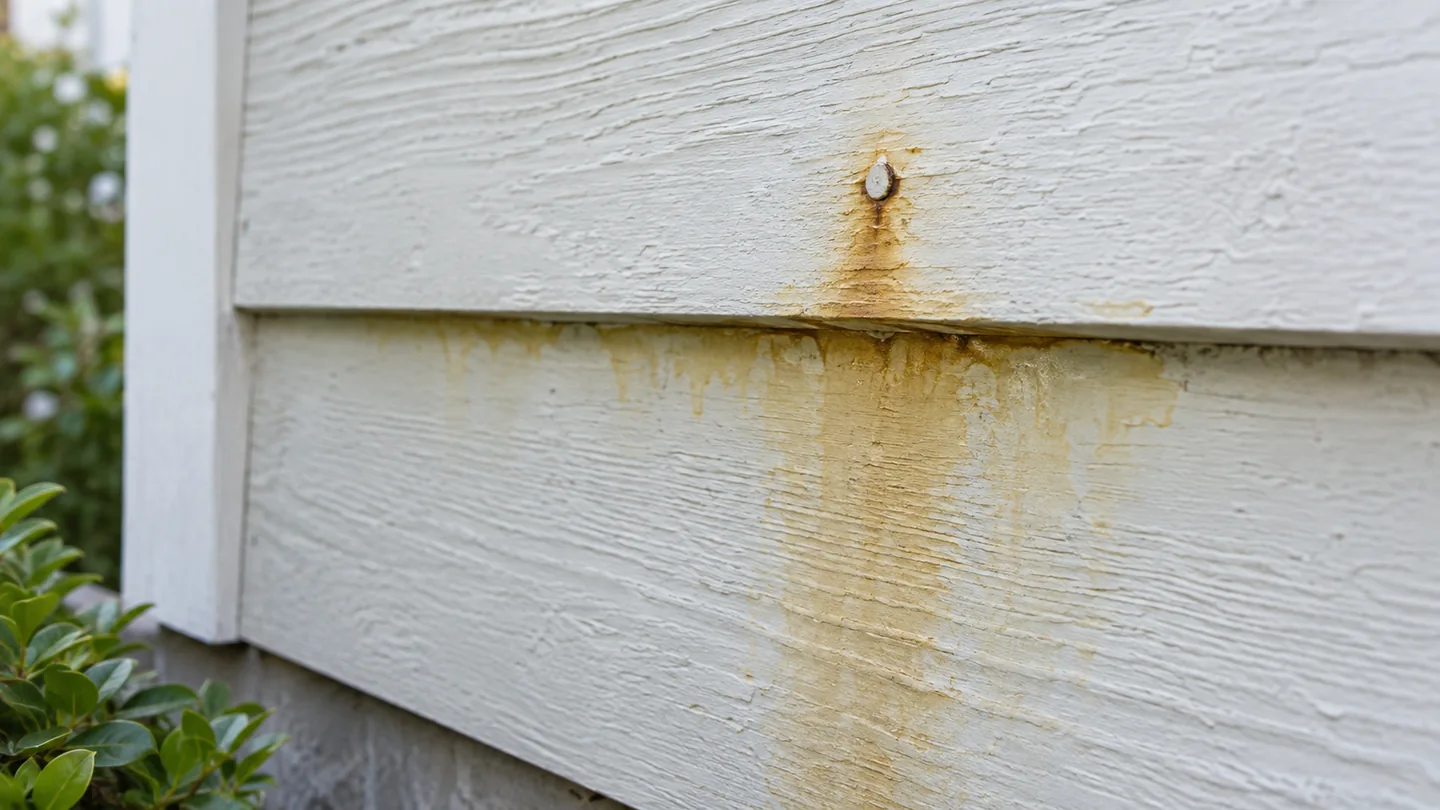
Photograph the affected elevation and mark the stain locations. Look for alignment with knots, grain, fasteners, board ends, roof edges and irrigation spray. A narrow drip from a metal component raises a different question from discoloration that appears within the wood pattern.
In this Reddit discussion, a homeowner noticed yellow streaks months after a contracted cedar repaint and also reported hard-water sprinkler exposure. Commenters offered different explanations. The discussion is useful because it preserves that uncertainty: a photograph and the word cedar do not establish tannin bleed. The investigation should consider the building and water sources around the affected boards as well as the coating system.
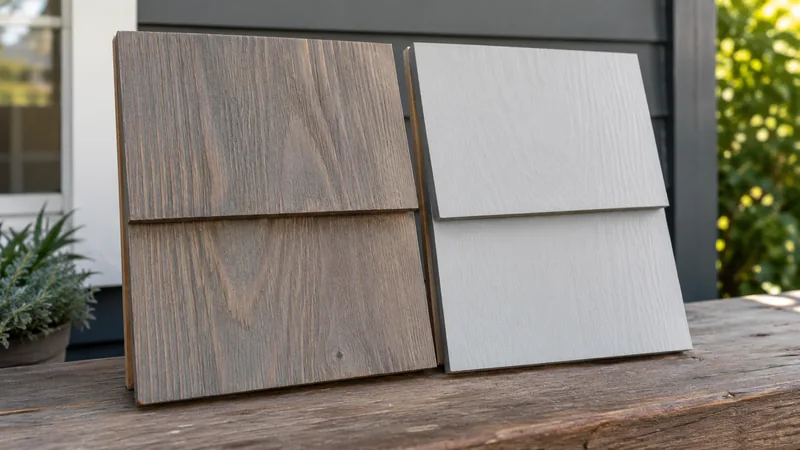
Understand how wood extractives can affect paint
Sherwin-Williams: Tannin Staining describes tannin staining as discoloration from substances migrating out of the wood through the coating. Cedar and other woods can present this issue, and delayed staining may involve moisture moving through the substrate. That makes the timing of the mark relevant.
Do not assume every visible wood pattern needs complete stripping. First assess whether the film is intact and identify the likely source. A stain-isolating coating may be part of a repair, but it does not remove water entering from behind siding or repeatedly wetting a board end. The product choice and the building condition need to be addressed as separate parts of the plan.
- Compare the streaks with wood grain, knots, fasteners, and irrigation spray patterns to establish which physical features actually align with the discoloration.
- Check whether staining appears below unsealed ends or joints where water can enter, and record whether it returns after rain or sprinkler operation.
- Ask the painter to distinguish a tannin-blocking treatment from corrosion repair or deposit removal, since these tasks address different sources of yellow or brown marks.
- Use a representative dry test area to confirm the chosen preparation and blocking system, then document the exposure conditions before extending repairs across the siding.
Check fasteners and nearby metal
Look for rusty nail heads, damaged flashing, brackets or other metal above the stain. Sherwin-Williams: Rust explains that exposed steel and moisture can produce corrosion-related discoloration. A coating over the wood will not correct an actively corroding component that continues to shed material across it.
Inspect accessible areas safely and have higher details documented by the appropriate contractor. If corrosion is present, define how the metal will be repaired or protected and whether adjacent siding needs treatment. Avoid diagnosing every dark fastener mark as the same mechanism; wet wood and metal can interact in different ways. The important outcome is a repair that stops the source instead of repeatedly hiding its trail.
Review irrigation and drainage exposure
Observe where sprinklers reach the building during their ordinary operation without deliberately soaking the siding for a test. Check whether runoff from the roof, a hose connection or another detail repeatedly wets the same section. Compare the stain with those paths and with unaffected nearby boards.
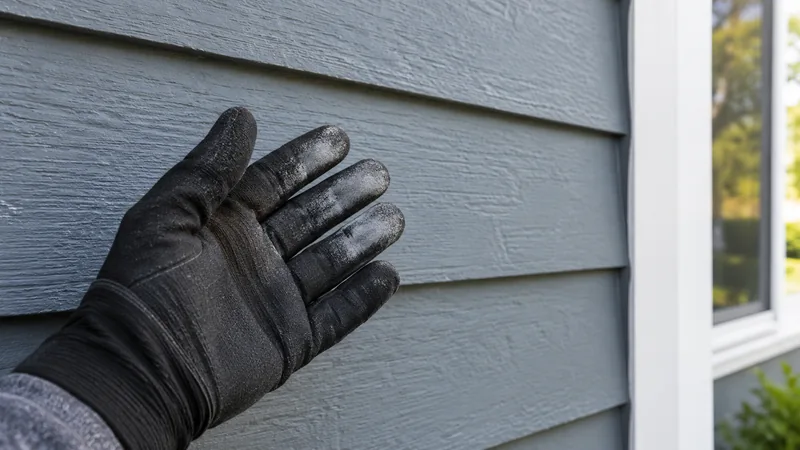
If deposits or water exposure are suspected, have the proposed cleaning method reviewed for compatibility with the coating and wood. A stain that does not wipe off immediately is not automatically tannin. Deposits can adhere firmly, and aggressive scrubbing can alter the finish. Correcting spray direction or drainage may be a necessary part of the scope even when the visible mark still needs separate cosmetic treatment.
Inspect the paint film and the underlying wood
Determine whether the coating is firmly attached, blistered or peeling. Look for softened wood, open joints and damaged board ends where water can enter. A surface that is both stained and failing needs more than a stain-blocking topcoat.
Where old coating must be disturbed, establish relevant lead precautions before scraping or sanding. Preserve the failure evidence and record which layers release. The repair extent should follow the condition of the substrate and coating, not simply the colored outline of the stain. If deteriorated wood is present, decide whether repair or replacement is needed before the painting system is selected.
Test cleaning before assuming recoating is necessary
Use a small representative area and a method appropriate to the identified mark and existing finish. Follow the cleaner and coating guidance, protect adjacent materials and assess the result after drying. Record whether the discoloration changes and whether the film remains uniform.
The test is not a contest to find the strongest chemical that removes color. A cleaner that damages the coating or leaves a different sheen can create another repair. If the mark is confirmed as wood-extractive staining, discuss a suitable treatment and isolation system with the coating supplier. If it is a deposit or corrosion trail, address that source rather than applying a wood-stain remedy indiscriminately.
Specify a compatible stain-isolation repair
For confirmed wood extractives, select a primer or coating intended to resist that staining and suitable for exterior use on the existing system. Sherwin-Williams: Tannin Staining notes that staining can still occur even with appropriate preparation, so avoid an absolute guarantee based only on a product label.
Prepare and coat a sample after the relevant moisture or contamination condition has been addressed. Follow the actual drying and recoat requirements and evaluate the finished area before expanding the work. Some stain blockers have limits on exterior use or on the area they may cover. Verify those limits rather than taking an interior cabinet-painting recommendation and applying it across a cedar elevation.
Define the finish area and follow-up
A local stain repair may need broader finishing for consistent color and sheen. Decide whether coating individual boards, an architectural section or the whole elevation is appropriate. A small rectangular patch across several boards can remain visible even when the stain is successfully isolated.
Keep photographs, water-exposure corrections, product details and sample results in the project record. Observe the area through normal irrigation and weather after the work is ready for service. If discoloration returns, compare whether it follows the same grain or a new runoff path. That evidence helps distinguish continuing extractive movement from a separate source and makes the next decision more precise than simply requesting stronger primer.
Questions & answers
Does yellow paint on cedar always mean tannin bleed?
No. Corrosion trails, deposits and other stains can look similar. Compare the pattern with wood grain, fasteners and water exposure, and use a compatible cleaning sample where appropriate. Cedar makes wood extractives plausible, but the species alone does not confirm the diagnosis.
Can tannin stains appear months after painting?
Manufacturer guidance describes delayed discoloration associated with moisture carrying extractives through the wood. That makes later water exposure relevant, not only the original application. Inspect the film and moisture paths before deciding whether the correction is cleaning, stain isolation or a wider substrate repair.
Should I prime the whole house if one section is stained?
The scope should follow the coating and substrate condition, the identified cause and the appearance goal. A local problem may permit a limited repair, while broader conditions can justify more work. Test the proposed system and define natural finish boundaries before committing to an entire exterior.
Sources & further reading
- Sherwin-Williams: Tannin StainingWood extractives can discolor a coating; delayed staining can indicate moisture moving through the wood.
- Sherwin-Williams: RustSteel exposed to moisture corrodes; prepare rusted areas and protect bare steel with an appropriate corrosion-control coating.
Reader discussions
These conversations describe problems people encountered. They do not establish the cause of a defect or replace product instructions and applicable requirements.